Mustangs on the Move: Division of Design Kicks Off at Meadows School of the Arts
The brand new Division of Design welcomes three innovative programs to a new home—Creative Computing, MADI and SMU Guildhall.

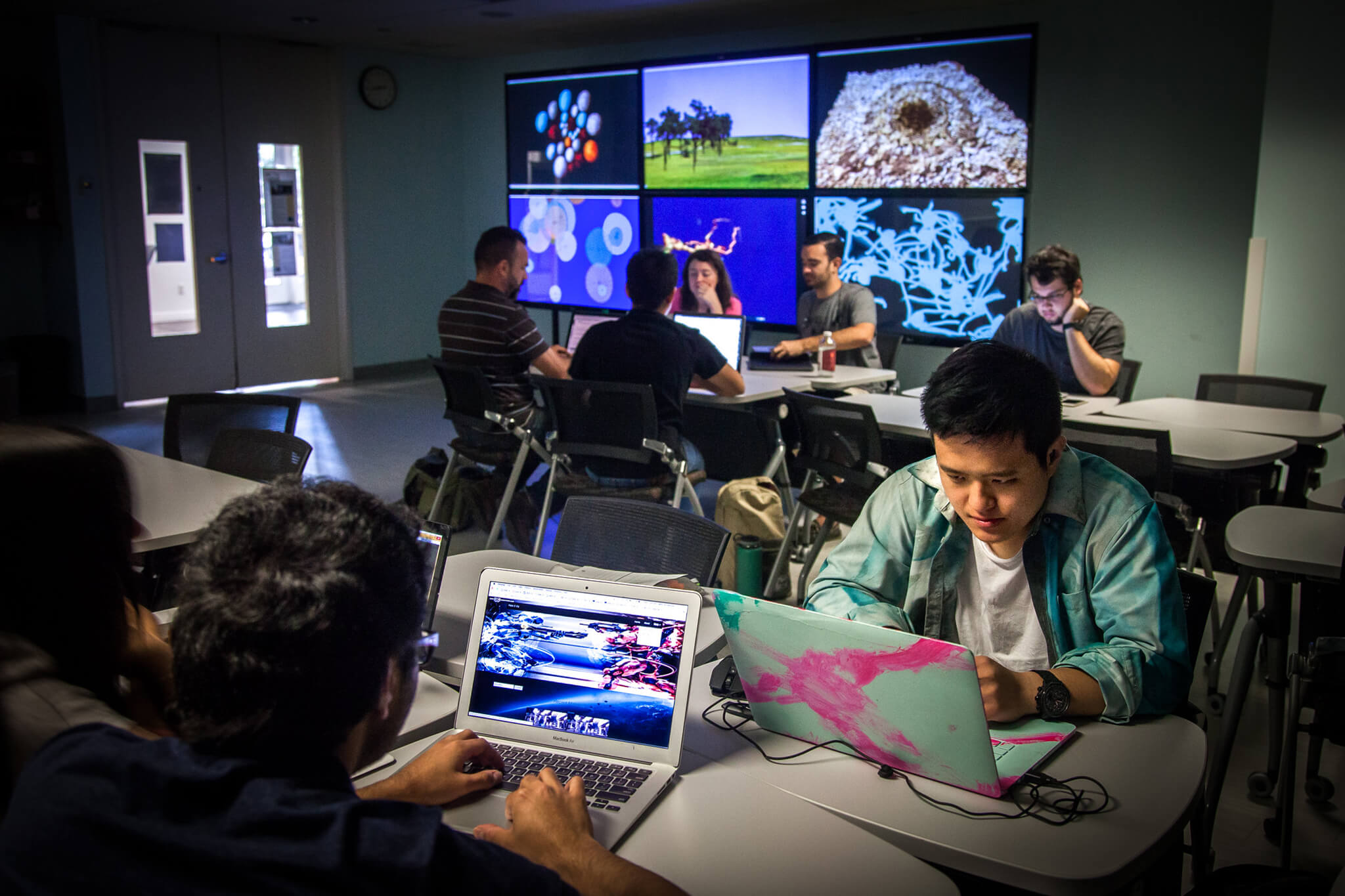
June 1 marked the launch of a new Division of Design at the Meadows School of the Arts. Combining Creative Computing, the Master of Arts in Design and Innovation (MADI) and SMU Guildhall—likeminded programs that drive innovation at the intersection of technology, design, and business—this Division’s visionary model enables promising future opportunities including new, competitive programs.
A MERGER FOR A BRIGHT FUTURE
The creation of the Division of Design leverages professional and practical prowess within three programs of technological and creative forward-thinkers, allowing a remarkable opportunity to grow something unique and exciting.
Division of Design Departments
- Creative Computing (C3): Offering a B.A.and Minor in Creative Computing, this interdisciplinary major combines theory and methodology from computer science and engineering with aesthetic principles and creative practice from the arts.
- MADI: Previously under the Lyle School of Engineering and supported by both Lyle and Meadows, MADI moves fully into Meadows with its master’s degree in Human-Centered Design, MADI/MBA, and Graduate Certificate in Design and Innovation.
- SMU Guildhall: Previously under the Provost Office, SMU Guildhall is home to the new B.A. in Game Development and its signature program, the Master of Interactive Technology, which is one of the world’s longest-running and highest-ranking graduate programs for Game Development.
Common Pillars and Unified Goals
Uniting programs allows us to hone and deliver unique design pedagogy for a variety of needs, while continuing to be driven by student outcomes and success after graduation. Four shared pillars empower faculty and students in these programs:
- Creativity — This is an artistic endeavor. To be successful, final products must be compelling and beautiful, and they must engage and impact audiences, consumers and clients.
- Design — Good design is difficult; it requires dedication and insight to discover. When done well, it enables products to benefit and delight those who use them. It can make difficult tasks easy and improve outcomes.
- Innovation — We strive to build curriculum and pedagogical methods that help define, empower, and pioneer the future frontier. This requires a constant cycle of evaluation and updating.
- Technology — The other three pillars are enabled and accelerated by technology. Recent advancements in generative AI and computational power available to broad segments of the world will ensure that this moment in history will be remembered alongside the Industrial Revolution or invention of the printing press.
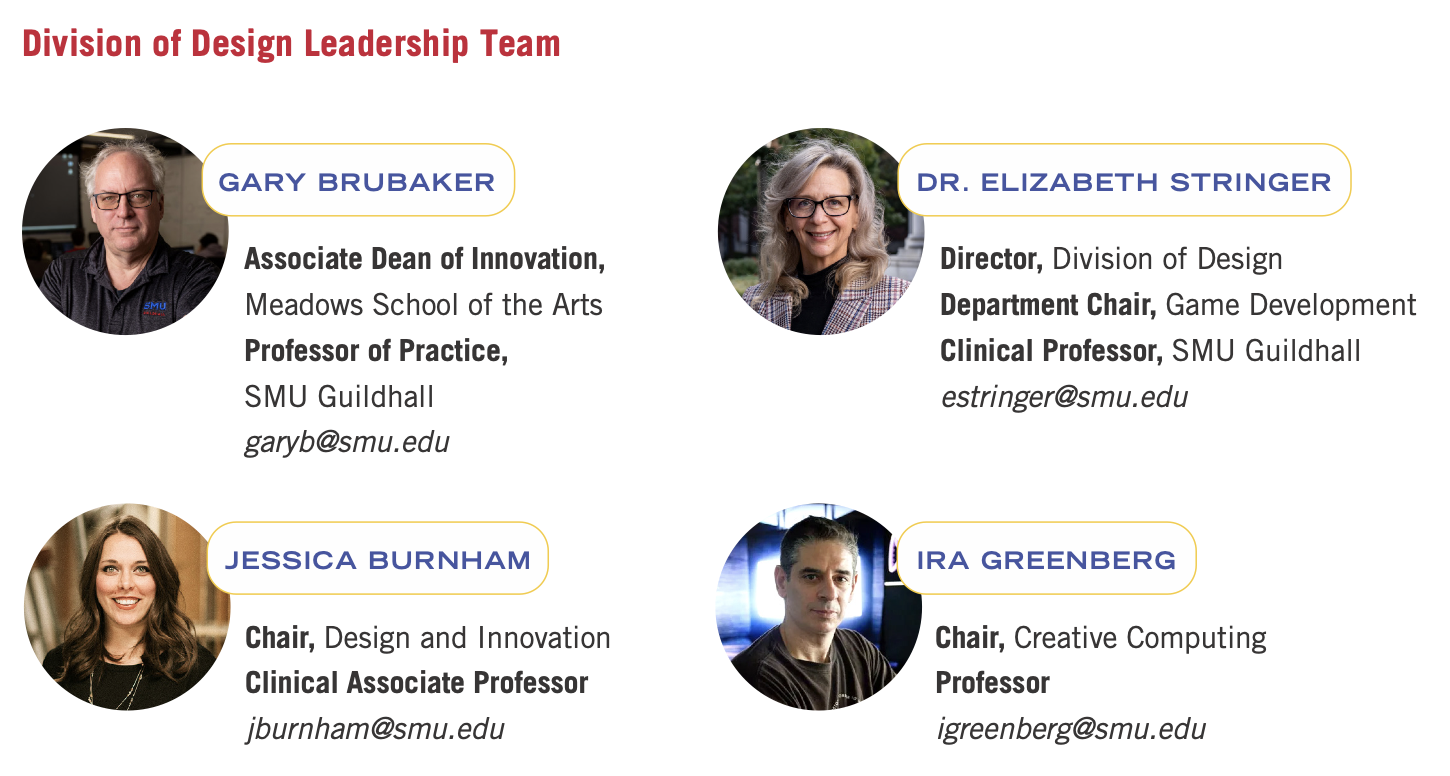
“For SMU to take such a strong and intentional step to further the multidisciplinary fields of Design is not only transformational for the university, but for the city and region at large,” said Jessica Burnham, Chair of Design and Innovation. “Industry leaders from across the region are asking for employers to be more curious, less risk-adverse, able to navigate ambiguity, and know how to make sense of complex systems — all core tenants of what we teach. We’re at the cutting edge of integrating technology, curiosity, artistic craft, and research in to applied projects that directly impact our students and our city. No other program is built out of these core concepts like we have at SMU.”
Innovative New Programs
Ira Greenberg, Chair of Creative Computing, notes that visionary leadership made this union possible at exactly the right time—a forward-thinking endeavor that will launch the pioneering of expanded opportunities for students, faculty, industry partners, and the broader SMU community.
“The new Division of Design creates a powerful and timely configuration. We share a fundamental belief that deepening the connection between the academy and industry is essential to the success of our students, now more than ever,” Greenberg said. “The possibilities created by our combined strengths are truly exciting.”
This begins with the introduction of the newest program at Meadows, the Bachelor of Arts in Game Development, which will admit its first students in Fall 2026.
The B.A. in Game Development undergraduate degree will prepare students to think critically, design creatively, and cross-functionally communicate effectively in the evolving landscape of interactive entertainment, digital mediums, and game development. The following four program learning outcomes represent the skills, knowledge, and dispositions expected of all B.A. program graduates:
- Creative and Technical Game Design Proficiency
- Professional Practice and Presentation Proficiency
- Specialized Portfolio Proficiency
- Innovation, Research, and Continued Learning
Other planned new programs include:
- Development of more classes for undergraduate students focused on Human-Centered Design, Product Design, and Digital Product UX/UI
- New undergraduate courses for game development
- New programs, courses, and training opportunities that will prepare students to lead in an AI-transformed world
“In the age of AI, Human-Centered Design becomes more valuable; the new division will bring together the skills and foresight to research and educate the areas that will shape our lives in the coming decades,” said Associate Dean of Innovation, Gary Brubaker. “It is human creativity which leverages computation that will create the art and products and services that change the world.”