Dance Faculty Present, Teach at International Conference and Festival of Blacks in Dance
Professors Michelle N. Gibson and Alvon Reed shared their artistry and scholarship at the 36th annual event, hosted by the International Association of Blacks in Dance in Atlanta.

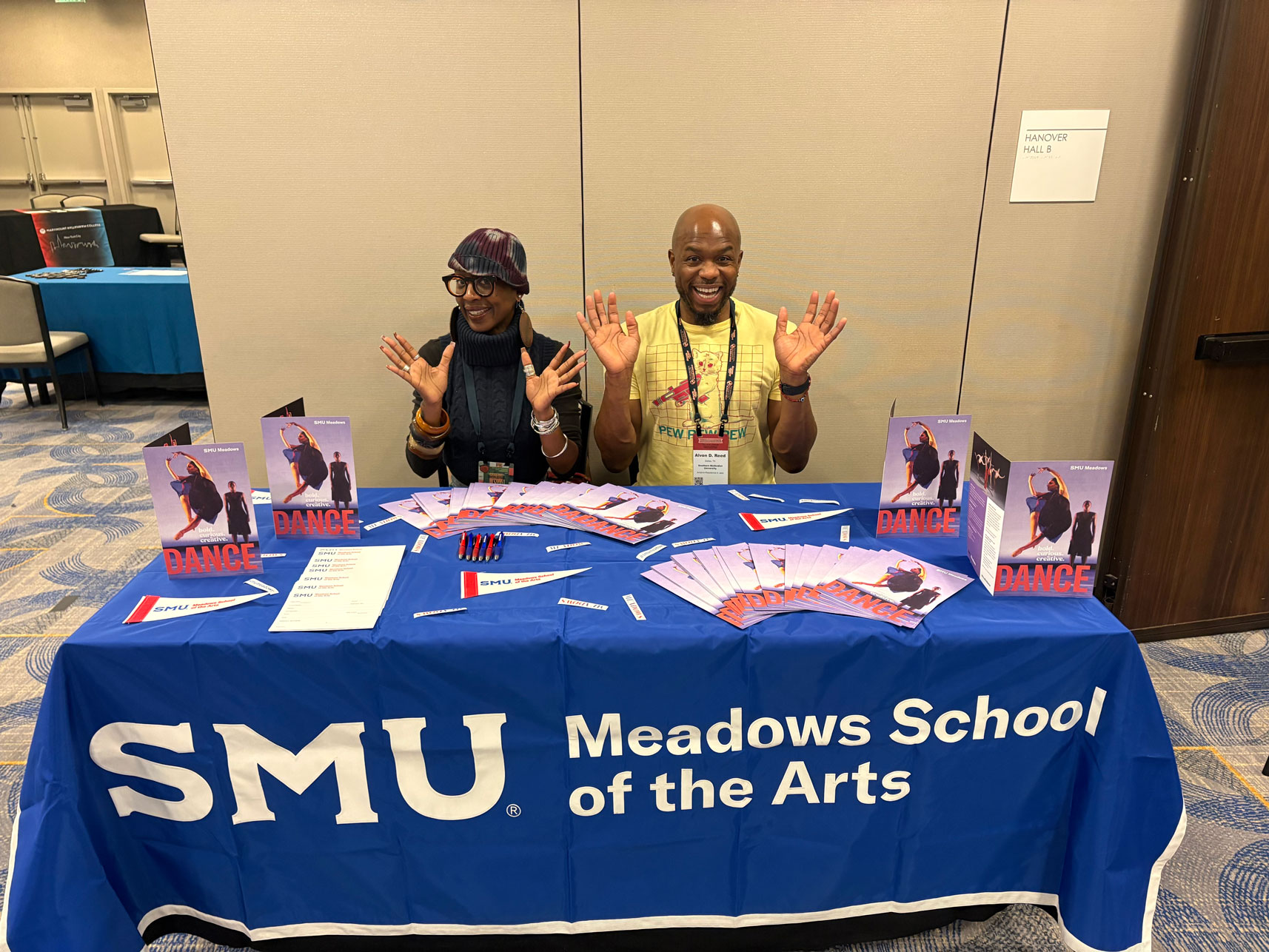
Two faculty members from SMU Meadows’ Division of Dance recently represented the University on an international stage, presenting and teaching at the 36th Annual International Conference and Festival of Blacks in Dance, hosted by the International Association of Blacks in Dance (IABD).
Held earlier this month in Atlanta, GA, the conference brought together companies, educators, administrators, independent artists and community members under the theme, “From Soul to Sole, THE BLACK DANCE FAMILY REUNION.” Rooted in IABD’s vision to ensure that dance by people of African ancestry is revered, respected, and preserved, this year’s convening intentionally returned to the South, drawing from Southern heritage, traditions and ancestral memory.
Professor Michelle N. Gibson and Professor Alvon Reed both contributed to the five-day conference through movement and choreography workshops, panels, and keynote addresses that centered lineage, rhythm, ritual and embodied knowledge.
Gibson facilitated an immersive workshop titled “Michelle N. Gibson’s New Orleans Second Line Aesthetic: Congo Square Underneath Our Feet.” The workshop invited participants into the cultural, spiritual and communal traditions of New Orleans Second Line practice, blending sacred and secular traditions through polyrhythmic movement and curated jazz music. Grounded in her lived experience as both a preacher’s daughter and Grand Marshal of Second Line proceedings, Gibson framed Second Line as both ritual and activism.
“The experience felt less like a traditional conference and more like a homecoming, an intergenerational gathering where past, present, and future coexisted in shared space,” Gibson explained of the powerful reunions among attending artists. “It was, in every sense, a family reunion—one many of us needed.”
In addition to her workshop, Gibson delivered the conference’s morning plenary keynote address, emphasizing the importance of trusting and honoring ancestral work. She called for deep reverence toward the pioneers of Black dance and underscored each generation’s responsibility to carry forward rituals and practices that have sustained Black communities through collective movement.
Professor Alvon Reed contributed through both practice and scholarship. Alongside Pat Taylor, he facilitated “Choreographing Jazz: A Rhythm-Driven Methodology,” a workshop that explored groove, pulse, swing, syncopation and dynamic texture as primary sources of choreographic inspiration. Through structured improvisation and compositional exploration, participants generated original material rooted in musicality, individuality and cultural lineage.
Reed also served as a panelist in the lecture presentation “Rhetoric and Resistance in Dance,” led by Dr. Laura Ann Smyth of Loyola Marymount University. The panel explored how rhetoric is embodied through movement vocabularies emerging from marginalized communities and how jazz-informed dance practices can function as a form of resistance, denouncing hegemonic norms while imagining more liberated futures.
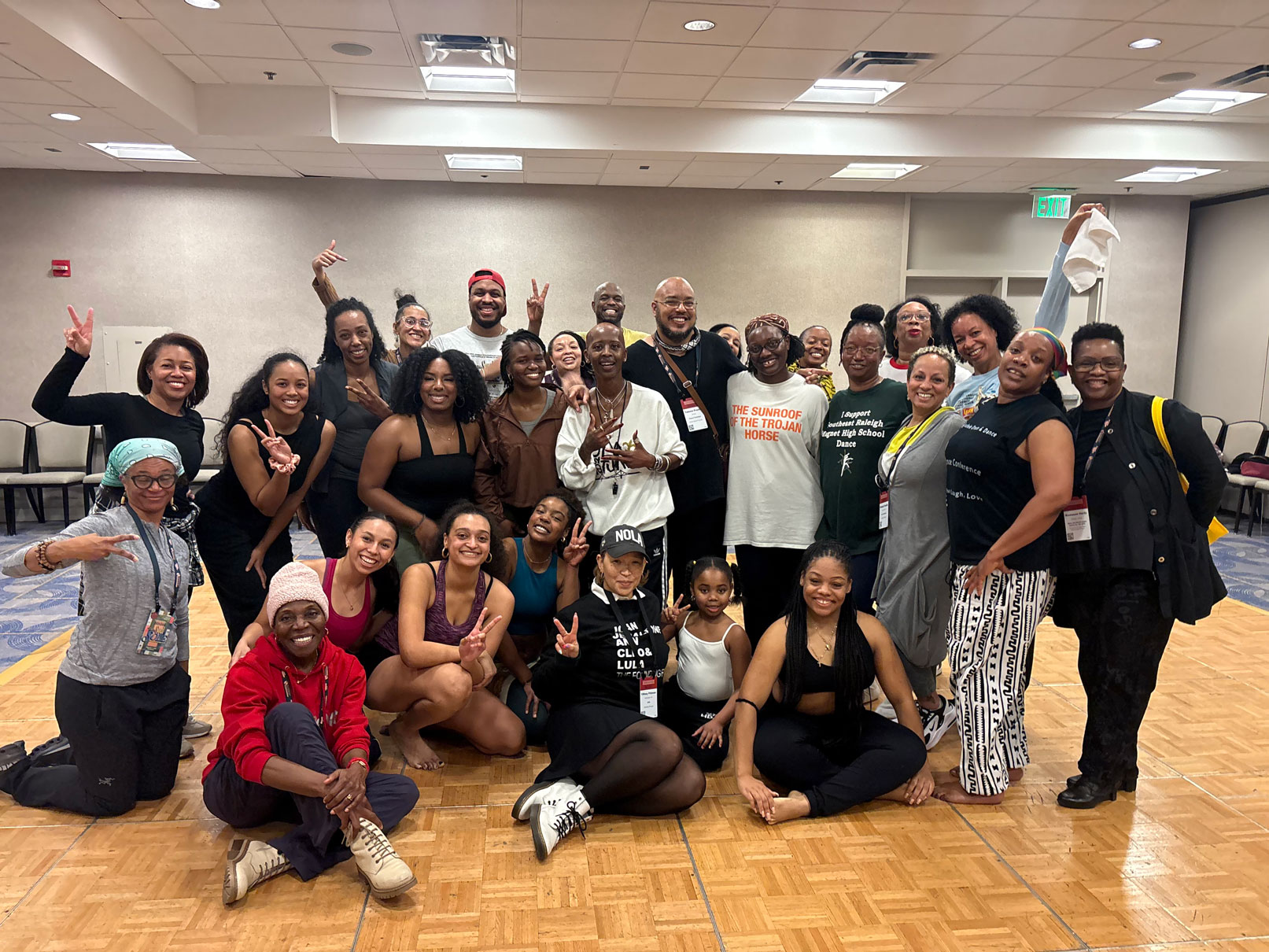
Together, Gibson and Reed’s contributions reflected the conference’s broader call to action: to expand understanding of Black dance legacies, foster meaningful connections across the field and reaffirm collective care and shared purpose.
“I extend my heartfelt thanks to Dr. Maria Dixon Hall and Dean Sam Holland for their continued support and encouragement of the efforts toward the preservation of Black dance culture, education, and history,” says Gibson. “Their leadership and advocacy have been deeply meaningful to this work.”
Through teaching, presenting and engaging in dialogue with artists from across generations, our dance faculty members helped advance conversations about preservation, innovation and the living continuum of Black dance, bringing the spirit of “Soul to Sole” back to campus.