Q&A: Shilo Brooks
President and Chief Executive Officer of the George W. Bush Presidential Center Shilo Brooks joined the center in September 2025. At SMU, he serves as professor of practice in the Political Science Department, senior fellow at the Center for Presidential History, and senior fellow at the Tower Center for Public Policy and International Affairs. Brooks writes and lectures widely on topics in political theory, leadership and the humanities, and is host of the Old School podcast on The Free Press.
What have you taken away from your first several months at the George W. Bush Presidential Center – and at SMU?
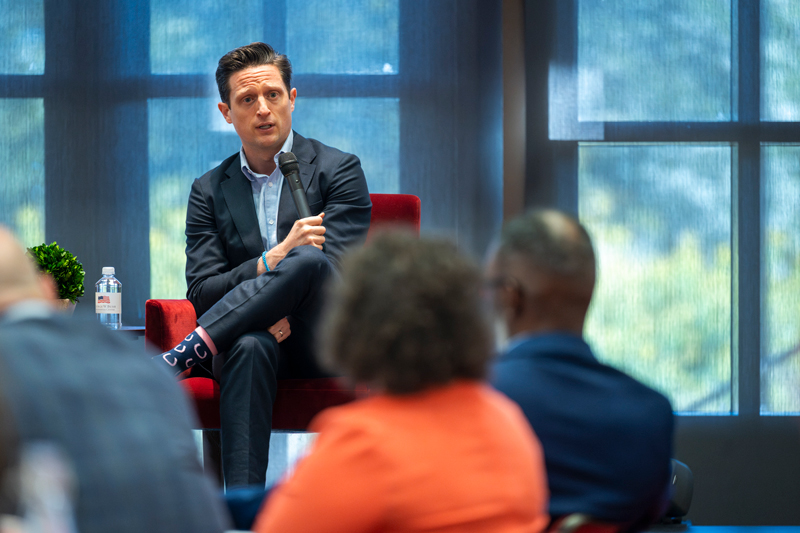
The Bush Center is an extraordinary institution filled with people who truly care about their work. President and Mrs. Bush are, to me, quintessential Americans and extraordinary public servants. They’re examples for all of us.
SMU has been incredibly welcoming and invigorating. Faculty from all over the University have come by just to introduce themselves, to say how excited they are to have a fellow faculty member at the Bush Center. And the energy of SMU students has been palpable. They’ve offered thoughtful suggestions about partnerships between the Bush Center and SMU. They strike me as ambitious and hungry to learn, which signals to me that this is a place committed to serious education and real intellectual inquiry.
You previously worked at Princeton University, the University of Colorado, Bowdoin College and the University of Virginia, among others. How have those experiences shaped your approach to your current roles?
At those institutions, I developed a reputation as a builder of programs and institutes. The programs I created were meant to shape the soul of students, to form character, and to engage aspects of human life that can’t be quantified or reduced to data sets – aspects of the human spirit.
A big part of that work was making students excited to learn – getting them interested in books, ideas and moments in history they might not otherwise have encountered. I tried to show them the richness of the past: that you can encounter ideas in books that can change your life because you couldn’t have had those ideas on your own.
Doing that has helped me see why the history of statesmanship, leadership and the presidency really matters – and why those legacies deserve serious study.
The Bush Center has a focus on compassionate leadership, and you are contributing to the SMU strategic plan’s imperative about principled leadership. What qualities do you think are critical for great leaders – and why are they so important to develop at this moment in American history?
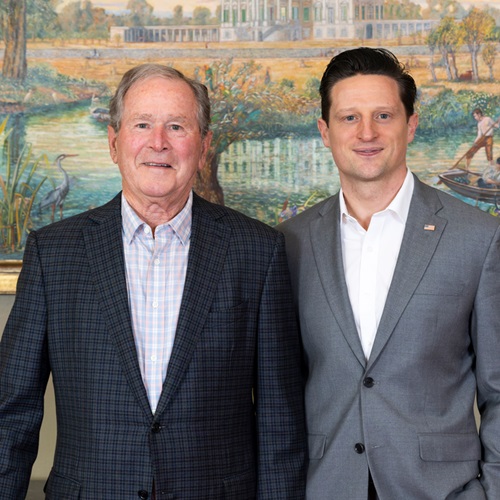 Leaders need a set of principles that guide decision-making. That’s central to President Bush’s legacy and one of the reasons I’m so proud to work here.
As an educator, it’s not my job to tell students what their principles should be. They need to think for themselves and determine their own principles. But they do need to arrive at conclusions. Leadership requires a compass, because you can’t predict what challenges will land on your desk. And when they do, you need a consistent, meaningful and moral way to navigate them.
Without principles, leadership becomes very difficult. Leaders have to develop hearts of strength and courage; SMU and the Bush Center are uniquely positioned to help students begin that process: discovering their principles and learning how to live by them.
Could you talk about the relationship between the Bush Center and SMU as a part of the broader Dallas community?
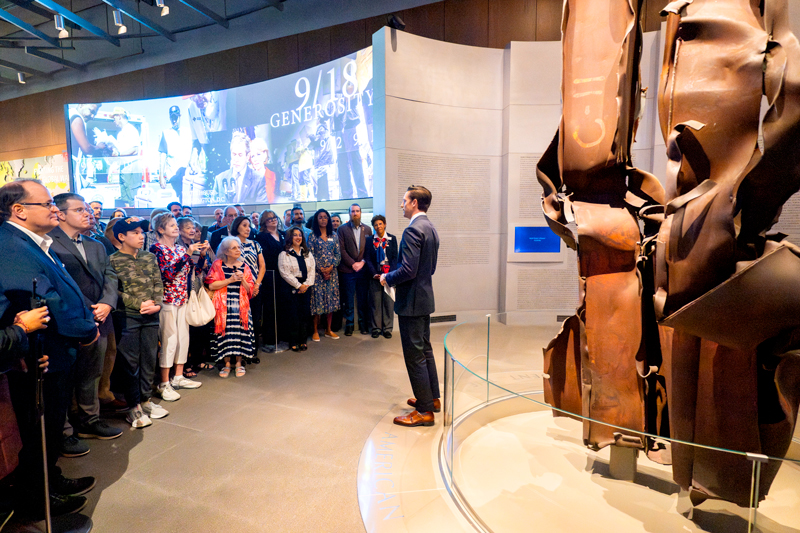
At the Bush Center, we bring programming and conversations to Dallas that might not otherwise happen here. Our doors are open to everyone, and we can convene people and perspectives in a distinctive way. When you can bring global figures here – sometimes specifically because of President Bush – that elevates Dallas as a gathering place for serious thought and dialogue.
Dallas already has a strong entrepreneurial spirit and a vibrant civic culture nourished by an institution like SMU. And the Bush Center can serve as a beacon for people who want to learn, engage with a variety of viewpoints, and think deeply about leadership, policy and principles.
During the last few years, SMU has experienced a great deal of growth and momentum. What most excites you about the future of the University?
The convergence of new leadership, rising student quality and a rapidly growing city are a unique blend that brings limitless possibilities. As I said before – I’m a builder, and this a perfect scenario for a builder.
This is the first university I’ve worked at where I genuinely believe that 30 years from now, it will look meaningfully different – and significantly stronger – than it does today. There’s an energy here, a sense of possibility, and a shared excitement among students, faculty, alumni and board members that I haven’t encountered elsewhere.