Screen time shapes not just how many words toddlers learn, but which ones
SMU research finds parent personality and child temperament also influence digital media's effects on language development.

The videos toddlers watch may be reshaping their vocabularies in unexpected ways, according to new research from SMU.
Two related studies led by SMU psychologist Sarah Kucker found that children who spend more time watching videos and TV learn different types of words than their peers, and that a child's temperament and their parents' personality traits help explain why some families use more digital media in the first place.
"We know media is not just good or bad, it's much more nuanced," Kucker said.
How Screen Time Changes Which Words Toddlers Learn
In a study of 388 caregivers published in Developmental Science, Kucker and colleagues found that toddlers with higher video exposure learned proportionally fewer words for body parts like "arm," "nose" and "ear," but more words for people and furniture. The researchers controlled for children's age, caregiver income and overall vocabulary size.
The body parts finding aligned with the researchers' expectations. Learning those words typically requires physical interaction, the kind screens cannot provide.
"Touching your leg when you say the word leg is helpful for kids learning the word leg, or you think about parents always saying things like, 'That's your nose,' and they touched your nose," Kucker said. "You don't get that through video."
But the increase in people words surprised the research team. They suspect the content of children's programming may explain this finding. When they analyzed summaries of the videos parents reported their children watching most, about 65% referenced people words, including characters, family members or occupations like police officer or firefighter.
The findings matter because early vocabulary composition can predict later language development. Children who know clusters of related words, including body parts, tend to have stronger word-learning abilities and faster vocabulary growth.
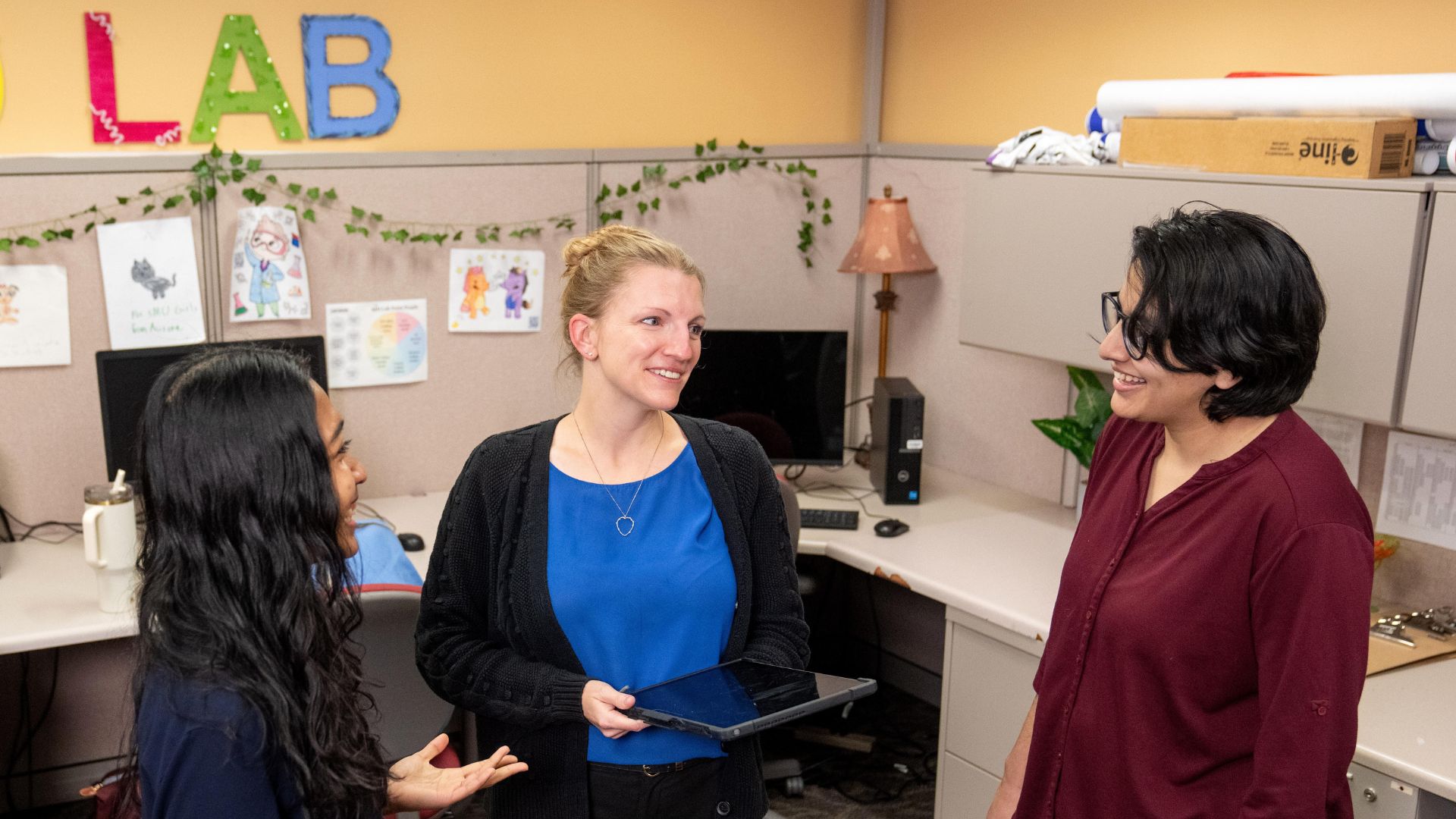
New SMU research points to the need for more personalized guidance around children's media use rather than one-size-fits-all recommendations.
Parent Personality and Child Temperament Shape Family Media Habits
A second study, published in Developmental Psychology, examined why some families use more digital media than others. Kucker and SMU graduate students Syakira Wijaya and Sneh Jhaveri, along with collaborators at Georgetown University and the University of Miami, surveyed 464 caregivers and followed up with 90 families one year later.
Wijaya, now a first-year doctoral student, led the study's conceptualization and writing. She began contributing to the research as an undergraduate and secured a Psi Chi summer research grant to expand the study's sample size. Jhaveri played an equal role in conceptualization, investigation and methodology.
The researchers found that parent personality matters. Parents who scored higher in conscientiousness, a trait associated with organization and self-discipline, tended to have children who spent less time with digital media.
Children's own temperament also mattered. Toddlers with higher "negative affect," a temperament trait characterized by fussiness and difficulty self-soothing, watched more videos, which in turn was linked to smaller vocabularies. The finding suggests some parents may turn to screens to calm difficult-to-soothe children, inadvertently creating a cycle that affects language development.
"There's more to the story than just allowing or not allowing the use of digital media," said Wijaya. "Both parent personality and child temperament influence how much digital media children use in a family."
Early Media Use Predicts Vocabulary Size One Year Later
However, when the researchers followed up one year later, they found that the link between early media use and vocabulary held true across the board: children who used more digital media at age 2 had smaller vocabularies at age 3, regardless of their temperament or their parents' personality traits.
Contrary to what the researchers expected, using videos for educational purposes or watching alongside children did not offset the negative relationship between screen time and vocabulary in this study.
The findings point to the need for more personalized guidance around children's media use rather than one-size-fits-all recommendations, Kucker said.
While this study did not find that co-viewing offset the effects, prior research has supported that approach, and Jhaveri puts this into practice with her own child. When showing her daughter an educational video about visiting the doctor, she placed a toy doctor kit nearby. Her daughter began connecting what she saw on screen with the tools in her hands, using the stethoscope on her doll just as she watched it being used on TV.
"Parents can pause a video and ask questions about what’s being said and shown,” she said. “I see digital media as a tool to teach my daughter and also to motivate her to remember and learn language. It's about parent involvement versus just leaving a child alone with a device."
Research reported in this press release was supported by the Eunice Kennedy Shriver National Institute Of Child Health & Human Development of the National Institutes of Health under Award Number R15HD101841. The content is solely the responsibility of the authors and does not necessarily represent the official views of the National Institutes of Health.