SMU DataArts helps arts leaders navigate a changing landscape
Research center has become a leading national source of data on the health of the arts.

In brief:
- As arts funding becomes less predictable, SMU DataArts helps leaders see whether their challenges reflect national trends or local conditions.
- SMU DataArts maintains the Cultural Data Profile, the largest database of nonprofit arts information ever assembled.
- The SMU DataArts Arts Vibrancy Index measures arts activity in more than 900 communities, helping leaders make the case for cultural investment.
Nonprofit arts organizations across the country are navigating a challenging landscape, as audiences continue to shift and organizations face changes in funding. To understand what those trends mean for their own communities, many arts leaders turn to SMU DataArts, which has spent more than a decade assembling the numbers behind that picture.
"At a time when many arts organizations are facing significant uncertainty, access to credible data and objective analysis is more important than ever,” says Jennifer Benoit-Bryan, SMU DataArts’ Executive Director. “It is incredibly rewarding to see our research helping leaders make informed decisions, advocate for their communities, and build stronger organizations. That's how research creates lasting value, not just for our clients and partners, but for the arts sector as a whole."
SMU DataArts, a national arts research center
The research center maintains the Cultural Data Profile, the largest database of arts information ever assembled. Thousands of nonprofit arts and cultural organizations complete surveys each year that provide researchers and arts leaders with a detailed picture of the sector. Public and private arts funding and support organizations use the profiles to inform grantmaking, while national and regional funders commission studies drawing on the data collected to guide investments in local arts economies. Through the City Arts Data Exchange, the center also helps local arts agencies align how they collect and share data.
A separate project, the Arts Vibrancy Index, measures arts activity across more than 900 communities and has become a reference point for local leaders seeking to make the case for cultural investment and develop targeted investment strategies based on strengths and gaps within their local arts ecosystems.
SMU DataArts formed in 2018, when the University merged its National Center for Arts Research, established at SMU in 2012, with DataArts, a Philadelphia nonprofit founded in 2004 as a project of the Pew Charitable Trusts that ran the country's most widely used arts data platform. Headquartered within the Meadows School of the Arts, SMU DataArts also draws on research and expertise from the Cox School of Business.
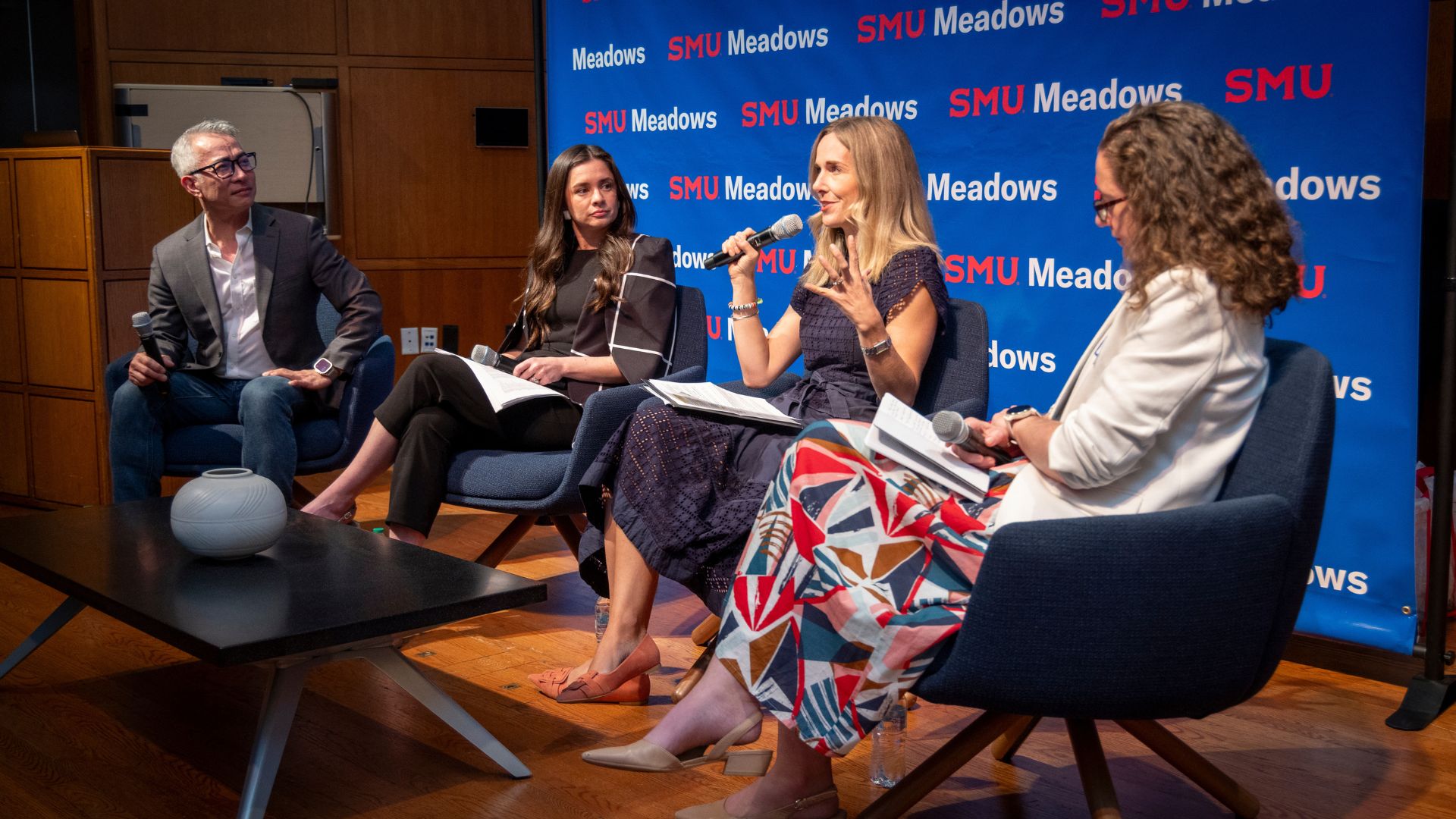
A lecture and panel discussion on Reimaging Arts Philanthropy moderated by SMU DataArt's Director Jen Benoit-Bryan. Photo credit Kim Leeson. Image provided by SMU DataArts.
Why arts funding data matters
The center's work has taken on added weight as arts funding has become less predictable. Federal support, which grew during the pandemic, has shifted in recent years, while many organizations are navigating changes in public and private funding. SMU DataArts provides the broader context arts leaders need to understand whether the pressures they face reflect national and regional trends or conditions specific to their own organizations and communities.
Against this backdrop, SMU DataArts helps leaders see which conditions keep arts organizations stable. Its recent report on 10 U.S. cities, drawing on data from 4,416 nonprofit cultural organizations, found that the revenue gap between the strongest and weakest cities widened 117% from 2019 to 2024. Local government support covered only about 5% of the average organization's expenses in 2024, yet cities with steady or growing public arts funding saw stronger finances and attendance across their sectors.
The arts sector benefits from the same kind of analytical rigor that supports decision-making in other fields,” said Wenhua Di, Research Director at SMU DataArts. "We apply established research methodologies and data analysis to develop reliable findings about organizational performance, funding, audiences, and community impact. The goal is not only to describe what is happening in the sector, but to produce useful insights that help inform strategic decisions and contribute to the field over time."
Turning arts data into insight
The center's mission is to equip the arts and culture ecosystem with data that helps build strong, vibrant and equitable communities. Its work spans sector finances, the creative workforce, grantmaking and questions of access and equity. The center has also explored how emerging artificial intelligence tools can support grantmaking while preserving the essential role of human judgment.
More than a decade after SMU began building its arts research enterprise, SMU DataArts continues to expand the research and data available to arts organizations, funders and community leaders, providing a clearer picture of where the sector stands and helping leaders make more informed decisions about its future.