Global Development Students Recognized for Research
Two SMU students share how the Global Development minor prepared them to partner with communities in Tanzania through interdisciplinary research and humanitarian engineering.

Each year, the Research and Innovation Week Poster Session offers undergraduates the opportunity to showcase their research to professors, judges and community members. At the 2026 competition, held March 26 in the Frances Anne Moody Hall Atrium, 64 high-achieving student researchers and innovators gathered to represent their work.
Standout undergraduates, rising junior Kristian Perez and graduating senior Nomvuyo Makhathini, earned honorable recognition for their research under the mentorship of Dr. Jessie Zarazaga, associate director of the Hunt Institute for Engineering and Humanity and director of the Sustainability and Development master's program. Her one-of-a-kind research hub supports humanitarian student projects, integrating engineering, design and community engagement to build sustainable, community-centered solutions, both locally and globally.
We sat down with these talented students to learn more about their groundbreaking work.
Kristian Perez, "How Can a Raspberry Pi Kickstart the Creation of a Weather Station in Tanzania?"
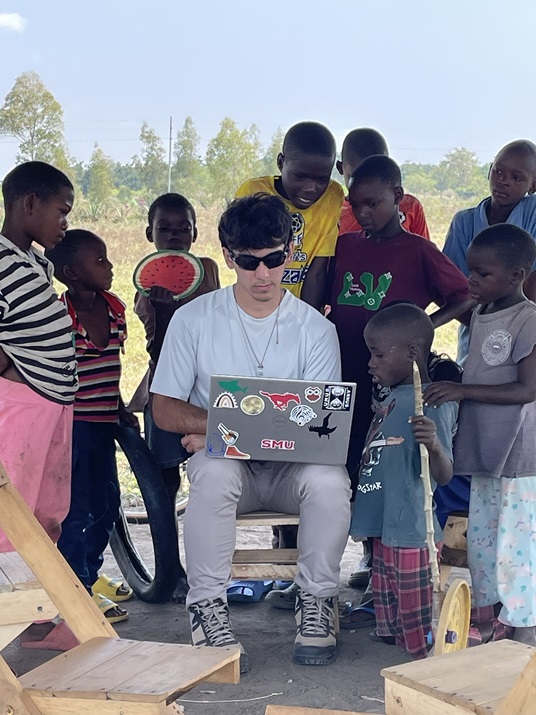
Kristian Perez '28, a student at SMU Lyle studying mechanical engineering with a minor in global development, was drawn to engineering to be a changemaker.
For Perez, Lyle has been a place to fulfill his desire to help others, providing opportunities such as his research assistantship with Dr. Zarazaga and the engineering of a weather-monitoring system to collect climatic data, including rainfall and weather patterns, in the village of Kasisa, Tanzania. His project centers on empowering local residents to predict and prepare for dangerous weather patterns, such as major storms, that affect their agriculture and livelihoods.
“I was inspired to pursue this project for the opportunity to help people in need through the use of technology,” Perez explained. “Not only were we collecting data from Tanzania — we were using the data to help the people there learn weather patterns to better prepare for major storms.”
Centering the project on local needs, the device served as a foundation that has been expanded upon by researchers and villagers. The goal was to create something useful that could persist long after he leaves.
“Creating something that the community was able to make their own was a huge success,” Perez continued.
Perez, whose passion for engineering is inspired by his little sister, says the project meant new skills and perspectives that brought him closer to his "why engineering."
“My little sister has cerebral palsy,” Perez explained. “She allowed me to see how big a need there is for extra support for children with disabilities. I chose to be an engineer dedicated to creating prosthetics.”
“While I was there, I saw individuals with disabilities moving with makeshift crutches. All the goals I came with from America doubled in importance because I saw similar challenges in a new place with new perspectives — reinforcing my goal of helping people with disabilities.”
He is extremely grateful to Dr. Zarazaga for this once-in-a-lifetime opportunity, and to the collaborators and community members who supported him along the way.
“The Tanzania Kasisa project will be a massive foundation for my engineering career for years to come.”
Nomvuyo Makhathini, "From Technology to Health: How Participatory Design Transformed Sanitation Priorities in Kasisa Village, Tanzania"
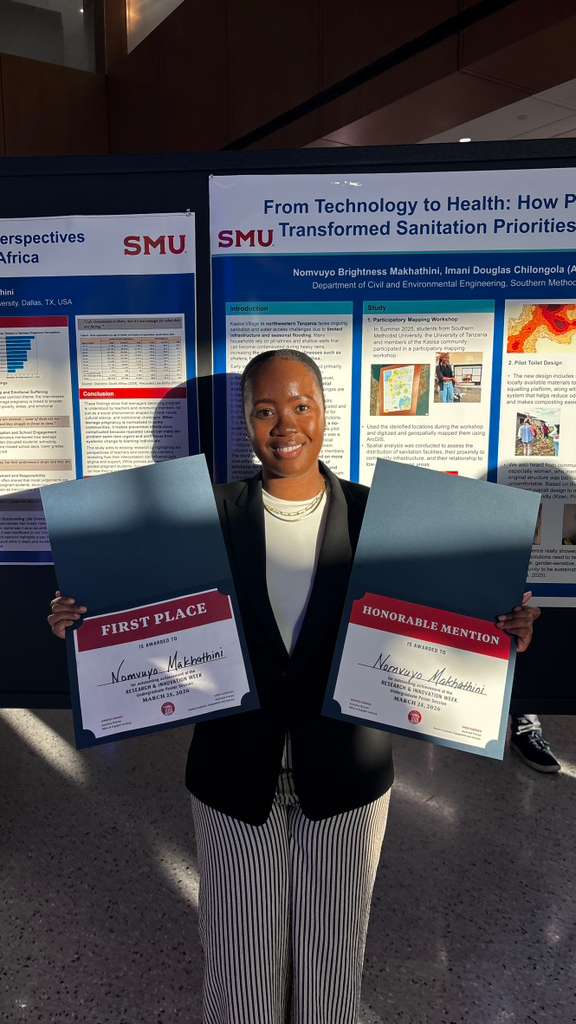
Passionate about global health, Nomvuyo Makhathini '26, a graduating senior studying health and society with a minor in global development, turned to Lyle and to Dr. Zarazaga to learn how her insights in medical anthropology could make a difference for girls and women across the world.
Her project, centered in Kasisa Village, Tanzania, examines how access to sanitation, environmental factors and the placement of infrastructure impact health and safety. For women and young girls, the placement of sanitation facilities in flood-prone areas can increase health risk and limit access to personal care.
“As a Health and Society Major, my focus is community-based knowledge and health-related disparities,” Makhathini explained. “This project was an opportunity to turn my curiosity about analysis into real community impact.”
“With GIS and participatory mapping, instead of just asking questions, I could visualize the actual challenges this community faces,” Makhathini continued. “I was able to map out where sanitation facilities are, see which ones are in flood-prone areas, and spot gaps in access, especially for vulnerable groups like young girls.”
Pursuing a research project that not only garnered university recognition but also made a real difference in the lives of girls across the world was, for her, an incredible accomplishment. As an incoming SMU doctoral student in medical anthropology, the insights and experience she gained through this project will sustain her as she carries her desire to help others to new heights.
“This opportunity and recognition truly mean a lot to me,” Makhathini expressed. “Not just the hard work I’ve put in, but also the relationships and experiences that have shaped this project. It’s really special to be a part of something with real-world impact, even from afar.”
For students who might be interested in pursuing a high-impact research project of their own, Makhathini offers this advice: “Don’t be afraid to try something new. Seek out mentors, like Dr. Zarazaga, who believe in you and push you to grow, and remember that community engagement is incredibly valuable.”
Interested in making a global impact? Lyle's Global Development minor is an interdisciplinary program open to students from all academic backgrounds. Learn more about the Global Development minor.
About the Bobby B. Lyle School of Engineering
SMU’s Lyle School of Engineering thrives on innovation that transcends traditional boundaries. We strongly believe in the power of externally funded, industry-supported research to drive progress and provide exceptional students with valuable industry insights. Our mission is to lead the way in digital transformation within engineering education, all while ensuring that every student graduates as a confident leader. Founded in 1925, SMU Lyle is one of the oldest engineering schools in the Southwest, offering undergraduate and graduate programs, including master’s and doctoral degrees.
About SMU
SMU is the nationally ranked teaching and research university in the dynamic city of Dallas, and a member of the prestigious Atlantic Coast Conference. SMU’s alumni, faculty and more than 12,000 students in eight degree-granting schools demonstrate an entrepreneurial spirit as they lead change in their professions, communities and the world.