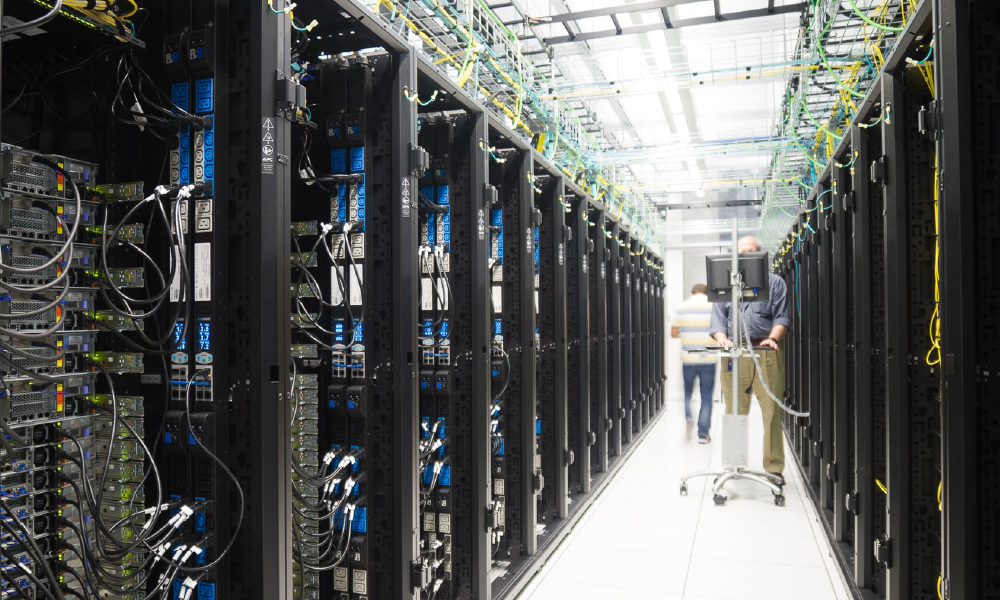
SMU’s high-performance computing cluster is an asset to students in the M.S. in cybersecurity program.

Graduate programs

Master of Science in cyber security

Design and develop secure computer systems

Program format

In-person and online

Commitment

Full time or part time

Duration

Two years (full time);
Three years (part time)

Overview

Learn to design and develop computer systems that are inherently secure, to protect crucial infrastructures, and to identify suspicious cyber behavior using data mining and anomaly detection with an M.S. in cyber security.

In addition to the technical aspects such as cryptography, protocols and access control, the curriculum concentrates on policy and management issues, integration and logistics, and budgeting.

Thinking Grad School? Think SMU.

Envisioning a brighter future? Think grad school at SMU, where you join a lifelong family network and see immediate returns on your educational investment. Take your new big step at SMU.

Student success

Our graduates consistently secure critical niche roles at leading companies and organizations in private and public sectors thanks to real-world research experience at the Deason Institute for Cyber Security, as well as engineering leadership certification and soft skills training.

This program prepares you to excel in the following areas and professions:

  • Information technology and software development
  • Autonomous vehicles and transportation
  • Defense and aerospace
  • Healthcare technology
  • Cloud computing and data management
  • Quantum cryptography
  • Blockchain and decentralized finance
  • Artificial intelligence and machine learning

Top 20%

Best National Universities

U.S. News & World Report (2026)

100%

of M.S. cyber security graduates were employed within six months of graduation (2024)

Career Outcomes Dashboard

9:1

Graduate student-to-faculty ratio

Student stories

John Reynolds

John Reynolds ’23

This U.S. Air Force veteran transitioned his ​​security expertise to the private sector while earning an M.S. in cybersecurity from SMU Lyle.

Angel Cuenca

Angel Cuenca ’22

He developed a quantum-powered platform for securing AI models against cyberattacks.

Requirements

  1. Application
  2. Application fee
  3. Official transcripts
  4. English language proficiency documentation (if applicable)
  5. A bachelor’s degree in one of the quantitative sciences, mathematics or computer science, or in one of the engineering disciplines.

All applications are holistically reviewed.

View all requirements

Ready to apply?

Get started here.

Tuition and financial aid

Tuition and costs

Explore the cost breakdown of tuition for graduate programs.

Financial aid

Find information on scholarships and financial support available at SMU.

Curriculum and learning

Featured courses

CS 7349

Data and Network Security

Students will investigate a comprehensive set of contemporary issues in computer security, including state-of-the-art technology used to address security problems.

CS 7331

Data Mining

Students are introduced to classification, association analysis and cluster analysis through hands-on experience using state-of-the-art tools to design and execute data mining processes.

CS 8349

Advanced Network and System Security

Students will analyze secure networks and systems, security audits, intrusion detection and prevention, storage security, firewall configurations and much more.

Outside the classroom

  • Centers and institutes

    Grow as an engineer with collectives that promote leadership, innovation and entrepreneurship.

  • Maria Murad with friends in Jordan

    Internships

    Get practical experience to develop industry skills, build a professional network and gain valuable insights. Internships can open doors to future opportunities and contribute to long-term career success.

  • Clubs and organizations

    Explore interests, develop leadership skills and connect with like-minded peers.

  • SMU students working with plants at Bontham Family Farms

    Community engagement

    Apply your classroom knowledge to real-world issues while making a positive impact.

Faculty

Our distinguished faculty are industry leaders and subject matter experts, bringing real-world experience and industry insights to the classroom. SMU Lyle maintains small class sizes, allowing students to develop meaningful mentorships with their professors.

Facilities

SMU Lyle students have access to state-of-the-art facilities where they can conduct research, meet with industry leaders, and gain skills on new and established technologies.

Faculty experts in cybersecurity lead the Darwin Deason Institute.

Darwin Deason Institute for Cyber Security

Advancing the science, policy, application and education of cyber security through basic and problem-driven interdisciplinary research.

SMU engineering students use state-of-the-art technology in the Center for Digital and Human-Augmented Manufacturing

Center for Digital and Human-Augmented Manufacturing

Combines research innovation and industry partnerships to explore how digital twins, AI, virtual reality and more will shape the future of manufacturing.

Request more info about this program

Request more info about the M.S. in cyber security

Loading...

Frequently asked questions

Cybersecurity professionals remain in high demand across many industries, with jobs projected to grow 33% over the next decade. Students with a master’s in cyber security typically earn higher salaries due to specialized technical skills.

Many graduates with a M.S. in cyber security work in specialized fields such as cloud computing, become network security engineers or security architects over an entire company, or even become chief information security officers or chief technology officers at the international level.

The SMU cyber security program requires students to satisfy the following:

  1. A bachelor’s degree in one of the quantitative sciences, mathematics or computer science, or in one of the engineering disciplines.
  2. A minimum of one year of college-level calculus.
  3. A minimum of two years of industry experience or submission of official GRE general graduate school admission test scores. 

The online Master of Science in cyber security program, Lyle Anywhere®, is often obtained by working professionals, which allows them to choose synchronous online or recorded classes.

The Career Development Center at Lyle provides multiple opportunities for employers to meet and work with our students, including a career fair just for engineering students twice a year. Additionally, the center holds resume and cover letter writing workshops students can attend.

Yes, the M.S. in Cybersecurity has advanced elective courses, including software testing, data mining, cryptography, data security and much more.

The program is 30 credit hours, which typically takes full-time students two years to complete and part-time students three years to complete.