Carbon Monoxide Mapping Array Project
Many of the deepest mysteries in modern astrophysics revolve around galaxies. The complex interplay of stars, gas, dust, and supermassive black holes makes galaxies the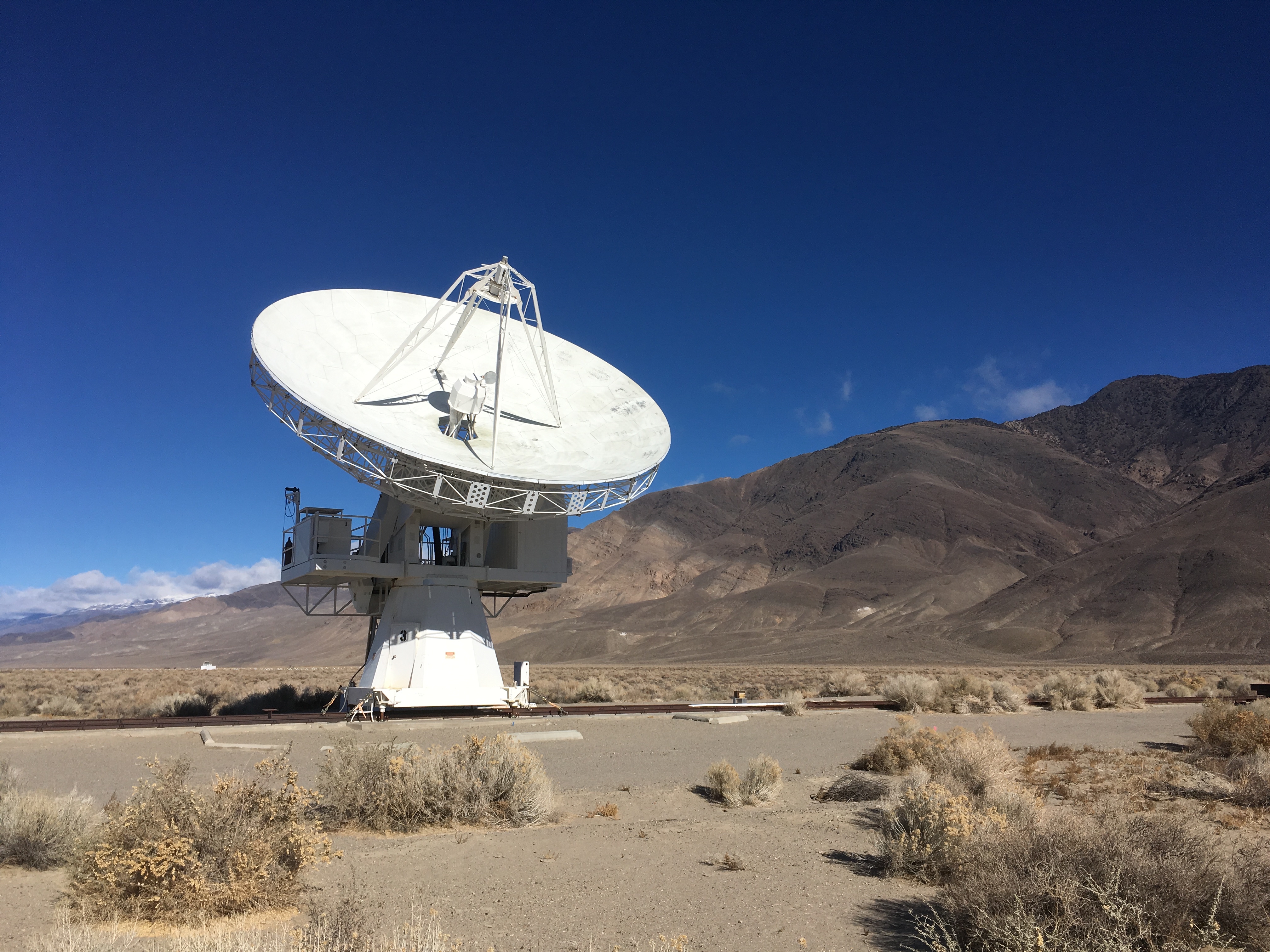 mselves dynamic, evolving ecosystems whose life cycles remain poorly understood. On larger scales, galaxies are the key laboratories which we use to study fundamental questions of dark matter, dark energy, and the fate of the Universe. The Carbon Monoxide Mapping Array Project is pioneering a new technique for observing galaxies in the distant Universe called line intensity mapping. Where traditional observations spend time and expense imaging large numbers of individual galaxies, COMAP and other intensity mapping experiments instead map large volumes of space with intentionally low resolution, allowing them to capture the aggregate light from every galaxy in a target volume. In doing so, they offer aunique window into the faint but numerous galaxies which are invisible to traditional surveys, and the potential for a more efficient probe of large-scale structure at high redshift. COMAP targets two emission lines from carbon monoxide molecules, one emitted from redshift z~3 near the peak of cosmic star formation, the other from z~7 during the Epoch of Reionization. Because CO molecules appear in the dense molecular clouds which provide the fuel for star formation, COMAP can make uniquely holistic studies of how many stars are born in the Universe at any one time. The SMU group led by Breysse plays a leading role in COMAP and the nascent field of intensity mapping, with ongoing work in data analysis, theoretical modeling, and the design of future observatories.
mselves dynamic, evolving ecosystems whose life cycles remain poorly understood. On larger scales, galaxies are the key laboratories which we use to study fundamental questions of dark matter, dark energy, and the fate of the Universe. The Carbon Monoxide Mapping Array Project is pioneering a new technique for observing galaxies in the distant Universe called line intensity mapping. Where traditional observations spend time and expense imaging large numbers of individual galaxies, COMAP and other intensity mapping experiments instead map large volumes of space with intentionally low resolution, allowing them to capture the aggregate light from every galaxy in a target volume. In doing so, they offer aunique window into the faint but numerous galaxies which are invisible to traditional surveys, and the potential for a more efficient probe of large-scale structure at high redshift. COMAP targets two emission lines from carbon monoxide molecules, one emitted from redshift z~3 near the peak of cosmic star formation, the other from z~7 during the Epoch of Reionization. Because CO molecules appear in the dense molecular clouds which provide the fuel for star formation, COMAP can make uniquely holistic studies of how many stars are born in the Universe at any one time. The SMU group led by Breysse plays a leading role in COMAP and the nascent field of intensity mapping, with ongoing work in data analysis, theoretical modeling, and the design of future observatories.