Professor Recommendations
Brief Bio:
Frederick Grinnell (born 1945 in Philadelphia, Pennsylvania) is an American cell biologist, also known for his work in bioethics. Currently, he is professor of cell biology at UT Southwestern Medical Center in Dallas, Texas. He took his undergraduate degree in chemistry at Clark University (1966) and Ph.D. in biochemistry at Tufts University (1970). He joined the faculty at UT Southwestern in 1972 and founded the Ethics in Science and Medicine Program and Ethics Grand Rounds in 1998.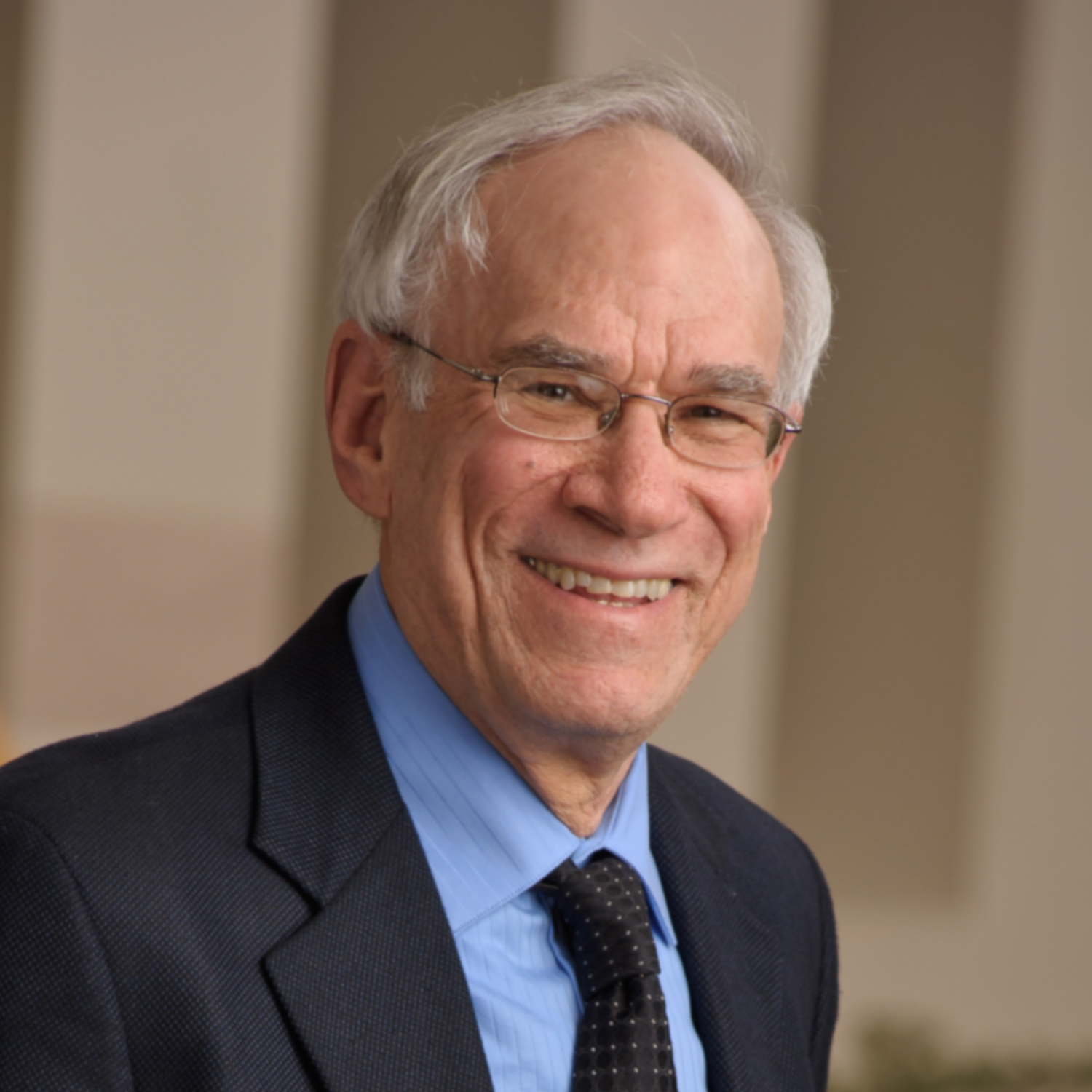
Grinnell's early scientific work contributed to the discovery of the biological adhesion protein fibronectin and helped to establish the importance of fibronectin in biomedical engineering and wound repair. Subsequently, his laboratory helped popularize the use of fluid (exudate) from open wounds to analyze the human wound environment and made the discovery that chronic wounds contain degraded fibronectin and high levels of proteolytic enzymes. In recent years, his research has focused on the use of three dimensional collagen matrices containing fibroblasts to learn about the mechanics of fibrous connective tissue.
In bioethics, Grinnell engages in cross-disciplinary work at the boundary between science and philosophy. His goal is to inform public policy and to advance science education and public understanding of science. Grinnell's work in bioethics is centered in the sociology of knowledge, an approach developed through his studies with the phenomenologists Richard Zaner and Maurice Natanson. He has published two books: The Scientific Attitude, now is in its second edition; and Everyday Practice of Science: Where Intuition and Passion Meet Objectivity and Logic, which was a finalist in the 2010 Royal Society Book Prize competition
Department:
Cell Biology
Cources:
Biomedical Engineering, Integrative Biology
Philosophy of Bioethics:
My research program consists of cross-disciplinary studies at the boundary between science and philosophy, attempting to articulate what doing science entails with the goal of informing science policy decisions and advancing science education and public understanding of science. The philosophical approach that I use involves exploring the assumptions and challenges implicit in practice.
Oxford University Press recently (2009) published my new book Everyday Practice of Science: Where Intuition and Passion meet Objectivity and Logic. Everyday Practice begins with the premise that although scientific facts can be so complicated that only specialists in a field will fully appreciate the details, the nature of everyday practice that gives rise to these facts should be understandable by everyone interested in science. My book describes how scientists bring their own interests and passions to their work, illustrates the dynamics between researchers and the research community, and emphasizes a contextual understanding of science in place of the linear model found in textbooks with its singular focus on "scientific method." Everyday Practice of Science also introduces readers to issues about science and society. Practice requires value judgments: What should be done? Who should do it? Who should pay for it? How much? Balancing scientific opportunities with societal needs depends on appreciating both the promises and the ambiguities of science. Understanding practice informs discussions about how to manage research integrity, conflict of interest, and the challenge of modern genetics to human research ethics. Society cannot have the benefits of research without the risks. Finally, the last chapter contrasts the practices of science and religion as reflective of two different types of faith and describes a holistic framework within which they dynamically interact.
Frederic Grinnell's Books:
1992:The Scientific Attitude, 2nd Edition, Guilford Press, New York, NY.
2009: Everyday Practice of Science: Where Intuition and Passion meet Objectivity and Logic, Oxford University Press, New York, NY.
Frederic Grinnell's Publications:
1994: Radical intersubjectivity: Why naturalism is an assumption necessary for doing science. In Darwinism: Science or Philosophy? ed. J. Buelland V. Hearn, Foundation for Thought and Ethics, Richardson, pp 99-106
2000: The Practice of Science at the Edge of Knowledge. Chronicle of Higher Education. 46(29):B11-12
2003: Defining Embryo Death Would Permit Important Research. The Chronicle of Higher Education. 49(36):B13
2004: Subject Vulnerability: The Precautionary Principle Of Human Research. American Journal of Bioethics. 4:72-74.
2004: Human Embryo Research: From Moral Uncertainty to Death. American Journal of Bioethics. 4:12-3.
2005: Misconduct: Acceptable Practices Differ by Field. Nature. 436: 776.
2006: Intelligent Design: Fallacy Recapitulates Ontogeny. FASEB J. 20: 410-1.25.
2009: Intelligible Design or Intelligent Design? It’s a Matter of Faith. Chronicle of Higher Education. 55(18): B5
2009: Discovery in the Lab: Plato’s paradox and Max Delbrück’s Principle of Limited Sloppiness. FASEB J. 20: 410-1.
2012: Research Integrity and Everyday Practice of Science. Science and Engineering Ethics. In Press