Families in the Carceral State: Race, Law, and Inequality Symposium
For legal professionals, students, and community members affected by state or federal systems that surveil, remove, imprison, or punish the family.
This symposium will feature authors of the book “Families in the Carceral State,” which brings together varied perspectives on the role of the carceral state in regulating and punishing families.
Event Details
Families in the Carceral State: Race, Law and Inequality Overview:
Most family law courses and books, and even much scholarship, treat discussions of systemic inequality within the family particularly along race and class lines—as beyond the script. Family law ignores the differences between marital families, which tend to be more affluent, and other forms of family, including kinship networks, unmarried couples, and polyamorous groups. Indeed, the law’s reification of marriage and focus on the white, middle-class, heteronormative, and gendered nuclear family as the norm results in an obscuration of other important relationships, such as unmarried partners, grandparents, siblings, other relatives, and friends. The family law canon ignores the history and structure of most families, as well as the analysis of the impact of how supposedly neutral family rules regarding marriage, divorce, property division and custody exclude most families in America and reinforce existing inequalities. Consequently, most students and practitioners do not learn the carceral state framework governing most families.
Drawing from Michael Foucault’s theory of a “carceral archipelago,” the word carceral extends far beyond physical prisons. The carceral state is a form of government that uses an array of legal practices that operate to police, discipline, and subordinate a given population in the name of safety or protection. The panelists situate families within social and cultural context, using the political economy as key to understanding power relations. Collectively, they demonstrate how areas of the law not considered to be family law define and subordinate many families. This symposium and the forthcoming book excavate and theorize this shadow family law, illustrating how the carceral state has gained ever-increasing control over previously considered private areas of life, including reproduction, parenting, and intimate relationships.
This symposium brings together varied perspectives on the legal treatment of families, particularly as to poor people’s family law and the role of the tentacles of the carceral state through criminal law, family regulation (child welfare) law, immigration, education, etc. The panelists are primarily emerging voices, many of whom engage in interdisciplinary analysis, with fresh and largely unheard perspectives. These new scholars grapple with the intersection of the carceral state with class, race, nationality, disability, and sexual orientation. After considering how the state systematically privileges some family structures and burdens others, chapter authors will center autonomy and justice to envision a community-centered state that offers political power controlled by and for contemporary families.
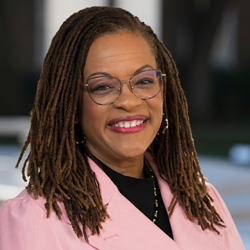 |
Jessica Dixon Weaver “Family Surveillance and Carceral Adoption” |
Professor Jessica Dixon Weaver is the Vinson & Elkins Distinguished Faculty Fellow and Professor of Law at SMU Dedman School of Law. She served as Associate Dean for Research from 2022-2025. She teaches Family Law, Race and the Family, Children and the Law, and Professional Responsibility. Her scholarship focuses on theorizing methods for improving legal systems and policies affecting families and children, including child abuse and neglect, intergenerational caregiving and multigenerational living. She also writes about the intersection of race, gender, and family law, and her current research examines the impact of enslavement laws on marriage, divorce, and inheritance within the American family. Professor Weaver’s scholarship has been published in the Yale Law Forum, University of Virginia Journal of Social Policy and the Law, Fordham Law Review, Tulane Law Review, Seton Hall Law Review, and Washington University Journal of Law and Policy, among other publications. She is the co-author of a leading law school case book, CONTEMPORARY FAMILY LAW, 6th ed., and FAMILY LAW SIMULATIONS: BRIDGE TO PRACTICE (1st and 2nd eds.), both published by WEST ACADEMIC. She has received numerous research and service awards at SMU, including the 2025 Maguire Public Scholar Lecturer, 2019-20 and 2020-21 Robert G. Storey Distinguished Faculty Research Fellowship from SMU Dedman School of Law, the Gerald J. Ford Senior Research Fellowship, and the Thomas W. Tunks Distinguished University Citizen Award. She is the recipient of the 2026 Lutie A. Lytle Outstanding Scholar Award.
Professor Weaver received her B.A. from the University of Pennsylvania and her J.D. from the University of Virginia School of Law, where she served as Notes Editor for the Virginia Law Review. After law school she began her own law practice where she represented children and families in domestic relations and juvenile justice court. She was the inaugural director of the W.W. Caruth Jr. Child Advocacy Clinic at SMU where she taught students how to represent children in child abuse cases for seven years. She is past chair of the AALS Sections on Children and the Law and Family and Juvenile Law and currently serves on the editorial board of the Family Law Quarterly, a scholarly peer-reviewed journal of the American Bar Association. She is a past Board Member of Capita, a non-partisan global think tank seeking to transform public policies impacting family well-being and flourishing, and she currently serves as Co-Chair of the Capita Advisory Council, leading two Idea Labs on Family Policy and the Common Good.
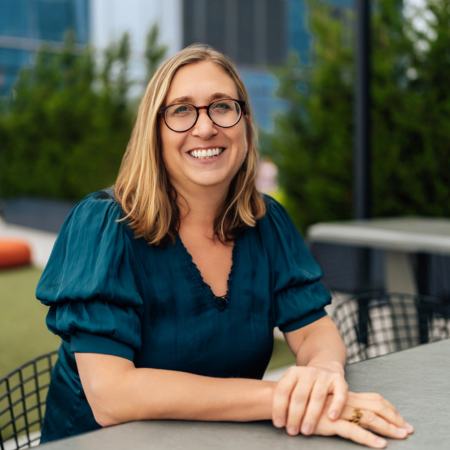 |
Cynthia Godsoe |
Cynthia Godsoe is the Rose L. Hoffer Professor of Law and Associate Dean for Research and Scholarship at Brooklyn Law School. She teaches courses in family law, criminal law, children and the law, legal profession, and sex crimes, and her scholarship centers on how carceral state systems re-entrench class, gender, and racial hierarchies and marginalize communities. Her recent and forthcoming work appears in the Georgetown Law Review, Boston University Law Review, UCLA Law Review, Michigan Law Review, and California Law Review Online, among others.
Professor Godsoe graduated from Harvard College, magna cum laude with distinction, and Harvard Law School, cum laude. Following law school, Professor Godsoe clerked for Judge Edward Korman in the U.S. District Court for the Eastern District of New York and was a Skadden Public Interest Fellow. Before joining the Brooklyn Law School faculty, she represented children and youth in impact litigation and individual cases in juvenile justice, education, and family law matters as an attorney at the Legal Aid Society’s Juvenile Rights Division and at Advocates for Children. She is a Reporter of the ABA Criminal Justice Section Standards on Victims, Member of the American Law Institute (ALI), and past chair of the AALS Sections on Criminal Law and on Family and Juvenile Law, has trained both prosecutors and public defenders on juvenile justice issues, and participates in pro bono work on a variety of family law and criminal law issues.
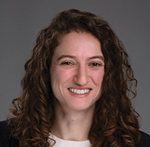 |
Anna Arons is an Associate Professor of Law. She teaches evidence, criminal law, and courses related to family law. Professor Arons writes about the government’s regulation and policing of families and the intersection of family regulation and criminal procedure. Her scholarship appears in publications including the New York University Law Review, Columbia Law Review, University of Pennsylvania Law Review, and Washington University Law Review, and has been cited in publications including MSNBC, the New York Times, Pro Publica, USA Today, and the Washington Post.
Professor Arons joined the St. John’s faculty from N.Y.U. School of Law, where she was an Acting Assistant Professor of Lawyering and the Impact Project Director of N.Y.U.’s Family Defense Clinic. Since coming to St. John’s, she has continued this work with the Family Defense Clinic. Before entering academia, Professor Arons was a public defender in the family defense practice of Neighborhood Defender Service of Harlem, representing parents in cases where the government was attempting to remove their children from their care or otherwise impinge on their rights. She graduated summa cum laude from Barnard College and received her J.D. from Yale Law School. After law school, she clerked for Judge Andrew L. Carter of the Southern District of New York.
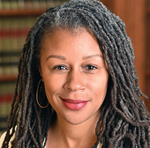 |
LaToya Baldwin Clark “Fraudulent Families” (with Maddie Bello, recent UCLA Law graduate) |
LaToya Baldwin Clark is a Professor of Law at UCLA School of Law. Previously, she was an Earl B. Dickerson Fellow and Lecturer in Law at the University of Chicago Law School. She writes and teaches about education law, family law, property law, race, and discrimination. Baldwin Clark received her B.S. in Economics cum laude from the Wharton School of the University of Pennsylvania, and her M.A. from the University of Pennsylvania in Criminology. She then earned her Ph.D. from Stanford University in Sociology and her J.D. from Stanford Law School.
After law school, Baldwin Clark clerked for the Honorable Claudia Wilken of the Northern District of California and the Honorable Goodwin Liu of the California Supreme Court. Baldwin Clark’s publications have appeared or will appear in the Yale Law Journal, Virginia Law Review, Columbia Law Review, Northwestern Law Review, University of Chicago Law Review, and Harvard Civil Rights-Civil Liberties Law Review, among others.
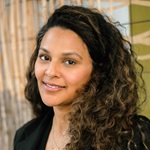 |
Natasha Chokhani “Evidentiary Subordination of Foster Youth” |
Natasha Chokhani is an Assistant Professor of Law at the CUNY School of Law. She is interested in how the family regulation system perpetuates and entrenches race-class subordination and how the juvenile and the family regulation systems mirror each other with respect to the pathologizing, policing, and surveillance of adolescents. In addition to and arising out of that, her research will also examine how documentary evidence often privileges the state, reifying structural order.
Natasha joined CUNY Law from NYU School of Law where she was an Acting Assistant Professor of Lawyering. Before entering academia, Natasha was a staff attorney in the Family Defense Practice at The Bronx Defenders, where she represented parents ensnared by the dragnet of the family regulation system. While at The Bronx Defenders, Natasha created a project focused on foster youth who became parents while in the system and how state surveillance was inevitably intensified after they had children. Natasha also co-directed the Holistic Defense Clinical Externship at Columbia Law School for two years. She represented clients in post-conviction relief proceedings at the Center for Appellate Litigation (CAL) and supported human rights defenders at the International Service for Human Rights (ISHR).
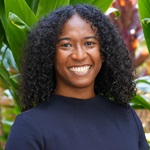 |
D Dangaran “Abolishing Child Support Carcerality” |
D Dangaran is an assistant professor of law at the University of Hawai’i at Manoa William S. Richardson School of Law. They are a graduate of Yale University and received their J.D. from Harvard Law School, where they were an articles editor on the Harvard Law Review. After law school, they clerked on the District of Columbia Court of Appeals and the U.S. Court of Appeals for the Ninth Circuit.
Professor Dangaran teaches and researches constitutional law, family law, and civil rights. Their published scholarship explores prison abolitionist theory and disability law claims centered on trans rights in prison. In 2025, they received a Dukeminier Award for their Essay, Bending Gender: Disability Justice, Abolitionist Queer Theory, and ADA Claims for Gender Dysphoria. Their current research deconstructs conservative religious claims regarding “gender ideology” and pro-trans claims under the First Amendment, the Equal Protection Clause, and the Eighth Amendment. They also research and write about nonmarital family law and the abolition of family court. Before joining the Richardson faculty, Professor Dangaran was the Director of Gender Justice at Rights Behind Bars, where they argued numerous federal appeals and trial matters, specializing in using litigation and other advocacy to help incarcerated trans people access necessary gender-affirming care. They currently serve as the co-chair of the National Trans Bar Association. In that role, they lead efforts to support trans law students, lawyers, and legal professionals across the United States.
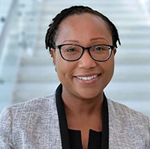 |
Tianna Gibbs “Carceral Logic and Private Family Law” |
Tianna Gibbs is a Professor of Law and the Director of the Gender Justice Clinic at American University Washington College of Law. Her expertise and scholarly interests include family law, domestic violence, race and the law, poverty law, and access to justice issues that impact litigants in high-volume courts. Her scholarship has been published in the Harvard Civil Rights and Civil Liberties Law Review, University of Virginia Journal of Social Policy and the Law, and University of Missouri-Kansas City Law Review, among other publications. Professor Gibbs received the 2022 Junior Faculty Award from the Society of American Law Teachers.
Professor Gibbs received her J.D. from Yale Law School, where she was an American Bar Association Legal Opportunity Scholar and a law student attorney in the Community and Economic Development Clinic, Landlord-Tenant Clinic, and Community Lawyering Clinic. She also served as a student supervisor in the Domestic Violence Clinic. While in law school, Professor Gibbs received the Stephen J. Massey Prize, which is awarded to the clinic student who exhibits the values of the clinical program. She also received the post-graduate Arthur Liman Public Interest Fellowship. Before entering academia, she was a supervising attorney at the Legal Aid Society of DC, practicing family law and domestic violence law for nearly a decade.
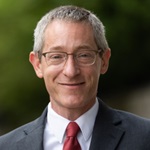 |
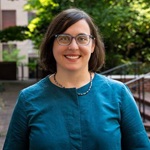
Josh Gupta-Kagan “Supporting Kinship Care without Dividing Families” |
Josh Gupta-Kagan is a Clinical Professor of Law at Columbia Law School. Gupta-Kagan’s teaching and scholarship focus on legal issues affecting children and families, especially child neglect and abuse and juvenile justice law. His scholarship has been published in the Stanford Law Review, University of Chicago Law Review, Fordham Law Review, and Journal of Empirical Legal Studies, among other publications. He is the director and founder of the Family Defense Clinic at Columbia Law School, which represents parents and other caregivers facing allegations of child neglect or abuse. Gupta-Kagan earned a J.D. from the New York University School of Law. After graduating from law school, Gupta-Kagan clerked for Judge Marsha S. Berzon on the 9th U.S. Circuit Court of Appeals. He also received two Outstanding Faculty Publication Awards from the University of South Carolina School of Law in 2018 and 2021.
 |
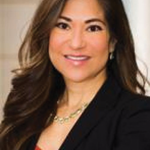
Sara Lorr “Stigma, Psychiatric Disability, and Parenthood” |
Sarah Lorr is an Associate Professor at the University of Maryland Francis King Carey School of Law. Her research focuses on disability law and family regulation, specifically how substantive legal doctrine and ostensibly neutral standards subordinate poor, nonwhite, and disabled parents in the family regulation system. She also studies the overapplication of guardianships to adults with disabilities, especially intellectual disabilities, and has fought against the imposition and continuation of guardianships in legal proceedings. Professor Lorr’s recent scholarship has appeared or is forthcoming in the Stanford Law Review, the California Law Review, the Oklahoma Law Review, and the Columbia Journal of Race & the Law. Professor Lorr received her J.D. from Fordham University School of Law.
 |
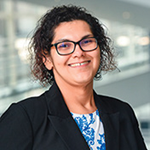
Mariela Olivares “Governing Families Through Immigration Law: Exclusion, Separation, and the Carceral State” |
Mariela Olivares is a Professor of Law at Howard University School of Law. She teaches Torts, Immigration Law, Family Law, and a seminar on Domestic Violence Law. Her professional and scholarly interests include the intersection of family law, domestic violence, and immigration law and policy, including access to justice for immigrants and limited-English proficient populations. Her scholarship has been published in the Harvard Law Review, Harvard Latino Law Review, UCLA Chicanx Latinx Law Review, and Georgia State University Law Review, Nebraska Law Review among other publications. Before teaching, Professor Olivares was an attorney in family law and domestic violence law and has experience litigating employment discrimination and director and officer insurance liability cases. Professor Olivares clerked on the Supreme Court of Texas. She received her LL.M. in Advocacy with Distinction from Georgetown. She graduated from the University of Michigan Law School, where she was a Clarence Darrow Scholar and the Executive Editor of the Michigan Law Review. Professor Olivares graduated Phi Beta Kappa from the University of Texas-Austin with highest honors and special honors with degrees in Plan II Honors and Spanish Literature.
 |
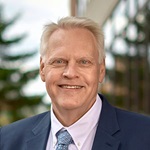
Neoshia Roemer “Incarcerating the American Indian Family” |
Neoshia Roemer is a Professor of Law at Seton Hall University School of Law located in Newark, New Jersey. There, she teaches Contracts, Family Law, Federal Indian Law, and Poverty Law. Professor Roemer’s areas of interest include family-based rights, child welfare, poverty issues, citizenship, and the Indian Child Welfare Act. She has earned a national reputation as a legal scholar through her numerous scholarly publications and presentations and an appearance on NPR’s 1A. Her law review articles have appeared or are forthcoming in the Minnesota Law Review, Boston University Law Review, and the University of Kansas Law Review. Professor Roemer is a graduate of University of New Mexico School of Law.
 |
David Thronson “Charade: Misrepresenting the Detention of Migrant Children as Foster Care” |
David Thronson joined the faculty at the Michigan State University College of Law as a Professor of Law in 2010. He has served twice as MSU Law’s Associate Dean for Academic Affairs and twice as MSU Law’s Associate Dean for Experiential Education. From 2019 to 2024 Thronson was Director of the Talsky Center for Human Rights and the Alan S. Zekelman Professor of International Human Rights Law. His research focuses on the intersection of family law and immigration law, in particular on the impact of immigration law on children. His scholarship has been published in the Emory Law Journal, Ohio State Law Journal, University of Virginia Journal of Social Policy and the Law, Wake Forest Law Review, and Nevada Law Journal, among many other publications. He is also the co-author of two books, IMMIGRATION AND REFUGEE LAW AND PUBLIC POLICY, 8TH ED. (Foundation Press, forthcoming 2026) and RESEARCH HANDBOOK ON FAMILY LAW AND MIGRATION (Elgar Publishing, forthcoming 2027). He is an elected member of the American Law Institute, a fellow of the American Bar Foundation, and from 2024 to 2026 served as Co-President of the Society of American Law Teachers.
Thronson graduated from the University of Kansas with degrees in mathematics and education, then taught mathematics and science in Nepal as a Peace Corps volunteer. He completed a master’s degree at Teachers College, Columbia University while serving as a teacher and administrator in three public high schools in New York City. In 1994, Thronson earned a JD from Harvard Law School, where he was Co-Editor-in-Chief of the Harvard Human Rights Journal. After clerking for the Hon. A. Wallace Tashima, of the U.S. District Court for the Central District of California and the U.S. Court of Appeals for the Ninth Circuit, he returned to New York City as a Skadden Fellow at The Door’s Legal Services Center where he provided direct legal services to at-risk young people. From 1999 to 2002, Thronson taught in the Lawyering Program of New York University School as he taught courses in immigration law, public international law, and international human rights at Seton Hall University School of Law and Hofstra University School of Law. He subsequently served as Professor and Associate Dean for Clinical Studies at the William S. Boyd School of Law at the University of Nevada Las Vegas. Thronson has taught immigration law as a visiting professor at the University of Michigan Law School since 2017, was a visiting professor at the University of Iowa College of Law in 2020 and the University of Miami in 2023.
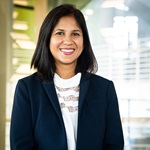 |
Shanta Trivedi “Registering Inequality” |
Shanta Trivedi is an Associate Professor of Law at the University of Baltimore. Professor Trivedi is a widely published legal scholar and policy advocate in popular media, focusing on promoting policies and primary prevention approaches to prevent the damage to children of family separation. In addition to teaching courses in family law and child welfare law, she is a faculty advisor for the law school’s Family Law Association. Her law review articles and essays have been published in the California Law Review Online, NYU Review of Law & Social Change, University of Virginia Journal of Social Policy and the Law, and the Yale Law and Political Economy Blog. Her opinion piece, “Apparently We Don’t Need Abortion Because of Foster Care…or Whatever,” responding to a statement by Supreme Court Justice Amy Coney Barrett during the Dobbs argument, was the most-read article of 2021 on Ms. magazine’s website. Trivedi graduated with her J.D. from Boston University.
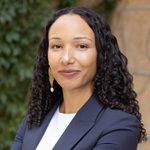 |
Lisa Washington “Porosity and Precarity: Families at the Intersection” |
Lisa Washington is an Assistant Professor of Law at the University of Wisconsin. Professor Washington focuses on the intersections of family regulation law, the criminal legal system, and the immigration system. Her most recent scholarship is published in the Yale Law Journal, the Columbia Law Review, the Northwestern University Law Review, the Boston University Law Review, the Chicago Law Review Online, and the Yale Law Journal Forum.
Professor Washington received her first law degree from Humboldt University in Berlin. She then attended Columbia Law School, where she earned an LL.M. degree. Professor Washington is a former Hastie Fellow. She has a background in comparative legal studies and completed her Ph.D. studies summa cum laude at the Freie Universität in Berlin, Germany. Washington has also received the AALS Section on Family and Juvenile Law Emerging Scholar Award.
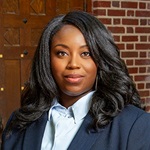 |
Danielle Wingfield “The School-to-System Pipeline and Carceral Logics of Family Regulation” |
Danielle Wingfield is an Associate Professor of Law at the University of Richmond School of Law. Her research focuses on the intersection of family regulation, education, civil rights, and legal history. Her recent scholarship has appeared or is forthcoming in the California Law Review, Minnesota Law Review, Boston University Law Review, Washington & Lee Law Review, William & Mary Bill of Rights Journal, and Northwestern University Law Review of Note. She is also the co-editor of The Memoirs of Henry L. Marsh, III: Civil Rights Champion, Public Servant, Lawyer, and her article, The Convergence Against Homeplace, received the 2026 AALS Family and Juvenile Law Section Emerging Scholar Award.
Professor Wingfield also serves as Of counsel with The Child Advocate Law Firm, where she advises on child welfare and education matters, and she has conducted research and policy analysis on family regulation systems for legal advocacy organizations. She previously held a joint postdoctoral research appointment at the University of Virginia Schools of Education and Law and earned her Ph.D. from the University of Virginia, her J.D. from the University of Richmond, and her B.A. from the College of William & Mary.
| Time | Event |
| 8:30–9 a.m. |
Opening Plenary Cynthia Godsoe and Jessica Dixon Weaver |
| 9–10:15 a.m. |
Criminalizing Parenthood and the Inequalities of Non-nuclear Families Sarah Lorr, Neoshia Romer, and LaToya Baldwin-Clark |
| 10:15–10:30 a.m. | Break |
| 10:30–11:45 a.m. |
Weaponizing Child Protection and Family Violence Lisa Washington, Tianna Gibbs, Shanta Trivedi, and Natasha Chokani |
| Noon–1 p.m. |
Lunch in Karcher Auditorium (Storey Hall) Provided by SMU Dedman School of Law, Dean Jason Nance |
| 1–2:15 p.m. |
Family Separation and the Carceral State Mariela Olivares, Cynthia Godsoe, Jessica Dixon Weaver, and David Thronson |
| 2:15–2:30 p.m. | Break |
| 2:30–3:45 p.m. |
Surveilling Youth and Families Anna Arons, D Dangaran, and Danielle Wingfield |
| 3:45–4 p.m. | Break |
| 4–5:15 p.m. |
Community Voices – Families Impacted by the Carceral State |
Each chapter author will discuss their chapter for 12–15 minutes with a discussion and Q&A to follow for 15-20 minutes.
Cost: Free to attend
Hospitality: Meals will be provided
Time: 8:30 a.m. to 5:30 p.m.
Date: October 30, 2026
Location: SMU Dedman School of Law
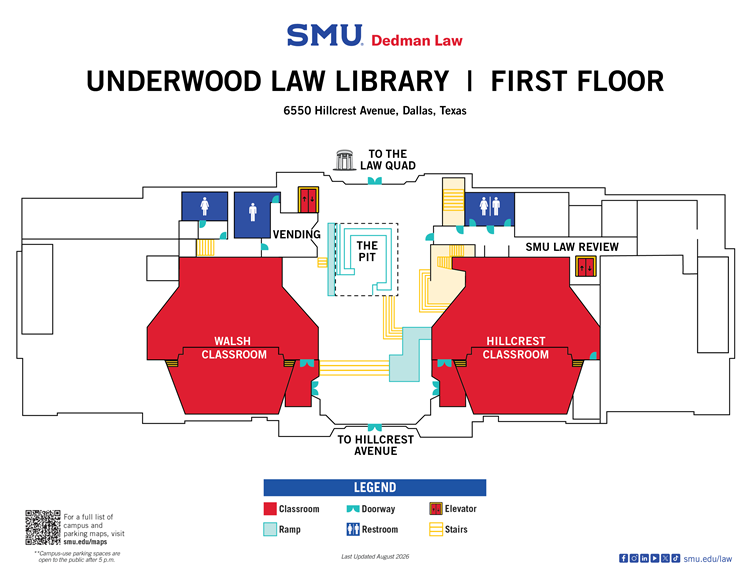
Underwood Law Library, Hillcrest Room
6550 Hillcrest Ave, Dallas, Texas
Click here for the SMU Campus map
For additional information: Contact TaLibra Ferguson
Airports:
- Dallas Love Field (DAL)
Closest to SMU’s Campus
For more information, visit dallas-lovefield.com - DFW International airport (DFW)
About half an hour from SMU’s campus
For more information, visit dfwairport.com
Hotels: Graduate by Hilton
- Located within walking distance of SMU Dedman School of Law
For more information, visit Hilton.com/graduate
Parking: Hilltop Plaza Parking Garage
- Park at Hilltop Plaza Parking Garage, located at 3423 Daniel Avenue, across from campus
- We encourage using rideshare services when possible.
- For more information, visit smu.edu/parking