Determine Current FTEs
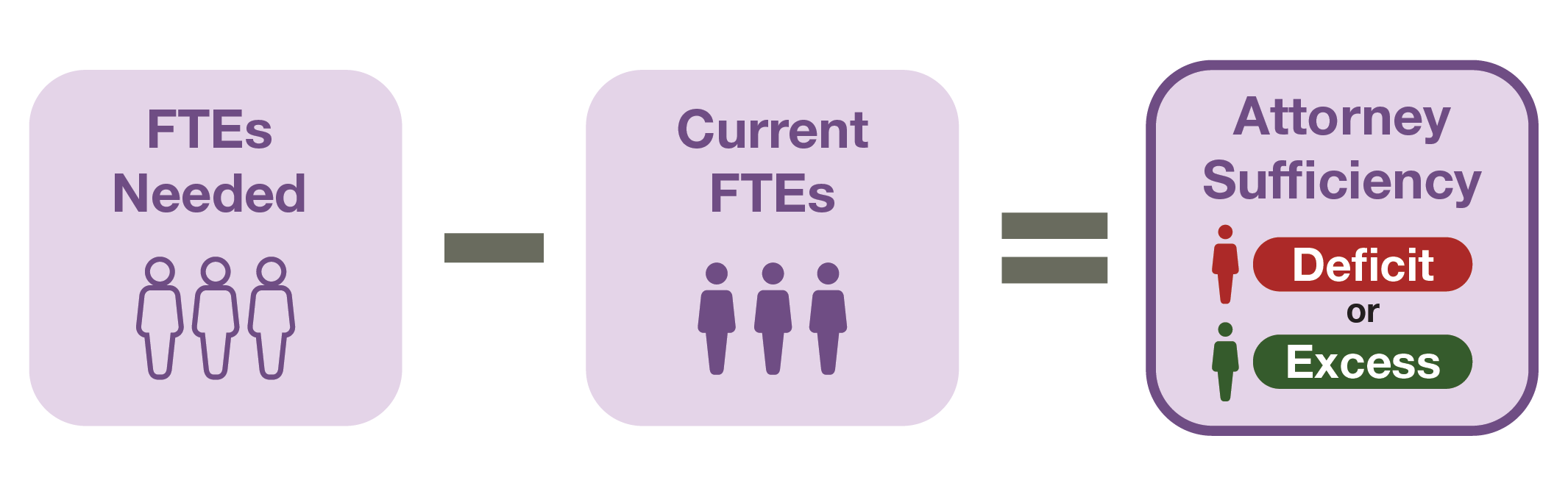
To calculate Attorney Sufficiency, you first need to know the number of attorney FTEs currently available to handle the caseload ("Current FTEs"). This sounds simple; however, in practice, it can be complicated. First, you must exclude FTEs for attorneys who do not do casework (e.g., supervisors). Next, you must consider the types of cases that were included in or excluded from the Projected Caseload (Step 2) and you must exclude all attorneys who represent clients in cases that are outside of the Projected Caseload (e.g., juvenile dependency attorneys). Finally, you should consider whether to subtract some portion of FTEs for attorneys just learning a new position (e.g., new attorneys or newly promoted attorneys).Attorneys with Supervisory or Administrative Responsibilities
Most providers have some attorneys who do not carry a caseload and other attorneys who have only partial caseloads. Often these are attorneys with supervisory, administrative, or training responsibilities. In determining the Current FTEs, you must subtract these FTEs. For example, Jurisdiction A is a small public defender office with a total of eight attorneys including the chief public defender and a deputy chief public defender. Both the chief and deputy represent clients. They also supervise the rest of the attorneys. Both estimate that they spend half of their time on casework and the other half on supervision and administration. Therefore, Jurisdiction A would exclude 0.5 FTE for the chief public defender and 0.5 FTE for the deputy from their count of Current FTEs.
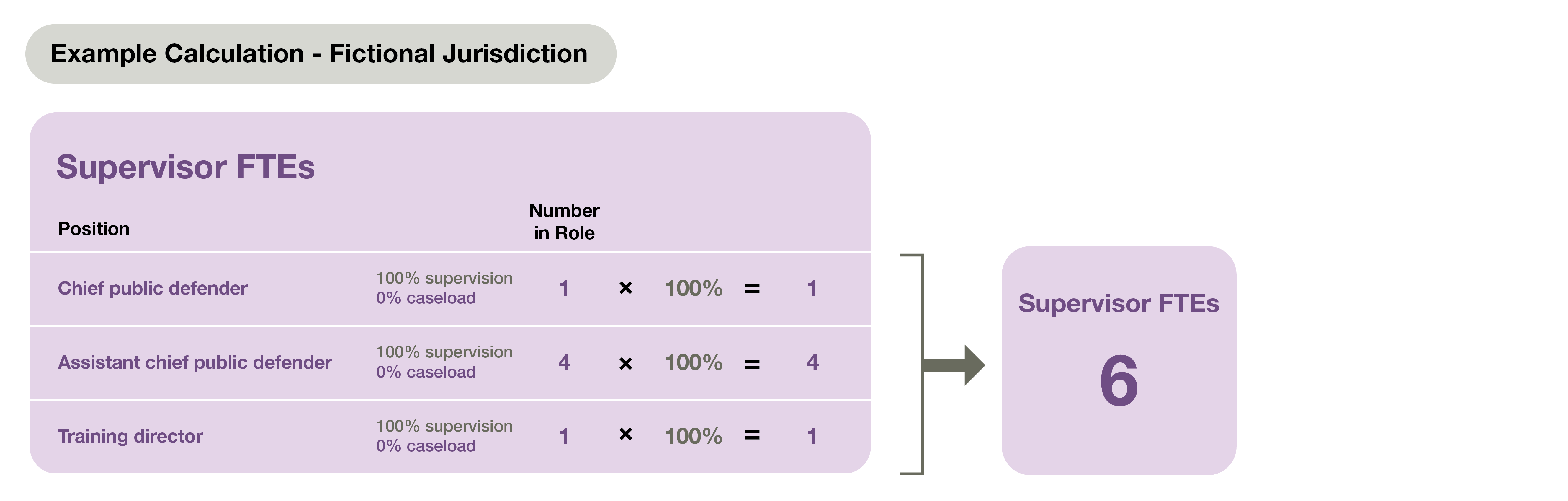
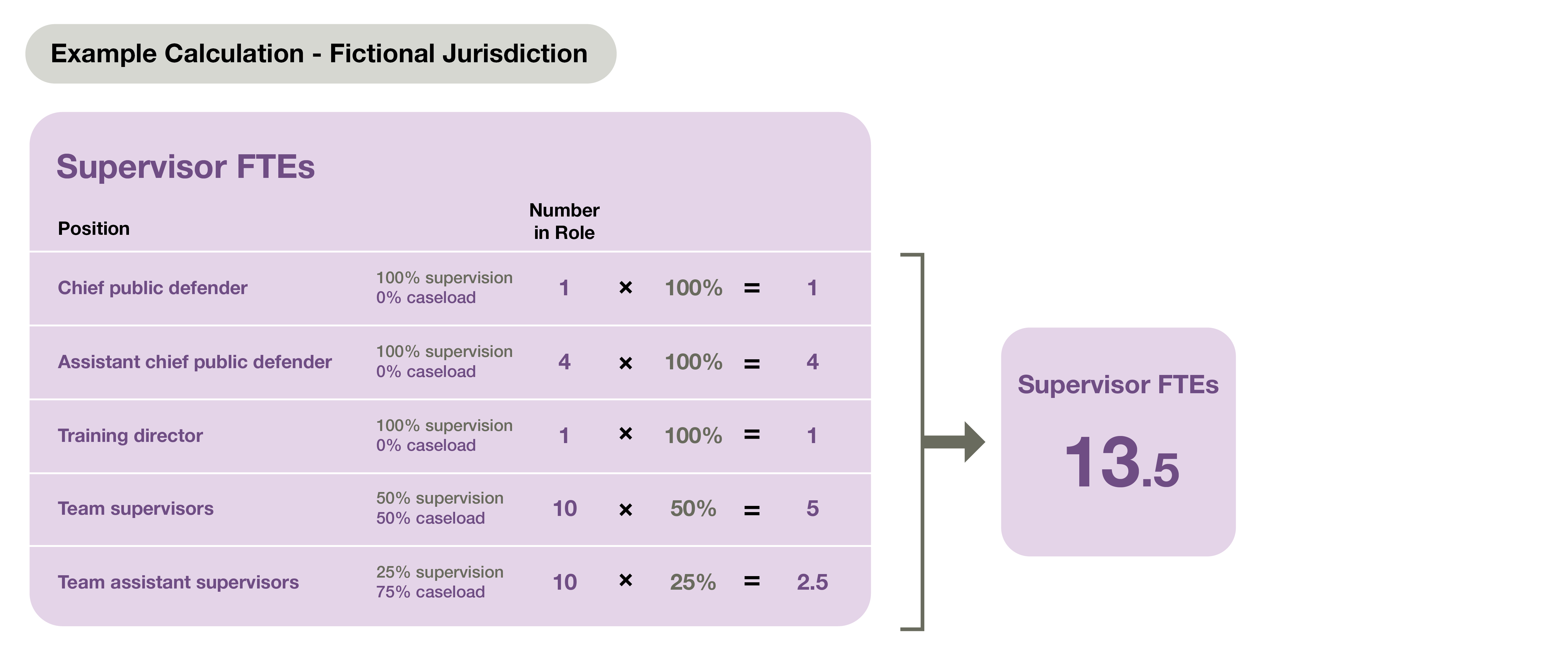
In Fictional Jurisdiction, the chief public defender, four assistant chief public defenders, and the training director do not represent any clients. Therefore, Fictional Jurisdiction would exclude 6 FTE from its Current FTEs for its full-time chief, assistant chiefs, and training director.
Additionally, in Fictional Jurisdiction, the adult criminal division is organized into 10 teams or trial divisions. Each trial division has a supervisor and an assistant supervisor:
- Supervisors are estimated to spend 50% of their time on case work and 50% on supervision.
- Assistant supervisors are estimated to spend 75% of their time on case work and 25% on supervision.
Fictional Jurisdiction would then exclude 0.5 FTE for the supervisor and 0.25 FTE for the assistant supervisor of each of their 10 trial divisions (total of 7.5 FTE).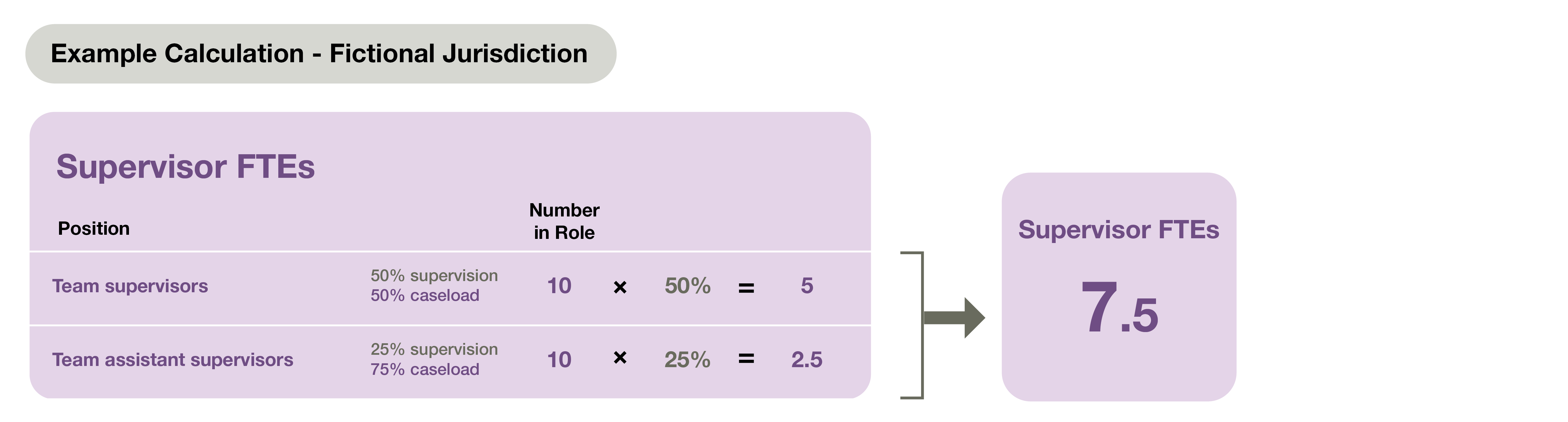
In total, Fictional Jurisdiction would exclude 13.5 FTE from their Current FTEs.
Attorneys Handling Matters Outside of the Projected Caseload
Other attorneys may have responsibility for cases excluded from the Projected Caseload (Step 2). As noted previously, the NPDWS standards are only intended to apply to adult criminal cases. As a result, your Projected Caseload typically would include only adult criminal cases. However, most public defense providers also represent minors in juvenile delinquency proceedings. Some providers also represent people in civil commitment and dependency proceedings. You must also exclude all FTEs or partial FTEs who work on these excluded case types.
In a system where trial attorneys work on both adult criminal cases and these excluded case types, you will need to discount each FTE by the percentage of time spent on the excluded case types. For example, in Jurisdiction A, one attorney covers the juvenile delinquency and civil commitment cases, as well as handling adult criminal cases. The attorney estimates that she spends 30% of her time on juvenile delinquency and civil commitment cases, which were not part of the Projected Caseload. Jurisdiction A would therefore exclude 0.3 FTE from their Current FTEs.
In Fictional Jurisdiction, the provider has several attorneys that exclusively handle cases that were excluded from their Projected Caseload.
- 26 attorneys handle juvenile delinquency cases
- Eight attorneys handle writs and appeals
- Six attorneys handle civil commitments and specialty dockets
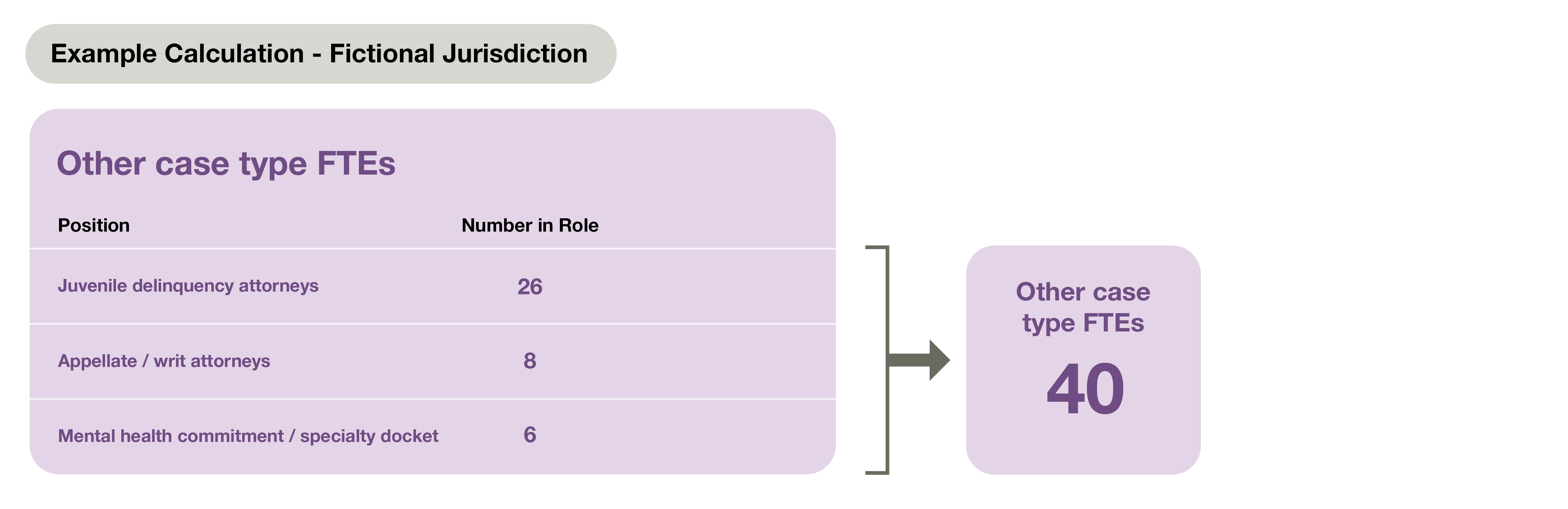
In total, 40 attorneys work in divisions that exclusively handle cases other than adult criminal representations. As a result, Fictional Jurisdiction must exclude 40 FTEs from their Current FTEs.
Attorneys with Significant Training or Other Obligations
Some public defense providers require new attorneys, or attorneys new to a different division, to spend significant time shadowing other attorneys or serving as second chair in proceedings. These providers may choose to proportionally reduce their Current FTEs for these attorneys because they do not have full-time availability for casework. For example, in Jurisdiction A, a new attorney spends their first three months shadowing another attorney and assisting with their casework. The provider would exclude .25 of each new attorney from the Current FTEs to account for this program.
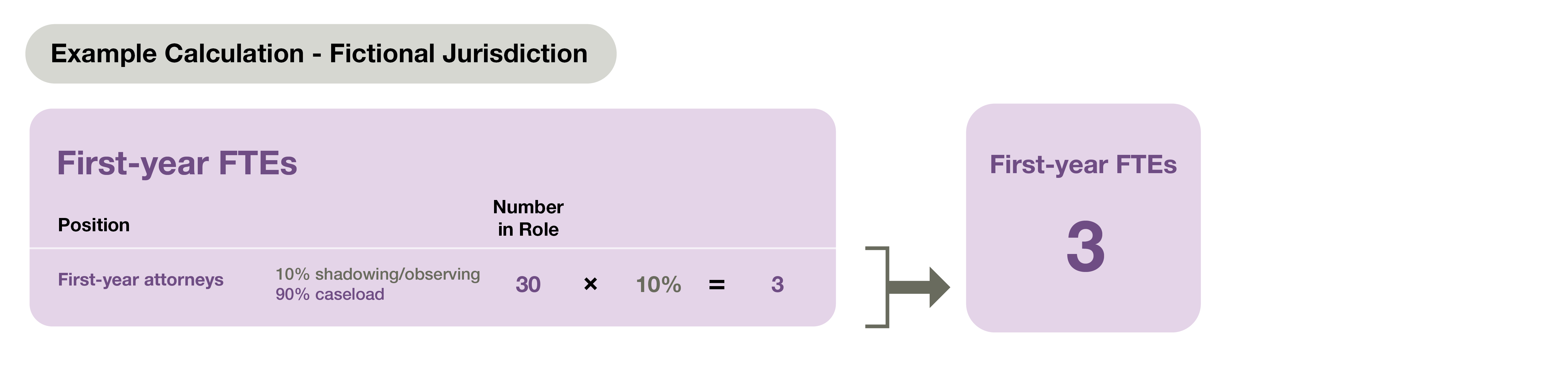
Fictional Jurisdiction's provider similarly allows new full-time attorneys to devote a percentage of their time to observing. Fictional Jurisdiction hired 30 new attorneys for the adult criminal division. In addition to providing these attorneys with a robust training and orientation program, these new attorneys shadow experienced misdemeanor lawyers for two weeks. Throughout their first year of employment, these new lawyers are also required to observe and second chair misdemeanor and felony proceedings. The office estimates that observation and shadowing takes about 10% of each new attorney’s time. Accordingly, Fictional Jurisdiction counts these 30 attorneys as 90% available for casework (0.9 FTE) to allow for this additional training time – discounting Current FTEs by 3 FTEs (30 x 0.10).
Complete Calculation of Current FTEs for Fictional Jurisdiction
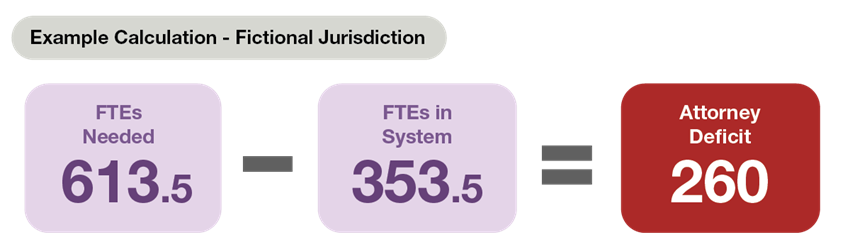
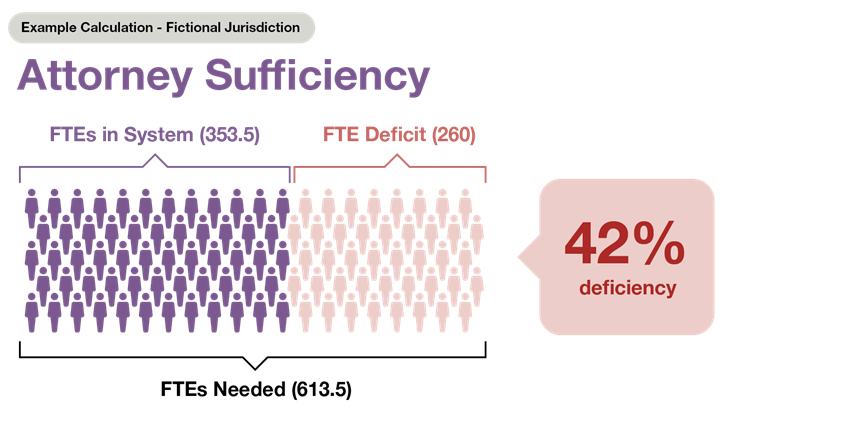
Fictional Jurisdiction has a total of 410 full-time attorneys. Below is a complete example calculation of Current FTEs for Fictional Jurisdiction, compiling all of calculations completed above.
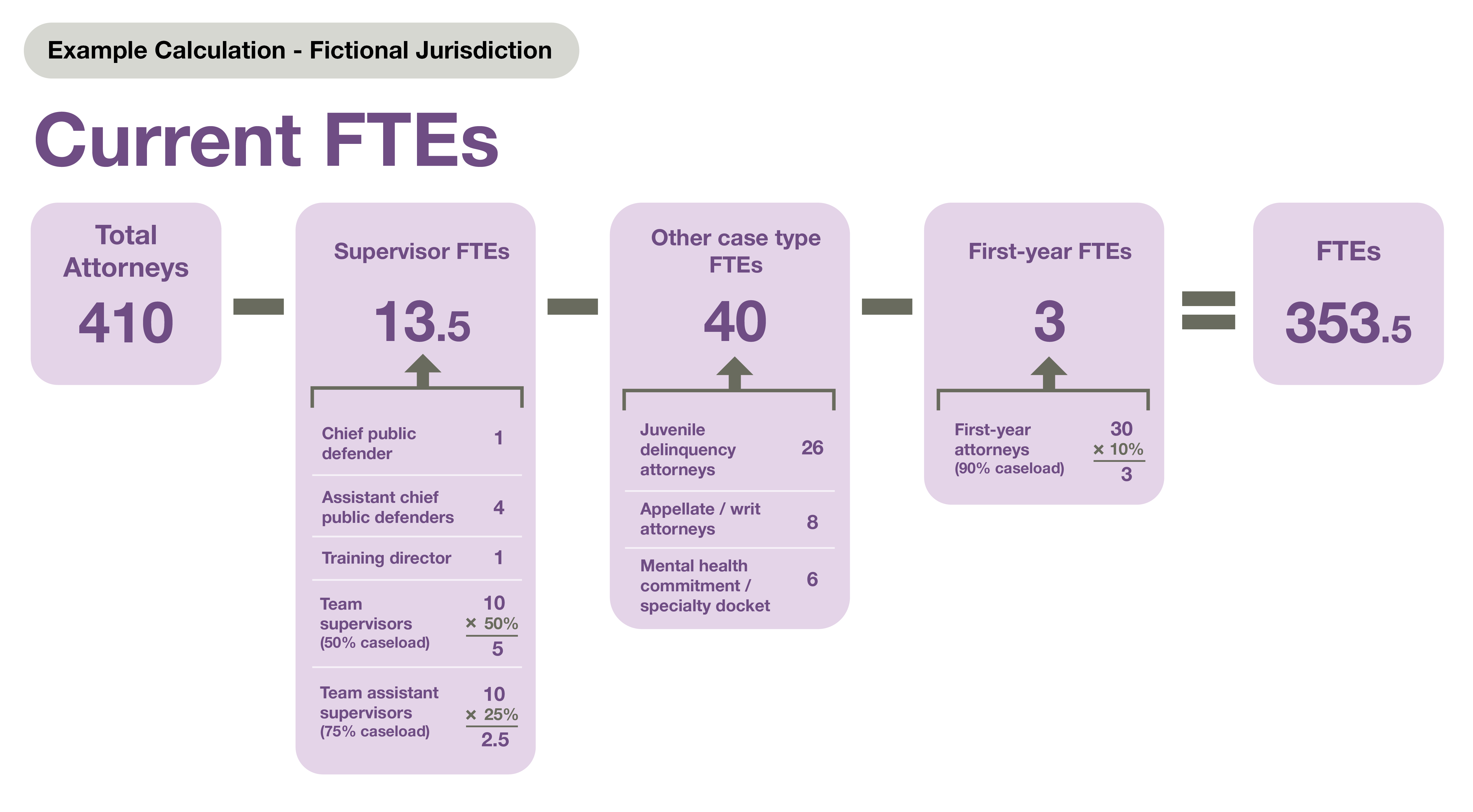
After accounting for supervisory and administrative attorneys, attorneys handling other case types, and the partial discount for new attorneys, Fictional Jurisdiction has 353.5 FTEs to address their Projected Caseload.