Course Leaders and Speakers
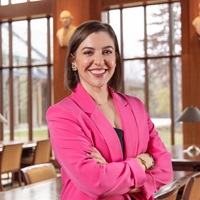
Keynote Speaker: Dr. Lindsay Chervinsky, Executive Director, George Washington Presidential Library
Lindsay M. Chervinsky is a presidential historian and the executive director of the George Washington Presidential Library. She is the author of the award-winning book The Cabinet: George Washington and the Creation of an American Institution and Making the Presidency: John Adams and the Precedents That Forged the Republic and co-editor of Mourning the Presidents: Loss and Legacy in American Culture. She regularly writes for public audiences in The Wall Street Journal, Ms., The Daily Beast, The Bulwark, Time, USA Today, CNN, and The Washington Post.

Shilo Brooks, George W. Bush Presidential Center
Shilo Brooks is President and CEO of the George W. Bush Presidential Center and Professor of Practice in Political Science at SMU. He was previously Executive Director of the James Madison Program in American Ideals and Institutions at Princeton University. He is the host of The Free Press' Old School podcast, author of a forthcoming book from Penguin Random House, winner of Princeton's Phi Beta Kappa teaching award, and a distinguished lecturer on statesmanship, civic leadership, American political thought, and liberal education. Brooks has also published scholarly work in political theory and the humanities. He holds a PhD in political science from Boston College and a BA from the Great Books Program at St. John's College.
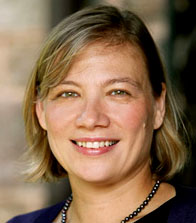
Kate Carté, Southern Methodist University
Katherine Carté is a professor of history at Southern Methodist University and a leading organizer of the Omohundro Institute’s conference series commemorating the 250th anniversary of the American Revolution. She is the author, most recently, of Religion and the American Revolution: An Imperial History (University of North Carolina Press for the Omohundro Institute, 2021), which won the Albert W. Outler Prize from the American Society of Church History. She is also the author of Religion and Profit: Moravians in Early America (University of Pennsylvania Press, 2009), and has published articles in Church History, The William and Mary Quarterly, and Early American Studies. Carté has received fellowships from the ACLS, the McNeil Center for Early American Studies, the American Philosophical Society, and the Program in Early American Economy and Society at the Library Company of Philadelphia. She is currently studying the role of religion, trust, and partisanship in Revolutionary-era Savannah, Georgia.
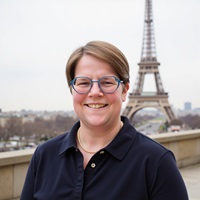
Liz Covart
Liz Covart is an award-winning historian of early America who skillfully blends academic research, public history, and digital innovation. A native New Englander with a PhD in history from UC Davis, she’s best known as the creator and host of the acclaimed Ben Franklin’s World podcast, launched in 2014, which has garnered more than ten million downloads and won the 2017 Best History Podcast Award. She also founded Scholar.DIY, a public-benefit company empowering scholars to build engaging digital narratives, and serves as the digital projects editor at the Omohundro Institute. Her work has earned prestigious recognition, including fellowships at the Massachusetts Historical Society and Colonial Society of Massachusetts and the 2022 Franklin New Media Award from the DAR.
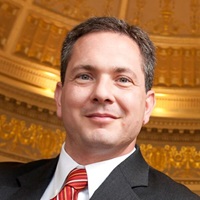
Jeffrey Engel, Southern Methodist University
Jeffrey A. Engel is the David Gergen Director of the Center for Presidential History at Southern Methodist University and a senior fellow at the John Goodwin Tower Center for Political Studies. A graduate of Cornell University with advanced degrees from the University of Wisconsin–Madison, he has taught American history, international relations, and grand strategy at Yale, the University of Pennsylvania, Texas A&M, and more. Engel is the author or editor of thirteen books on US foreign policy, including When the World Seemed New: George H. W. Bush and the End of the Cold War and The Four Freedoms: Franklin D. Roosevelt and the Evolution of an American Idea, and is a frequent commentator for outlets such as CNN, NPR, and The New York Times. His work has earned numerous honors, including the Paul Birdsall Prize and the Stuart L. Bernath Lecture Prize. He is currently writing Seeking Monsters to Destroy: How America Goes to War, from Washington to Biden and Beyond.
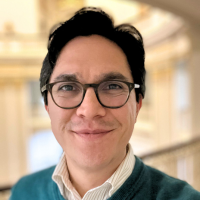
Brian Franklin, Southern Methodist University
Brian Franklin is the associate director of the SMU Center for Presidential History and a regular lecturer in the Clements Department of History and the University Honors Program. Franklin’s research focuses on the religious, political, and regional history of the United States in the eighteenth and nineteenth centuries. His current book manuscript, “America’s Missions,” explores the role of Protestant mission societies in shaping the early American republic. He has published widely on topics such as the history of missions, church-state relations in early America, and religion and westward expansion in the early republic. He teaches courses on Texas history and American history and has organized and taught in seminars for secondary teachers supported by the Gilder Lehrman Institute of American History and Humanities Texas.
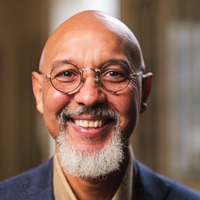
Ronald Angelo Johnson, Baylor University
Ronald Johnson is a historian of early American and Atlantic diplomacy, with a focus on how race, freedom, and international politics shaped the revolutionary era. His book, Entangled Alliances: Racialized Freedom and Atlantic Diplomacy During the American Revolution (Cornell University Press, October 2025), reinterprets the American Revolution through the lens of transatlantic diplomacy, uncovering alliances between American patriots and Saint-Domingue rebels in their shared struggle against European imperial power. He is also the author of Diplomacy in Black and White: John Adams, Toussaint Louverture, and Their Atlantic World Alliance and co-editor of In Search of Liberty: African American Internationalism in the Nineteenth-Century Atlantic World.

David Kramer, George W. Bush Presidential Center
David J. Kramer is the Executive Director of the George W. Bush Institute, a role he assumed following his time as a Senior Fellow in the Václav Havel Program for Human Rights and Diplomacy and as Director for European and Eurasian Affairs at Florida International University’s Steven J. Green School of International and Public Affairs. A graduate of Tufts University, he holds an M.A. in Soviet Studies from Harvard University. Kramer spent over two decades working at the forefront of American foreign policy, serving in roles as the Senior Director for Human Rights and Democracy at The McCain Institute for International Leadership, President of Freedom House, and Senior Transatlantic Fellow at the German Marshall Fund of the United States. He served eight years in the U.S. Department of State during the George W. Bush administration, including as the Assistant Secretary of State for Democracy, Human Rights, and Labor; Deputy Assistant Secretary of State for European and Eurasian Affairs; Professional Staff Member in the Secretary’s Office of Policy Planning; and Senior Advisor to the Undersecretary for Global Affairs. He also served as Executive Director of the U.S. Advisory Commission on Public Diplomacy. He is the author of Back to Containment: Dealing with Putin’s Regime, and serves on the board of the Free Russia Foundation.
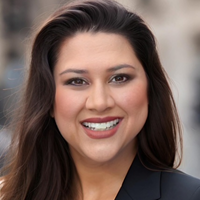
Patience LeBlanc, Master Teacher
Patience LeBlanc has over twenty-seven years of experience in teaching social studies. She has taught at both the middle school and high school level. With a BA in History from Texas A&M University and an MA in History from Texas Woman’s University, Patience is a knowledgeable teacher in her field. She is currently the secondary social studies coordinator for Frisco ISD. Her awards include the Humanities Texas Outstanding Teacher of the Year 2020, Gilder Lehrman Texas History Teacher of the Year in 2018, the American Lawyers Auxiliary Teacher of the Year in 2013, Texas Lawyers Auxiliary Teacher of the Year 2011, James Madison Foundation Fellowship winner in 2010, and the Leon Jaworski Award Winner for Excellence in Law Focused Education in 2005. She has been a consultant for many educational programs including Law-Related Education through the State Bar of Texas, the Center for Civic Education and the We the People program, and the Gilder Lehrman Institute where she has written curriculum and presented across the state and nation.

Susan Penman, Southern Methodist University
Susan Penman joined the Center for Presidential History as assistant director in the summer of 2024 after receiving her PhD in American Studies from the University of North Carolina at Chapel Hill. Her area of research is southern studies, with her doctoral work specifically focused on law and politics in New Orleans in the late twentieth century. Her current manuscript project, “Natural Law: Politics, Race, and Legal Culture in 20th-Century New Orleans,” studies the office of Orleans Parish District Attorney Harry Connick, Sr., exploring how local ideas about crime and punishment shifted during the three decades that he served as DA. Penman, who received an MA in Southern Studies and an MFA in Documentary Expression (both from the University of Mississippi), is an experienced oral historian who has contributed to a variety of projects, primarily for UNC’s Southern Oral History Program. At the Center for Presidential History, she oversees all of CPH’s oral history projects.

Pearl Ponce, George W. Bush Presidential Library
Dr. Pearl T. Ponce is Director of the George W. Bush Presidential Library and a political and diplomatic historian specializing in the Civil War era, governance, democracy, and federal power. Prior to her current role, she served as a professor and chair of the history department at Ithaca College. Dr. Ponce has taught a wide range of history courses in her career, including the American Civil War and Reconstruction, The House Divided: The United States in the Long 19th Century, 1800-1914, and the History of United States Foreign Relations. She is the author of To Govern the Devil in Hell: The Political Crisis in Territorial Kansas (2014) and the editor of Kansas’s War: The Civil War in Documents (2011). Her research interests have centered around the presidency, governance and democracy, the exercise of federal power, and the territorial system. Her latest project, “‘A Strange System of Terrorism’: Federal Power and the Fraying of Democracy in Utah, Washington, and Kansas Territories in the 1850s,” brings these threads together. She earned a master of arts and doctorate in history from Harvard University, a master of arts in history and certificate in contemporary history from Ohio University, and a bachelor of arts in international relations from Pomona College.