A Gift for the Future of Law and Technology: The Tsai Institute

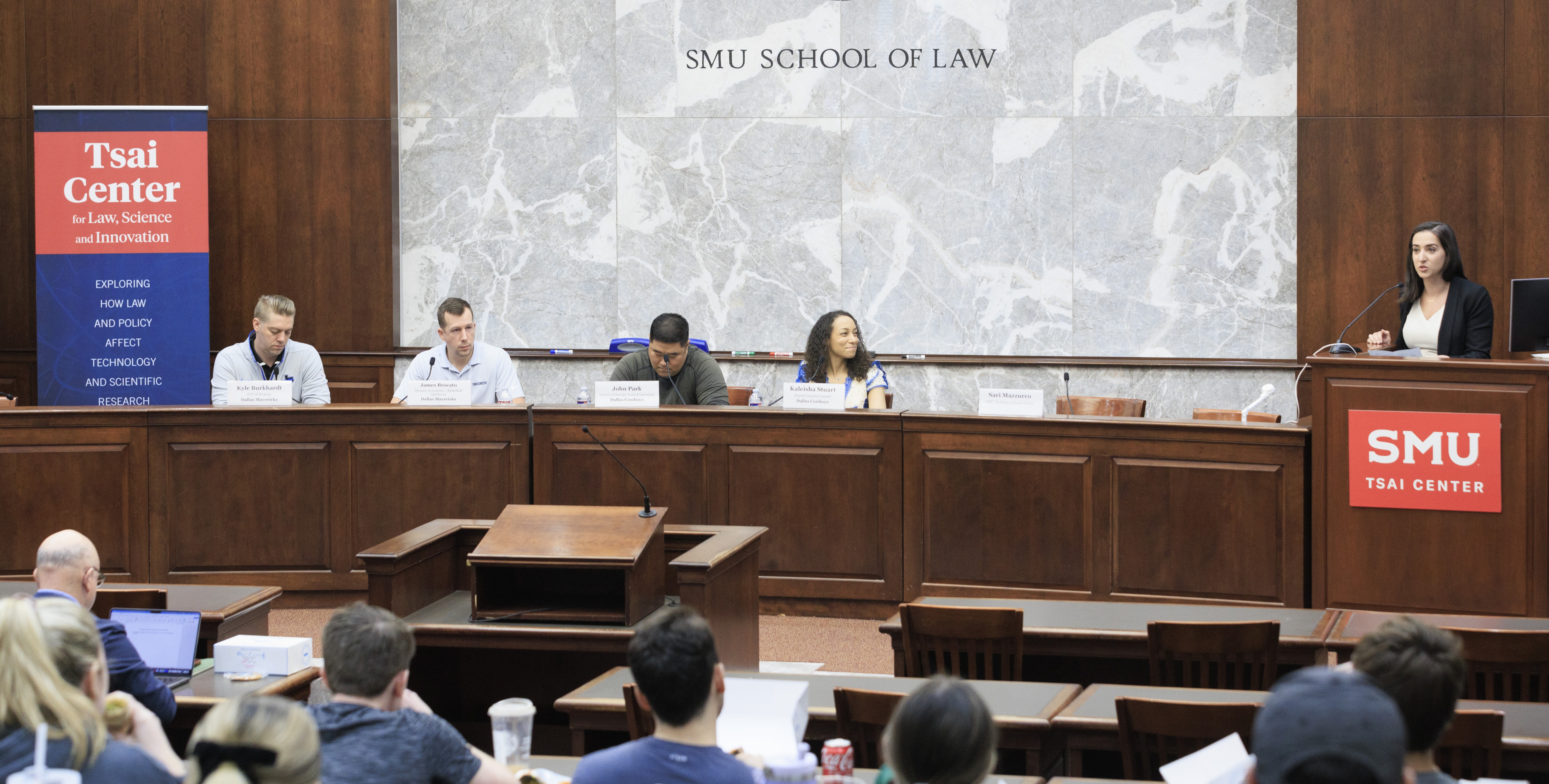
A $10 million endowment gift expands the Tsai program and brings SMU disciplines together to prepare students for a changing world.
A $10 million gift from an anonymous donor is giving SMU Dedman School of Law a larger role in equipping students for a future in which understanding technology will be essential to practicing law—and understanding law will be essential to developing technology.
The gift expands the Tsai Center for Law, Science and Innovation into the Tsai Institute for Technology, Innovation & Law, supporting an effort to bring engineering, business and legal education into closer conversation across SMU.
The opportunity reaches well beyond teaching students how today’s technologies work. It is about helping them think through changes that will continue throughout their careers.
“The Tsai Institute is well positioned to become a leading entity at the intersection of technology, innovation, and law,” says Dedman Law Dean Jason Nance. “It will oversee cutting-edge curricular programming to prepare graduates to deliver exceptional value, while facilitating groundbreaking research to advance our understanding of these important fields.”
“This is an inflection point for the Tsai program,” says co-director Nathan Cortez. “Having the resources to move from a Center to an Institute means we can be even more ambitious in confronting the really difficult questions raised by rapid technological changes today, while still pursuing all the programs that have made the Tsai Center successful.”
The gift provides the financial foundation for that ambition, said Peter Altabef, the Institute’s executive director. The additional $10 million enabled the program to meet the university’s endowment requirements to become an institute and gave its leaders momentum to move forward. He expects further fundraising as the effort develops.
The work builds on the Center’s existing scholarship and programming while opening opportunities across the university. At its heart is a question with practical consequences for future lawyers: How do people with different expertise learn to address the same technological challenges collaboratively?
Altabef, whose career spans law, business and technology leadership, developed the interdisciplinary approach with Dean Nance. Their discussions led to a plan to bring together faculty, courses, and graduate students from Dedman Law, the Lyle School of Engineering, and the Cox School of Business, building on the Tsai Center’s work.
One central initiative is a certificate program in emerging technology and policy. Originally envisioned for students in the three schools, it has expanded to include graduate students across SMU.
As Altabef describes it, the program requires 14 credit hours, including core coursework in engineering, business, and law, along with electives that let students pursue particular interests. A new engineering course and a new law course are being developed, while existing business courses are being adapted for the program.
“The purpose is to create an interdisciplinary approach among students and among faculty,” says Altabef. “When the students go out into the marketplace, they’ll have taken coursework in how technology is created, how those technologies affect the operations of organizations, and regulatory, ethics, and governance frameworks.”
For law students, that means learning more about the technologies behind the questions they will face professionally. For engineering and business students, it means engaging with the legal and ethical responsibilities that accompany innovation.
Altabef says the certificate received unanimous approval from Dedman Law’s faculty. Plans also call for offering the certificate to working professionals wanting to strengthen their understanding of emerging technologies.
The Institute organizes research and programming around five academic hubs: artificial intelligence and robotics; biotechnology and health futures; energy and environmental law; intellectual property and information law; and scientific evidence, ethics and justice.
Each has faculty leadership. Together, they broaden the structure for work that Altabef hopes will produce more collaboration and publication across schools, as well as partnerships with scholars outside SMU.
“The surge in our endowment will allow us to continue the great work begun by the Tsai Center—funding Tsai Talks, Tsai Summits, Leadership Lectures, Innovation Lectures, annual symposia, research grants, and our Tsai Scholars—but also permit us to do more,” says co-director David O. Taylor.
For co-director Meghan J. Ryan, the opportunities include supporting faculty research and bringing different disciplines together to address problems affecting people’s lives.
“The additional resources will allow us to build on the Tsai Center’s successes while pursuing new ideas and initiatives that may have previously been beyond our reach,” she says.
The legal questions are already taking shape. Ryan points to AI-generated evidence, the effects of remote proceedings on constitutional rights, and the ethical commitments accompanying scientific and technological advances.
“So, how can we verify whether something is real evidence or whether it has been artificially created?” she asks.
The questions transcend what technology can accomplish to what people should do with it.
“I think a big issue that is being raised by AI and other scientific and technological developments is ethics,” Ryan says. “How do we deal with some of these advancements from a human perspective, and how can we harness them for good and try to eliminate the downsides of them?”
The hubs provide resources for exploring those questions. Ryan and law school colleague Laura Abelson help lead the scientific evidence, ethics and justice hub.
“I think Laura has talked about, for example, bringing together researchers from across the country to talk about science and technology in the context of criminal justice and how those advancements affect criminal justice,” Ryan says.
Students already help with faculty research and bring legal practitioners to campus to discuss how their work intersects with science and technology. Ryan says students are assisting her with research for a symposium addressing ethics and evidentiary issues related to advances in artificial intelligence. The certificate program would create further opportunities for students from different schools to collaborate.
For Altabef, the research has practical significance beyond the university.
“This isn’t check the box work,” he says. “This is work in emerging technologies that we’re going to live with in the next five or 10 or 15 years, so I think the work we do will actually be very important.”
Beyond SMU, the Institute is considering additional institutional partnerships to give international thought leaders a venue for exchanging ideas about the opportunities and challenges emerging technologies present.
Closer to home, Altabef wants to strengthen connections with employers and expand scholarship and internship opportunities. After more than four decades in Dallas, he sees the city’s strengths in technology, finance and law increasingly converging. He wants SMU graduates equipped to contribute wherever those fields meet.
Yet the Institute’s reach extends beyond those professional disciplines. Opening the certificate to graduate students across SMU reflects Altabef’s conviction that the humanities belong in the conversation about technology’s future.
“You want the people who think out of the box, whether that’s a theater major or a music major or an English major,” he says.
Creativity, he believes, will become increasingly valuable as people learn to use emerging technologies.
For Altabef, success will include research that matters, stronger collaboration with faculty and a greater national and international presence for SMU. It begins, however, with what happens to students.
He wants them to leave with habits of mind that outlast any particular tool.
“You know, you could tell them what exists today, and it will be completely dated in two years.” he says. “Or you can help them think for themselves, and that will last them for 40 years.”