Rafael Antal, LL.M. , Class of 2026
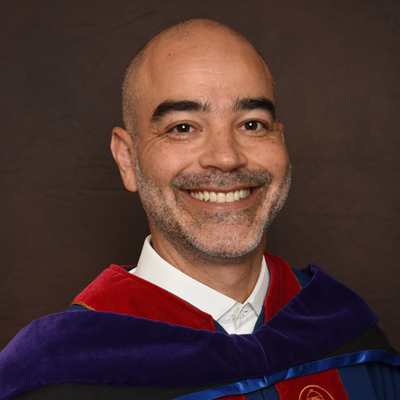
Tell us about where you’re from and where you earned your law degree.
I am from Sao Paulo, Brazil, where I built most of my legal career. I earned my Bachelor of Laws from Faculdades Metropolitanas Unidas (FMU) in 2015, after first completing a Bachelor of Business Administration at London Metropolitan University in the United Kingdom. That earlier international experience shaped how I think about law - not as a closed national system, but as infrastructure that needs to translate across borders. Before coming to SMU, I spent over a decade as a senior in-house legal executive in Brazil, primarily in construction, infrastructure, and luxury real estate - sectors where contracts and integrity controls carry real weight.
Why did you decide to seek a graduate degree in the U.S. and what attracted you to Dedman Law?
The U.S. legal system had been part of my work for years - many of the agreements I negotiated in Brazil involved U.S. multinational counterparties, and I increasingly felt the limits of operating at that intersection without formal U.S. legal training. The LL.M. was the natural next step.
Dedman stood out for a few reasons: a strong reputation in international and business law, aligned with the kind of practice I wanted to build; a location in one of the fastest-growing legal markets in the country and a strategic bridge between U.S. business and Latin America; and an international LL.M. community that felt genuinely welcoming from my very first conversation with the admissions office. The Dean's Scholarship confirmed it was the right place.
What part of the LL.M. program did you enjoy the most?
The Corporate Counsel Externship Program, without question. Being placed with the in-house legal team at KFC US gave me something no classroom alone could provide: direct exposure to how U.S. corporate counsel actually operates day to day. Coming from a senior in-house background in Brazil, the experience confirmed both how transferable my prior work was and where I still needed to learn American practice from the ground up.
I also genuinely enjoyed Contracts, Business Associations, and Perspectives of the American Legal System. The case method is unmatched - uncomfortable at first, indispensable later.
Was there a professor, mentor, or class that had a lasting impact on you at Dedman Law?
Several, and I would not feel right naming just one.
Dean Martin Camp set the tone for the entire program. He is the heart of the Graduate Legal Studies experience at Dedman, and his Business Associations course was one of the most substantive classes I took. What I will carry with me even more than the content is his disposition - consistently optimistic, intellectually generous, and always with the right piece of advice when international students need a steady voice.
Professor Mazzurco's Contracts class was extraordinary. From the very first session, she treated LL.M. students exactly the way she treated the JDs - same expectations, same opportunities, same rigor. That alone is not common in international law programs, and I credit her rigorous approach for my solid preparation as I now study for the Bar Exam.
Professor Daniel Ishihara (Legal Reading & Writing and P.A.L.S.) was equally formative - his patience and direct feedback made one of the toughest adjustments for an international student climbable. And Dean Steve Yeager, who runs the Corporate Counsel Externship Program, has been a constant presence, always available for advice that went well beyond the externship itself.
What makes Dallas a great place for LL.M. students?
Dallas surprised me. Coming from Sao Paulo, I expected a smaller, less dynamic city. What I found is one of the most economically alive corners of the United States - a hub for energy, finance, and technology, with a legal services market that ranks among the largest in the country. Texas is becoming the gateway between U.S. business and Latin America, which is directly relevant for international students building cross-border practices.
Beyond that, Dallas welcomes families. I came to SMU with my wife Julia and our two sons, Antonio and Vicente. We built a life here, found a community, and balanced the intensity of the LL.M. with the realities of raising small children. For an international student with a family, this is not a small thing - and Dallas makes it possible in a way many other major U.S. cities do not.
What are you doing now that you have graduated from Dedman Law with an LL.M. degree?
Right now, my full focus is on preparing for the Texas Bar Examination in July. Studying for the Bar is intense - long hours, daily discipline - but it is the next fundamental step in becoming a fully qualified U.S. attorney. My plan is to begin practicing in August, once the exam is behind me.
In parallel, I stay active in the American Bar Association's International Law Section and the Dallas Bar Association, and earlier this year I published a scholarly article on SSRN on cross-border anti-corruption compliance. My focus going forward is helping U.S. companies with Latin-American operations or supply chains navigate cross-border engagement, especially anti-corruption compliance under both the FCPA and Brazilian law.
How did your experience at Dedman Law impact your legal career?
In two specific ways. First, it gave me the analytical framework to operate substantively in U.S. legal practice - not as a foreign lawyer translating concepts, but as someone trained in the American method. Second, it gave me a platform to contribute. The scholarly article I published this year would not have been possible without the structured academic environment SMU provided.
Dedman did not change my career trajectory - it accelerated it, sharpened it, and gave it credibility in a market I now consider my own.
What is one memory from your time at SMU that you will always remember?
Honestly, the simplest one: the walk across campus between classes. The Dedman buildings, the brick, the trees - the campus has a quiet beauty that genuinely impresses you, every single day. There were entire mornings when I would walk from one classroom to another and find myself just looking around, struck by how privileged I was to be there. For someone coming from a noisy, fast city like Sao Paulo, that daily walk became a real anchor. It is the kind of memory that does not announce itself as important, but it stays with you.
If you could go back and talk to yourself on your first day at SMU, what would you say?
I would tell myself: read more, before classes start.
Like many international students, I arrived in Dallas only a few days before classes began. My first weeks were spent catching up - orienting myself to the city, the campus, the case method, and American legal writing all at once. By the time I hit my stride, weeks had passed. Deeper preparatory reading before the semester - not to memorize, but to arrive with familiarity - would have let me engage more substantively from day one.
The other thing I would say: trust that the discomfort of those first weeks is temporary. International students often carry the sense that we have to outperform to justify being here. The truth is, you belong here as much as anyone, and the friction of those early days is just the friction of growth.
What tips or advice do you have for a new LL.M. student?
• Participate in everything. Lunches, networking events, office hours, extracurricular classes - each one teaches you something about how the U.S. legal system and professional culture really work.
• Do not let language hold you back. Faculty and staff genuinely want to help, but they cannot read your mind. Speak up. Knock on the door. The cost of silence is higher than the cost of being uncomfortable.
• Take Dallas seriously as a place to build a career. It is one of the most consequential legal markets in the country, and the LL.M. positions you to participate in it.
• If you have a family, bring them in. The LL.M. is intense, and the support of the people who love you is what makes it sustainable.