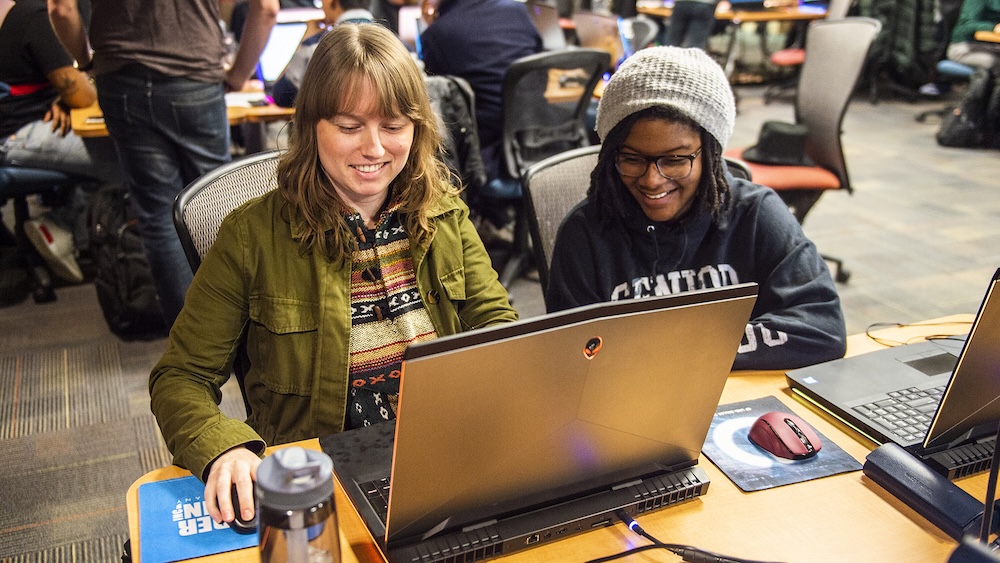
Students in SMU Guildhall’s Bachelor of Arts in Game Development benefit from the best game development school in the US.

Undergraduate programs

Game Development

B.A.

Overview

Launching fall 2026, the Bachelor of Arts in game development will grow your foundational technique and artistic skill in drawing, modeling and hands-on creative production to provide creative depth and cross-disciplinary experience for the evolving landscape of interactive entertainment, digital media and game development

Explore how interactive spaces are constructed within real-time 3D game engines and gain experience designing and producing digital environments that integrate artistic practice and emerging technologies

Preprofessional preparation

This preprofessional degree will prepare students for continuing graduate-level education, which is expected for industry readiness. Once you’ve earned a B.A. in game development, you can apply to the award-winning SMU Guildhall Master of Interactive Technology in Digital Game Development program, which provides advanced education toward a career in video game development through its industry-created, studio-mirroring curriculum with specialized training in art creation, level design, production or programming.

No. 1

SMU Guildhall ranked best video game design and development school worldwide

GAMEducation (2025)

No. 1

SMU ranked best in Texas for game design programs

Animation Career Review

Top 10

SMU Guildhall ranked among best Graduate Game Design programs since 2010

Princeton Review

Ready to apply?

Get started here.

Tuition & financial aid

2 out of 3 first-year students are awarded grants and/or scholarships with an average total of $38,598.

Tuition and costs

Explore the cost breakdown of tuition for undergraduate programs.

Financial aid

Find information on scholarships and financial support available at SMU.

Curriculum & learning

The mission of the Bachelor of Arts in game development is to provide undergraduate students with the artistic, technical and collaborative experience needed for interactive environment creation and digital world-building. Graduates will gain a balanced blend of creative, technical and professional competencies that mirror the cross-disciplinary nature of the modern game and interactive media industries. Students graduate with proficiency in game design theory, environmental storytelling, user experience (UX) design, prototyping, and digital art and animation workflows.

Students will also gain essential experience with agile methodologies, 3D modeling, digital pipelines, engine-based asset development (Unreal and Unity), and portfolio and prototype development. The curriculum emphasizes both individual creative expression and collaborative production practices, preparing students to understand cross-disciplinary teamwork skills, which they will need for real-world studio environments.

Featured courses

GAME 3370

Game Design

Explore the fundamentals of game design by analyzing, deconstructing and critiquing video games and current trends.

GAME 5310

Professional Practice in Art

Learn professional aspects of the art and video game industries including content creation, markets and distribution.

GAME 3390

Advanced Studio I: Serious and Commercial Game Development Methodologies

Learn to articulate work using serious and/or commercial game development methodologies as artists and present it in a peer–group setting.

Outside of the classroom

  • Photo of SMU Guildhall students smiling and talking

    Programs and centers

    Students are given opportunities to work with cross-disciplinary team structures at the Hart eCenter, SMU Guildhall GameLab, and Human and Machine Intelligence (HuMIn) Game Lab centers.

  • Clubs and organizations

    Explore interests, develop leadership skills, connect with like-minded peers and build lasting relationships.

  • SMU students working with plants at Bontham Family Farms

    Community engagement

    Apply your classroom knowledge to real-world issues while making a positive impact.

Facilities

SMU Guildhall faculty use the Visualization Lab during instruction to display massive amounts of data at high resolution.

Visualization Lab

An immersive, multipurpose, flexible room constructed with 24 perfectly aligned touch screen video panels and studio-quality speakers creating a 3D sound field.

SMU Guildhall Game Lab includes a living room simulation for game testing.

SMU Guildhall GameLab

SMU Guildhall’s GameLab includes a simulated living room for testing games and a professional usability lab for game testing and user research.

Frequently asked questions

According to leading employers such as Epic Games, Microsoft, Sony and Electronic Arts, candidates must have advanced proficiency in both creative design and technical art as well as interdisciplinary fluency and creative-technical literacy – competencies that begin at the undergraduate level and are fully refined through graduate-level education and professional training. Industry leaders and recruits look for entry-level applicants who have both a foundational undergraduate preparation plus advanced graduate-level specialization and credentialing. 

SMU provides both undergraduate foundations and advanced graduate-level training. 

The B.A. in game development is your clear pathway to graduate-level specialization and beyond. By integrating artistic innovation with technical proficiency, this program prepares graduates to continue into a range of specialized graduate programs to further develop experiential skills in employer-demanded areas like game art, environmental art, technical art, UX and interactive media.  SMU’s own award-winning master’s program, the SMU Guildhall Master of Interactive Technology in Digital Game Development, offers advanced training with specializations in art creation, level design, production and programming.

Video game design careers tend to pay higher-than-average salaries, according to Payscale, reporting an average annual salary of $66,894 that increases by 15% with five to nine years of experience.

According to a February 2022 report from the Society for Human Resource Management, U.S. tech salaries are rising. SHRM attributes the increases to strong labor market demand for skilled tech professionals.

No, this is not a programming specialization major. Those programming languages are needed for creative computing or computer science degrees.

This program focuses on the specialization of game art. Students graduate with proficiency in game design theory, environmental storytelling, user experience design, prototyping, and digital art and animation workflows. They also gain essential experience with agile methodologies, 3D modeling, digital pipelines, engine-based asset development (Unreal and Unity), and portfolio and prototype development.

Students who graduate with a degree in video game development build a competitive portfolio to be used for applying to graduate game development programs, such as SMU Guildhall. This major includes individual artist statements of purpose, portfolio development and public exhibition of creative projects.

This program is designed to work with a double major in drawing or sculpture. Additionally, there are other minors that would work well with this major, such as creative computing.

Yes, students gain experience designing and producing digital environments that integrate artistic practice and emerging technologies using modern game engines. Advanced elective courses can give students cross-disciplinary team experiences. Acceptance into research project teams is another way to gain real-world experiences. 

The B.A. in game development degree is designed to give undergraduate students the artistic, technical and collaborative experience needed to create digital interactive environments, developing their foundational skills in drawing, modeling and creative production for visual expression and digital world-building.