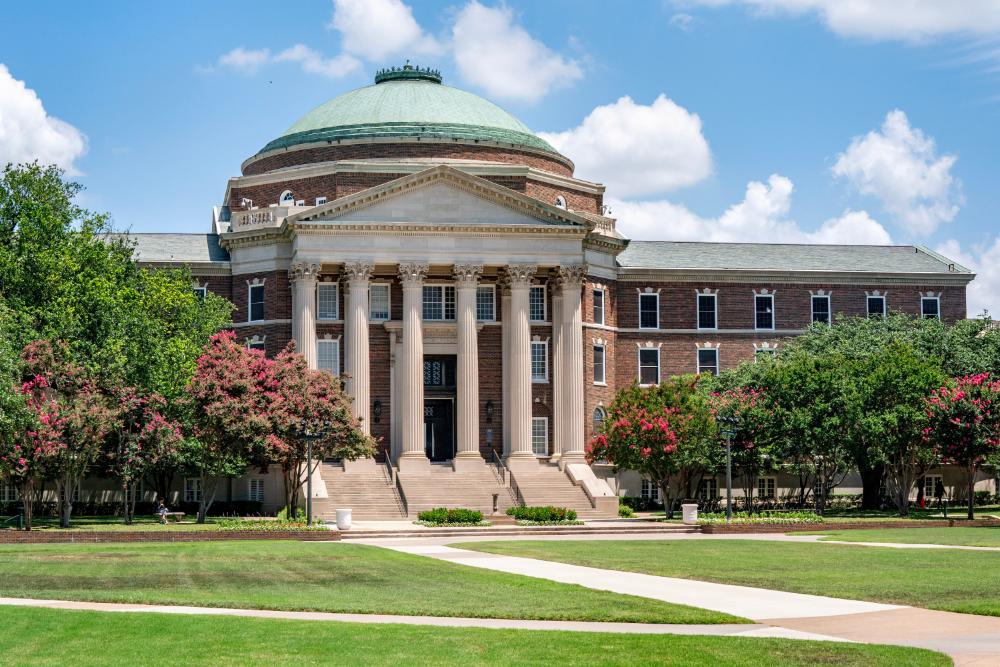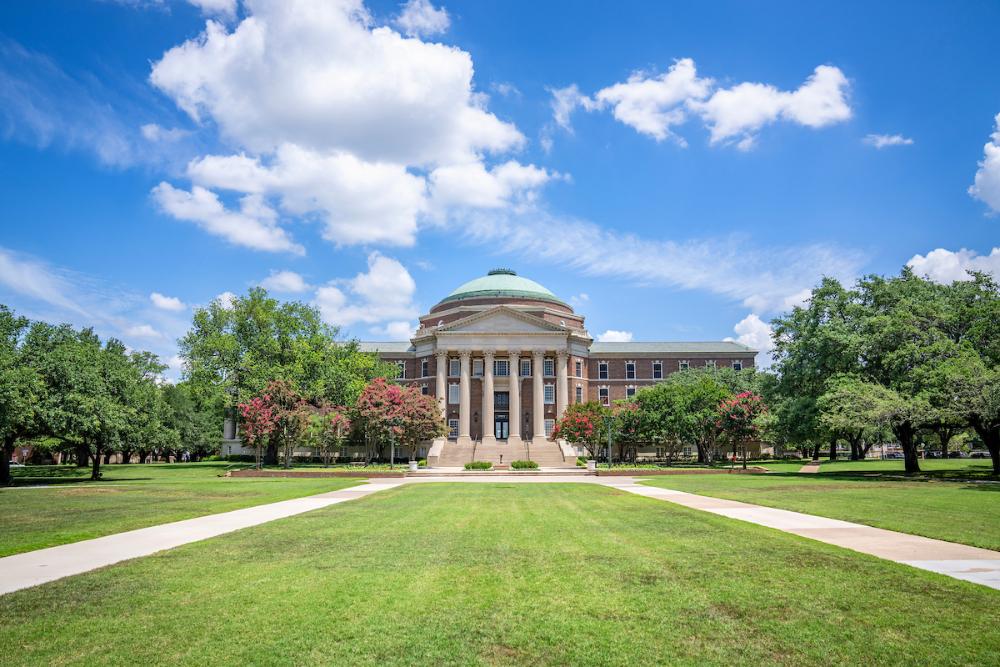
Dallas Hall, home to the M.S. in Data Science and Applied Statistics, is the oldest building on SMU campus.

Undergraduate programs

History

B.A.

Minor

Overview

The William P. Clements Department of History offers three types of courses: introductory, survey, and more advanced courses that explore large areas of human history; intermediate thematic courses that mix lectures and small group discussions to explore more closely defined topics; and seminars that probe deeply into given areas.  

Students must take at least six credit hours (two courses) in American history; six credit hours in European history; and six credit hours in African, Asian, Latin American or Middle Eastern history. Each student should devise a program of study that meets individual interests and needs and also achieves a balance between diversification and specialization. 

Top 20%

Best National Universities

U.S. News & World Report (2026)

11:1

undergraduate student-to-faculty ratio

90+

undergraduate majors at Dedman College of Humanities and Sciences

Ready to apply?

Get started here.

Tuition and financial aid

2 out of 3 first-year students are awarded grants and/or scholarships with an average total of $38,598.

Tuition and costs

Explore the cost breakdown of tuition for undergraduate programs.

Financial aid

Find information on scholarships and financial support available at SMU.

Curriculum and learning

Featured courses

HIST 1328

Votes for Women!: The History of the Women’s Suffrage Movement in the United States

Examines the struggle for women’s suffrage and its impact on women’s political power, social equality and American political life.

HIST 2337

History of Sports in the United States

The social, cultural and business history of sport in the U.S., including cultural meaning and ethical components of sports of the past two centuries.

HIST 3336

United States Cultural History

Introduces students to significant cultural brokers, institutions and forms, and explores how and why culture in the U.S. changed over time.

Outside the classroom

Faculty

The William P. Clements Department of History faculty members are dedicated teachers and distinguished scholars, specializing in fields that cover the globe. In addition to its strength in research, the department includes some of the University's most gifted teachers, receiving the University’s top teaching awards.

Facilities

The historic Dallas Hall on the SMU campus is the home of Dedman College of Humanities and Sciences.

Dallas Hall

The 57,687-square-foot facility is utilized by Dedman College as both academic and office space.

Several history faculty members from SMU’s  Clements Center for Southwest Studies gather at Taos Pueblo.

Clements Center for Southwest Studies

The center promotes research, publishing, teaching and public programming related to Texas, the Southwest and U.S.-Mexico borderlands.

Faculty gather at SMU’s Dallas Hall for programming hosted by the Center for Presidential History.

Center for Presidential History

The center advances research of the American presidency through fellowships, publications, public programs and educational outreach. 

Request more info about this program

Request more info about the B.A. in history program

Loading...

Frequently asked questions

Our undergraduate majors and minors enter the arenas of government, law, business, public service, the arts, education and every other field, mindful of the importance of language and imagination in effecting change.

No. Most historians need at least a master’s degree in their area of study. Historians gather firsthand information using primary sources like historical documents, working to inform and engage with the public.

We help students build their cultural competency, critical thinking and global skill sets to best prepare them for life after graduation. As a history major, you’ll learn how to think creatively and critically, conduct research, analyze complex material, make persuasive arguments and communicate your ideas effectively.

Yes, our classes help students interpret the political, cultural and economic developments that shape both American society and the wider world, which are skills many employers seek. Graduating history majors share here how their history degree has helped them in the job market.

Yes. Many with bachelor’s degrees in history go on to graduate school and/or law school. The largest portion (20%) of history degree holders works in education and libraries, according to the U.S. Bureau of Labor Statistics (BLS). 

The History Department offers the opportunity to earn up to three credit hours for an approved internship. In the past, our students have interned with the Dallas Jewish Historical Society, the George W. Bush Institute and elsewhere!

As part of the broad array of programs offered by the SMU Abroad Office, our professors lead summer study abroad trips to fascinating places like Rome, Paris, Oxford and Normandy. 

Yes. As part of the Bachelor of Arts in history, you will study American history; European history; and African, Asian, Latin American or Middle Eastern history.