Dedman Law Advocacy Team Wins Important Texas Supreme Court Decision in Pro Bono Case

A pro bono advocacy team led by Dedman Law's Director of Advocacy Programs won a ruling that preserves injured Texans' right to present unchallenged medical bills to juries — reshaping civil litigation statewide.
An SMU Dedman School of Law advocacy team has secured a significant victory at the Texas Supreme Court, one that clarifies how injured Texans may prove medical expenses in civil cases and strengthens access to justice for ordinary plaintiffs across the state.
In Ortiz v. Nelapatla, the Court reversed the Dallas Court of Appeals. It held that when a defendant challenges only part of a plaintiff's medical bills, the unchallenged portions remain admissible and may be considered by a jury. The ruling rejects a practice that had allowed defendants to effectively exclude entire billing affidavits by targeting only isolated line items.
WHAT WAS AT STAKE
The case centered on Texas Civil Practice and Remedies Code Section 18.001, a statute designed to streamline civil trials and reduce unnecessary litigation costs. The law allows parties seeking recovery for medical expenses to establish reasonableness and necessity through affidavits, rather than requiring expert testimony for every bill. Opposing parties may file counter-affidavits disputing those charges.
The central question: if a defendant challenges only some of those charges, can the remaining, unchallenged charges still reach the jury? The lower court said no. The Texas Supreme Court disagreed.
THE COURT'S RULING
The Supreme Court held that trial courts may not exclude an entire medical-billing affidavit simply because portions of it have been challenged. Instead, unchallenged portions remain admissible. The Court further held that, in certain circumstances, a defendant's own counter affidavit may be introduced as evidence when it affirmatively acknowledges that some charges are reasonable and necessary.
The ruling provides important guidance for trial courts across Texas. By establishing that medical-expense affidavits may be evaluated on an item-by-item basis, it ensures that a partial challenge cannot invalidate an entire affidavit. The opinion is expected to influence how medical-expense evidence is handled in civil litigation statewide.
The ruling is significant because requiring expert testimony for every medical charge, even those not genuinely in dispute, can dramatically increase litigation costs and make it harder for individuals to fully present their claims. The Court's opinion reinforces Section 18.001's core purpose: streamlining evidence, reducing unnecessary expense, and allowing juries to focus on the issues genuinely in dispute.
"This opinion is an important victory not only for our client, but for Texans who depend on a fair and practical civil justice system. The Court's ruling ensures that juries may still consider medical expenses that were never genuinely disputed. I am especially proud to have worked alongside former Dedman Law students whose dedication and professionalism reflect the advocacy values emphasized at the law school."
Lance Caughfield, Director of Advocacy Programs, SMU Dedman School of Law
THE DEDMAN LAW TEAM
 |
 |
 |
The case was handled entirely pro bono by three members of the Dedman Law community.
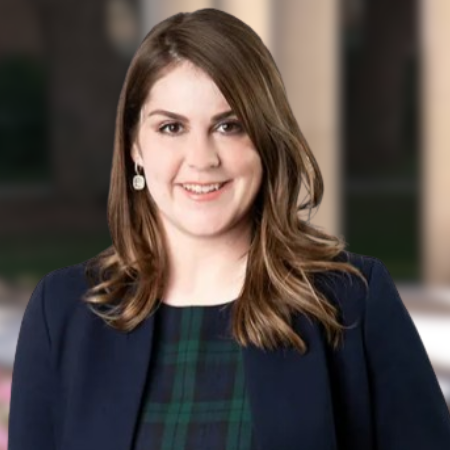
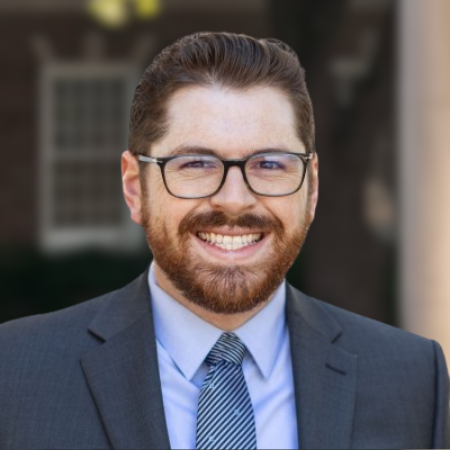
Lance Caughfield, Director of Advocacy Programs at SMU Dedman School of Law, took on the case, assisted with briefing and argument preparation, and coordinated the team's overall strategy. Haleigh Jones '15, took the lead role and briefed and argued the case before the Texas Supreme Court. Dallas Flick '18, assisted with briefing and argument preparation. Their work reflects Dedman Law’s longstanding commitment to advocacy excellence, public service, and preparing lawyers to serve clients and communities across Texas.
WHAT HAPPENS NEXT
The Texas Supreme Court did not directly award the additional medical expenses. The case has been remanded to the trial court, where a jury may now consider the admissible evidence and determine whether additional damages should be awarded.