A Simmons Applied Physiology and Health Management student works with a patient at a community health event.

Undergraduate programs

Applied physiology and health management

Major: B.S.

Minor

Overview

The B.S. in applied physiology and health management (APHM) at SMU prepares students to become leaders in health, fitness and wellness by combining scientific knowledge, research and management skills. Grounded in evidence-based practice, the program emphasizes holistic health outcomes and equips students with the analytical tools to critically evaluate and apply research in professional settings.

Through a curriculum that integrates physiology, health science and business principles, students gain a strong foundation for careers in wellness coaching, sports and allied health professions. Experiential learning opportunities reinforce classroom instruction, fostering the development of professionals capable of addressing chronic disease prevention and promoting sustainable health practices. Graduates are well-prepared for leadership roles or advanced study in fields such as physical therapy, nursing, or physician assistant programs.

Graduates are positioned for success given SMU’s Dallas location, home to major hospital systems and one of the country’s largest sports markets. APHM students build strong networks and land competitive internships. The program is housed in the Department of Applied Physiology and Sport Management.

Top 20%

Best National Universities

U.S. News & World Report (2026)

No. 1

Best Sports Business City

Sports Business Journal (2023)

48%

of SMU students participate in internships or co-op programs (2023-2024)

Ready to apply?

Get started here.

Tuition and financial aid

2 out of 3 first-year students are awarded grants and/or scholarships with an average total of $38,598.

Tuition and costs

Explore the cost breakdown of tuition for undergraduate programs.

Financial aid

Find information on scholarships and financial support available at SMU.

Curriculum and learning

Featured courses

APSM 3343

Health Promotion Practice

Explores the assessment, planning, execution and evaluation of health behaviors and programming in human populations.

APSM 4311

Principles of Exercise is Medicine

Discusses the physiological and medicinal role exercise plays in the promotion of health and the prevention and treatment of disease.

APSM 4344

Pandemics! The Science of Disease Spread, Prevention and Control

Explores the science of epidemic and pandemic prevention, treatment and control, and examines what we’ve learned from pandemics across time.

Outside the classroom

Student success

Our graduates consistently secure positions in medicine, rehabilitation, business and marketing and many other health-centered fields. Many go on to pursue advanced degrees in sports, medicine and business.

Student stories

Devon Luke (pictured at right) is an SMU Football athletic trainer and a student in the Applied Physiology and Health Management program.

Devon Luke ’26

Devon Luke (pictured at right) is an applied physiology and health management major and the president of the SMU Applied Physiology Club. She is also a student athletic trainer for SMU football, a Caswell Leadership Program Fellow and a medical scribe for a plastic surgeon. “Within the APHM program, I have been fortunate to learn from dedicated professors, collaborate with motivated students, assume leadership roles and engage in challenging curriculum that highlights the vital role of health in society and life.”

Faculty

Our distinguished faculty are industry leaders and subject matter experts, bringing real-world experience and industry insights to the classroom.

Facilities

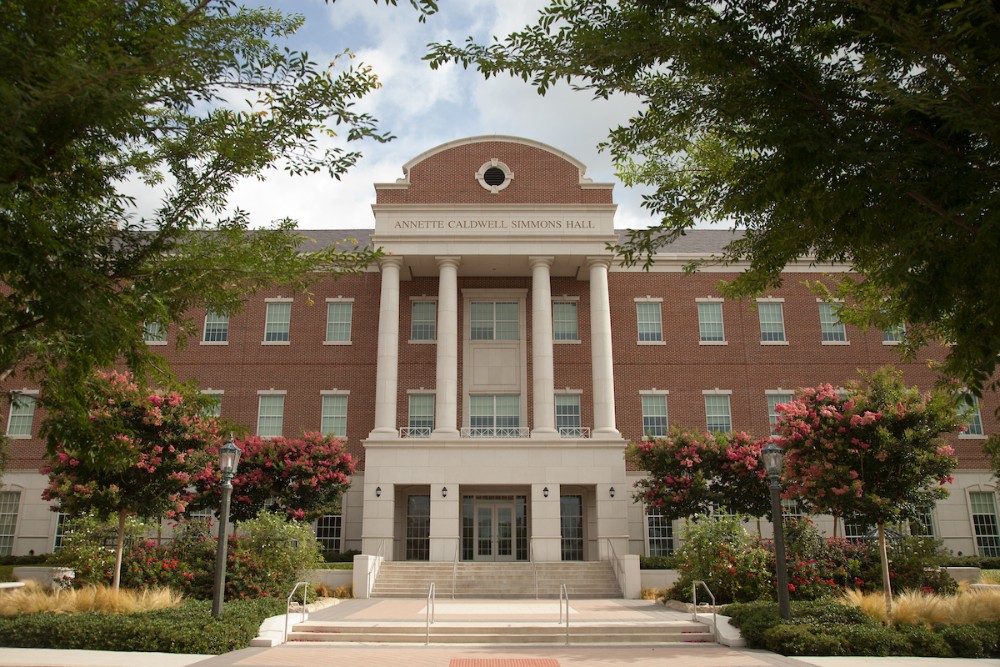
Annette Caldwell Simmons Hall is home to the Simmons School of Education and Human Development.

Annette Caldwell Simmons Hall

Home to the Simmons School of Education and Human Development, Annette Caldwell Simmons Hall has classrooms, study spaces, and research labs including the Integrative Physiology Laboratory.

Request more info about this program

Request more info about the B.S. in Applied Physiology and Health Management

Loading...

Frequently asked questions

A B.S. in applied physiology and health management is an interdisciplinary degree that examines health and wellness in individuals and populations. An APHM degree from SMU equips students with the skills to design research-based training programs, create effective lifestyle prescriptions, and manage fitness and health facilities – skills increasingly vital in serving aging and diverse populations.

Applied physiology and health management graduates pursue careers in fitness, health, and allied medical fields. Careers include exercise physiologist, fitness center director or manager, wellness consultant, personal or sports performance trainer, cardiac rehabilitation specialist, or researcher. Many advance to allied health professions such as physical therapy, physician assistant, nursing and medical practice, or work in health marketing, product development and corporate wellness.

Yes, at SMU students can double major or minor outside of the applied physiology and health management program, both within Simmons and across the University. About 1 out of 4 SMU undergraduates pursue two or more majors and minors. SMU and Simmons support students who wish to pursue cross-disciplinary studies.

Yes, an applied physiology and health management degree provides a strong foundation for many careers in healthcare, including physician assistant, nursing, physical therapy and medical doctor. Many graduates of SMU’s B.S. in applied physiology and health management have gone on to medical school and other healthcare professions.

While all three fields relate to health and performance, they differ in focus. Kinesiology emphasizes motor control, biomechanics, physiology and sports science. Public health addresses population-level issues like epidemiology, policy, and environmental health. APHM combines exercise physiology, chronic disease prevention, and health management – linking clinical science with wellness program design. There’s overlap, but each targets a different level of health science.

Graduates of SMU’s B.S. in applied physiology and health management program have been hired at medical offices and major hospital systems, fitness and rehabilitation centers, sports franchises and nutrition and wellness practices.

Yes, students can participate in a Research Practicum in Applied Physiology course where they conduct supervised research with an APSM research faculty member in their laboratory, as well as other courses rooted in research and lab learning.

Students also have access to the Integrative Physiology Laboratory, which is divided into “teaching pods” with specialized equipment to monitor physical performance for research and interactive learning.