Perkins Hybrid Students Gather for January Term

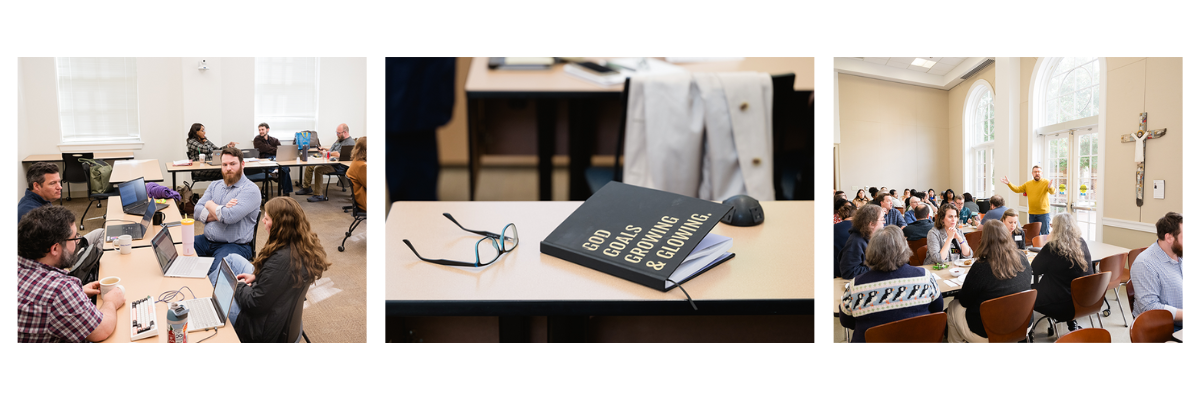
Typically at the beginning of the winter and summer semesters, hybrid students at Perkins School of Theology gather at the Dallas and Houston sites for their required in-person intensives. This year’s winter intensive took place in early January, bringing students from across the country together for a week of face-to-face learning, worship, and community building.
For many students, the intensives offer a rare opportunity to move beyond the screen and connect in person with classmates they have come to know virtually. M.Div. student Olivia Pruett, who traveled from out of state, shared how the experience fostered collaboration and deepened relationships.
“This intensive I connected with fellow students to get a house and support one another in sharing the cost of housing and meals,” said Pruett. “Before this course, we had classes together but weren’t very close. During this week, we found connection and decided to form a Band—that bAInd, since we took that AI in ministry course—meeting weekly to check in on our ministries, our struggles and victories, and how our souls are doing.”
Each member of the group comes from a different annual conference, and Pruett noted that without the in-person intensive, they may never have discovered how compatible and comfortable they were working together. “Being brave enough to reach out to someone who was almost a stranger has already enhanced my life and ministry,” she added.
Even though the intensives may be the first time students meet on campus, many describe their relationships as already deeply rooted. M.Div. students Kristin Wells and Tendresse Kapalang A Sul, both part of the Spring 2027 cohort, shared that their sense of community was strong long before arriving in Dallas.
“The faculty at Perkins emphasized from the beginning that we’re building a ministry together, so we need to be in contact with one another,” said Sul, who travels from Coffeyville, Kansas. “We text each other often and send pictures. I’m such a people person, so being able to finally see my friends in person means a lot.”
Wells, who traveled from Rogers, Arkansas, echoed that sentiment. “This is truly a lasting camaraderie,” she said. “We struggle together and hold each other accountable by staying on top of things.” During the intensive, students shared meals, spent time together outside of class, and even stayed in the same Airbnb—experiences that helped transform online classmates into close friends.
Both Wells and Sul are new mothers, and their shared life stage has strengthened their bond. Along with other peers, they created a group chat to share parenting experiences, encouragement, and support while navigating seminary.
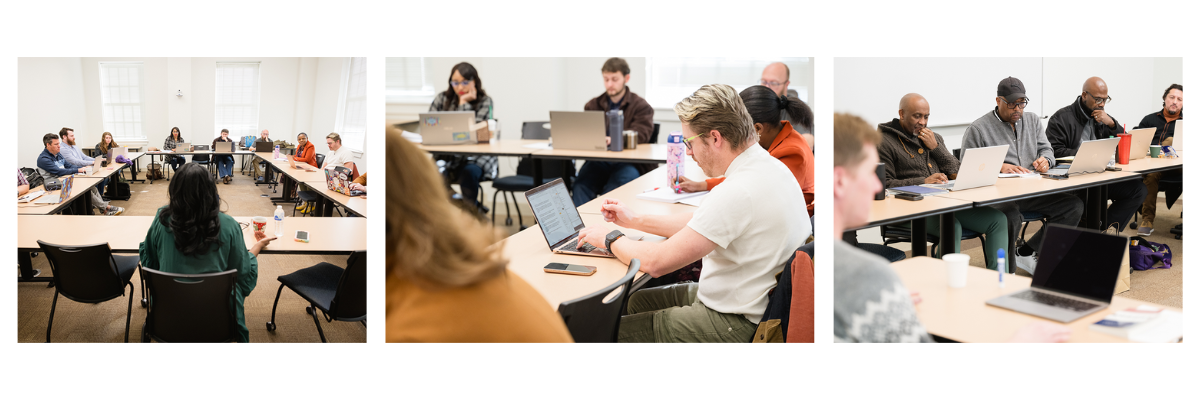
For many students, the hybrid format has made theological education possible in ways a traditional residential program could not. Wells shared that the flexibility of the hybrid model allowed her to pursue her calling without uprooting her family.
“It would’ve taken much longer to commit if it weren’t for the hybrid model,” she said. “I have a family and a 19-month-old. Getting up and leaving for seminary is difficult. This program allows me to hold two things that are important to me—my family and my education.”
M.Div. student Neil Glaser, a member of the Spring 2029 cohort, agreed. Based in Kansas City, he continues to serve in his ministry while completing coursework online. “It’s a beautiful blend of flexibility and meaningful conversation,” Glaser said. “The discussion boards and class conversations—especially in courses like Evangelism—help us engage different perspectives and challenge how we see the world.”
While students acknowledge that online learning can feel isolating at times, the intensives help bridge that gap. “Being online, we miss the small conversations before and after class,” Pruett said. “But the in-person weeks fill that void. Every intensive allows me to build deeper relationships and connect in ways you simply can’t online.”
Despite the distance between them during most of the semester, Perkins hybrid students say the program offers the best of both worlds—rootedness in their home communities alongside intentional, life-giving connection with peers who share the same call.