The work of caring for the whole person

This month’s Perspective theme, “Spiritual Care and Holistic Healing” is central to our current direction at Perkins and reflects one of my own passions for theological education. Our faculty has just approved a new curriculum to strengthen the Healthcare Chaplaincy concentration within our Master of Divinity, building on a long history of excellence in teaching pastoral care. The revision brings classroom and clinical learning into closer conversation and gives students a clearer path to begin preparing for professional board certification. The establishment of the Reverend Charles R. Millikan, D.Min., Endowed Chair of Spiritual Care (for which we are currently undertaking a faculty search) gives us an opportunity to deepen that work through faculty leadership, research, and partnerships with healthcare institutions in Dallas, Houston, and beyond. We want students who feel called to serve at a hospital bedside to see that vocation clearly reflected in the education we offer without diminishing our other forms of ministerial preparation.
Pastoral and spiritual care must be holistic. Illness can change how we experience our bodies, what we imagine for the future, and how we pray. Trauma can make it harder to trust the people who are trying to help. A minister or healthcare chaplain may spend part of a morning with a patient wondering how to tell her children about a diagnosis, then sit with a family trying to decide what their father would want at the end of his life. Later, a nurse may ask for a few minutes to talk through a decision that still weighs on him. Caring for the whole person means attending to these experiences together. A minister’s own faith tradition can ground that work while leaving room for the beliefs, practices, and questions of the person receiving care.
At Perkins, our faculty help students bring theology, pastoral care, and bioethics into conversation with the decisions people face in hospitals, hospices, congregations, and community agencies. Supervised practice is essential to that education. In Clinical Pastoral Education, which is one form of supervised practice, students serve in clinical settings and reflect with supervisors and peers on actual encounters. They learn to recognize spiritual distress, work alongside other members of a healthcare team, and consider how their own assumptions shape the care they offer. Our Intern Program cultivates that same habit of reflection in other ministry settings.
As Thanksgiving approaches and the semester draws to a close, I’m grateful for our students, for the faculty, staff, and mentors who teach and support them, and for the partners and friends who make their education possible. This month I’m especially mindful of those who will spend part of the holiday caring for others, and of the people whose places at our tables we will miss.
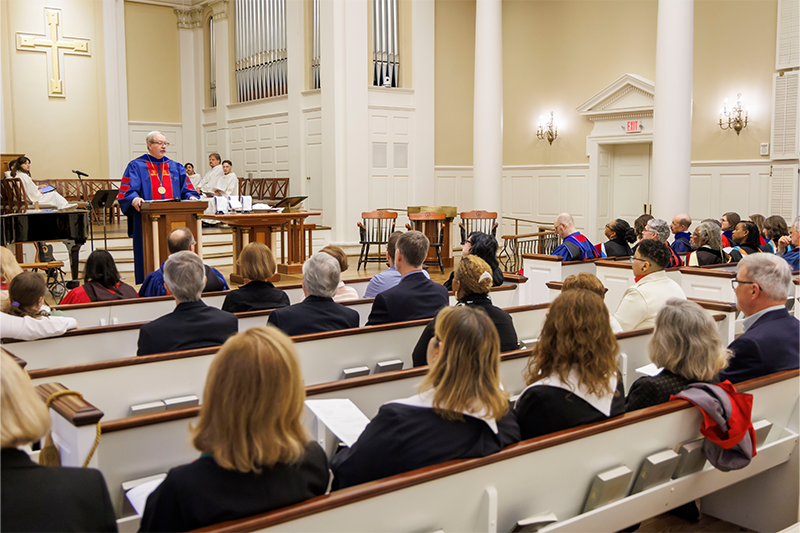
I hope you’ll join us for our annual Advent Service on Tuesday, December 1, at 6 p.m. in Perkins Chapel. With music from our sacred music program, we’ll gather for worship and make time for the hope and expectation of Advent. The service is free and open to all. I’d be glad to see you there.