Dean Stone's June Reflection

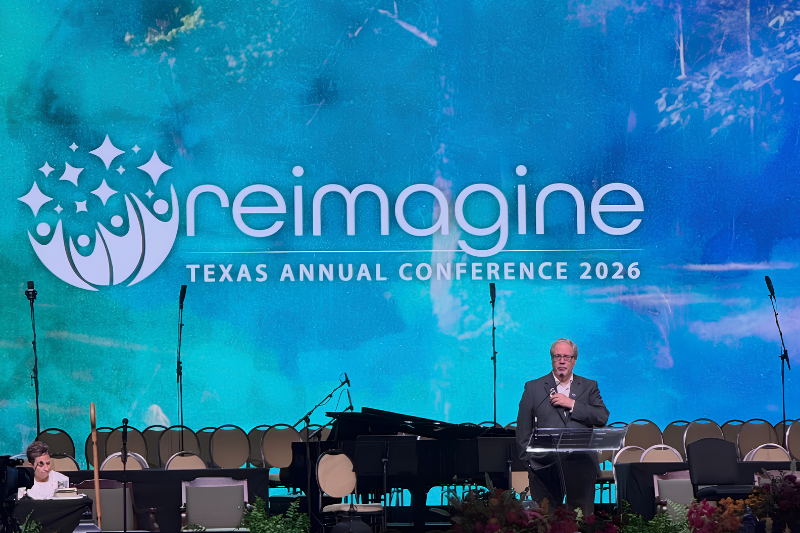
Each June, members of the Perkins community travel within our region and across the country to participate in United Methodist annual conferences. It is a joyous time when we get a chance to hear from alumni and friends about their vocational journeys, to connect with prospective students, and to learn from clergy and lay leaders about the ministries that are taking root in their congregations and communities. The month of June reminds us again and again that we are part of a living, global church, accompanying communities as they discern God's work in the present while carrying forward a rich inheritance from the past.
That task of remembering and responding lies at the heart of both Christian faith and healthy communities. Healthy communities depend upon moral memory—the willingness to remember honestly where we have flourished, where we have failed, and whose stories have too often been forgotten or eclipsed in favor of other dominant stories. Scripture repeatedly calls God's people to remember: to remember liberation from bondage, to remember the covenant, to remember Christ's death and resurrection, and to remember "the least of these" (Matt. 25). Memory in the biblical tradition is never merely nostalgic recollection. It is an act of discipleship. We remember so that we may live differently.
That theme weaves throughout this issue of Perspective.
This issue’s reflections on Juneteenth invite us to consider remembrance not simply as looking backward, but as a faithful commitment to justice today. As members of our Perkins community remind us, freedom is both a gift and a calling. Honest remembrance challenges us to become more faithful citizens and more faithful disciples.
Yet remembrance alone is never enough. We are also inspired by the ministry of Terre Duchesne McGill, whose leadership following the Springtown tornado demonstrates what happens when theological formation meets urgent human need. Compassion, resilience, and practical service become visible expressions of faith in action.
The issue also highlights Professor Susanne Scholz's work exploring the intersection of Scripture, yoga, and spiritual well-being. Her scholarship reminds us that remembering sacred texts is not simply an intellectual exercise but an embodied practice that shapes how we care for ourselves, our neighbors, and the communities we inhabit.
At Perkins School of Theology, we believe theological education prepares people not only to interpret the past but also to engage the present with wisdom, humility, and hope. This summer I am grateful for the many ways our students, faculty, alumni, and friends embody that calling every day. Thank you for joining us in this shared work of remembering faithfully, serving courageously, and participating in God's ongoing work of renewal.
Bryan Stone
Leighton K. Farrell Endowed Dean