Eric Markinson on integrating faith and healthcare

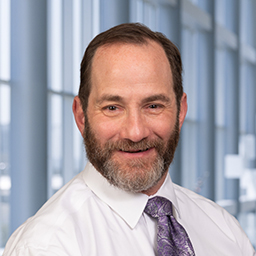
From the classroom to the clinic
For Markinson, Perkins provided a theological framework capacious enough to engage clinical environments with depth and imagination.
“Perkins did an excellent job laying a theological foundation that is in conversation with science and clinical care,” he said. “Certainly, the presence of excellent process theologians on the Perkins faculty sheds light on the presence of what is holy in the grandest and the microscopic corners of creation.”
That expansive vision of the sacred now informs his work in palliative care, where questions of meaning, suffering and hope often arise alongside complex medical decisions.
Markinson credits the Pastoral Care Concentration, with shaping his vocational imagination. “The Pastoral Care Concentration helped place me in a mindset to serve in healthcare,” he said. “And the weeklong residency at Houston Methodist was a superb orientation to clinical spiritual care.”
He also emphasizes the importance of Clinical Pastoral Education (CPE) for those discerning chaplaincy. “Clinical Pastoral Education is extraordinarily rich intellectual, practical, and personal work that is essential for the practice of any chaplaincy,” he said. “It’s a great internship — and those seeking ordination would do well to consider it.”
A call shaped by experience
When Markinson began his studies at Perkins, chaplaincy was not part of his long-term plan. After a 25-year career in schools, it was personal experience that redirected his path.
“My family’s experience of living and dying led me to leave a twenty-five-year career in schools to pursue healthcare chaplaincy at Perkins,” he said.
That lived encounter with illness and mortality gave him both empathy and clarity — gifts that now shape his ministry to patients and families navigating life-limiting conditions.
Several courses at Perkins left a lasting imprint on Markinson’s approach to ministry, particularly those that required students to embody theology in tangible ways.
“Several classes, too, urged students to apply our theological thinking to concrete expression,” he said. “Jack Levison’s Intro to the Hebrew Bible required manifesting our thinking in artistic ways; Wes Allen insists on setting preaching in context; and Family Systems work shines light on how those closest to us encounter what is holy.”
Markinson notes that he felt very well prepared by Jeanne Stevenson-Moessner and other faculty to serve people of all faiths and no faith, emphasizing that not every chaplain navigates those spaces easily.
A Word to Students Discerning Their Call
In his outpatient palliative care role, Markinson often accompanies families over extended periods of time. The opportunity to build long-term relationships is one of the most meaningful aspects of his vocation.
Markinson encourages students to pay close attention to where they sense God’s presence, even if it leads beyond traditional congregational ministry.
“If students’ call is to lead a community of faith, then have at it. But if there is an ache to celebrate what’s sacred in other places and passions — business, healthcare, the arts, schools — then I urge students to listen closely to what God is calling them to,” he said.
Through his work at Parkland Health, Markinson embodies Perkins’ commitment to forming leaders who engage the world thoughtfully and compassionately. His ministry stands as a testament to the many pathways, including healthcare, through which Perkins graduates live out their call to serve.