Faithful Formation for Pastoral Health Care: Alum Veronica Davis

Professional Guidance for an Emotional Chapter
Perkins School of Theology prioritizes creating opportunities for students to explore diverse paths to ministry beyond the walls of the church.
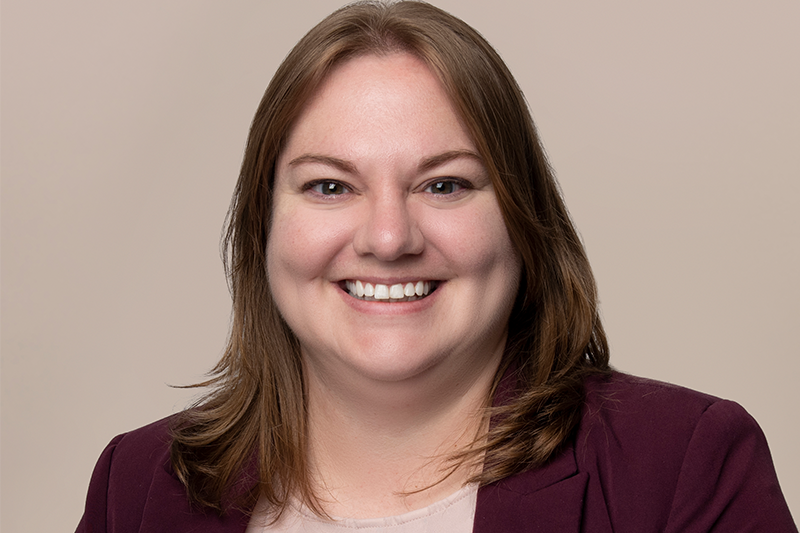
Now serving as a hospice chaplain at CC Young Hospice, Veronica shares a form of ministry that lives at the intersection of faith and medicine. Her story reflects the impact of her formation at Perkins to prepare her for the unique and deeply sentimental world of chaplaincy.
Grounded in Practical Preparation
The world of hospice chaplaincy is shaped by both clinical science and facing profound uncertainty. Patients are referred to hospice when physicians estimate six months or less to live—but no one truly knows when death will arrive. In that unknown, chaplains are invited to name what others often avoid: dying, grief, fear, hope, eternity.
“The knowledge of all the science of the profession does not overrule the sacredness of the work,” Veronica shares. “Hospice chaplains protect that sacredness—for patients and families, and also for the interdisciplinary teams we serve alongside.”
At Perkins, Davis found the theological grounding necessary to hold that balance. Courses in pastoral theology and world religions became daily tools, resources she still reaches for when caring for people from diverse spiritual backgrounds. Moral Theology with Dr. Theodore Walker sharpened her ethical discernment, preparing her for moments when compassion, justice, family conflict, medical realities, and legal frameworks collide. Christian Heritage courses emphasized an awareness that theology must be handled with care, especially in vulnerable spaces.
Together, these experiences formed a foundation that prepared Davis to serve faithfully in moments of immense emotional weight.
Exploring Possibilities at Perkins
While chaplaincy was not initially part of her plan at Perkins, it ultimately aligned with her sense of call beyond congregational life.
Through a unit of Clinical Pastoral Education (CPE) at Children’s Health, she began discerning healthcare ministry, realizing she would need deeper spiritual practices to sustain work in clinical settings. An internship with SMU’s Office of the Chaplain and Religious Life offered further exposure, allowing her to care for a diverse campus community and expand her understanding of ministry beyond traditional models.
Later, during the COVID-19 pandemic, Davis sensed another shift.
“I had Perkins friends who were exhausted and burned-out healthcare chaplains who had served the nurses and doctors during some of the hardest years of COVID and something in me knew that it was my turn,” she said. “So, after more discernment and applications, I went to Parkland Hospital for my year-long chaplain residency.”
Towards the end of her residency, Davis desired to explore the experiences she was having with families of the dying with more depth through hospice care.
Fulfilling a Need
Davis shares that the key factor about chaplaincy, especially in hospice, is embracing the fact that things can’t be fixed, but the role is still needed.
“The role of the hospice chaplain is to talk about the elephant in the room, be it dying, the afterlife/eternity, or grief,” she shared. “There is a science to the dying process, but there is also a lot of unknown or mystery. In these spaces then, faith, the unknown, and spirituality are all vital parts of a person’s journey if they chose to explore them at end of life.”
Davis recalls an experience with one of her first hospice patients that perfectly encapsulated her role.
“He taught me what a ‘good death’ could look like,” she said. “Having lived for years with a cancer diagnosis, he had made peace with his life and relationships. In his final days, they spoke about his hopes, his family, and what might lie beyond.”
Three days before the patient passed, as his condition rapidly declined, Davis took his hand and gently told him that the end would be soon. He smiled. He died later with his wife at his bedside, offering his family one final gift of timing and peace.
“I cannot explain that moment beyond mystery,” she reflects. “But chaplaincy is full of those holy, unexplainable moments.”
Advice for Students
For students discerning their own paths, Davis’s advice is this:
“Discern what makes your heart sing. What do you do well? What brings you joy? It may sound odd, but chaos is a space I do well in, so chaplaincy makes a lot of sense for me because I get to bring the calm when others feel anxious. What are the things or people you love?”
Davis believes God fuses people’s talents and skills with their joys so that they may find fulfillment in their vocations.
“Rule number one of chaplaincy—especially hospice—is that you cannot fix it, any of it. But you are still needed,” she said. “Does that idea draw you in? Give me a call.”
Davis’s work reflects Perkins’ commitment to forming leaders who serve faithfully wherever the world is hurting most.
Pay attention to what brings you joy, where your gifts meet the world’s need, and whether you are willing to walk with people without having answers. Ministry, she reminds us, is not limited to a building or a title. The theological tools gained at Perkins travel wherever there is pain, chaos, and longing for meaning.
Through Perkins, students are given the resources to explore many pathways—and the courage to follow them as they evolve. Veronica Davis’s journey is one such path, marked by faith, humility, teamwork, and a deep reverence for the sacredness of human life. It is a testament to how Perkins forms leaders who are willing to extend a hand, even—and especially—at the edge of mystery.