New Leadership, New Heights

Never one to shy away from a challenge, Dean Todd Milbourn is the high-altitude, high energy leader steering the Cox School forward.

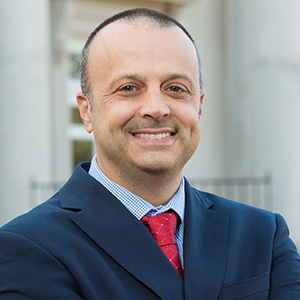
Headshot of Dean Todd Milbourn

In 2017, Todd Milbourn, a career academic with a high school and college background in athletics, took his passion for hiking to a higher level—literally.

He became intrigued with alpine and ice climbing, ultimately spending 12 days on Artesonraju, the sharp Andean peak in Peru that reaches 20,000 feet and served as muse for the Paramount logo.

“If you come to my office, there’s a picture of me smiling, because I hadn’t started the painful part of going down,” Milbourn says, jokingly. “I didn’t smile for the next two days.”


Physical pain aside, Milbourn sees alpine ice climbing, or any kind of rugged workout, as a necessary and beneficial distraction to his brain. For a high-energy extrovert in a high-profile role, sometimes it’s worth exhausting the body in service of restoring the mind.


“In these types of moments I’m not stressing about strategy and finances,” Milbourn says.

Dean Todd Milbourn gives a thumbs up sitting atop a snowy mountain peak
Figure: Dean Milbourn celebrates summiting the peak of Peru’s Artesonraju in 2017.


In June 2025, Milbourn officially started his role as dean of the SMU Cox School of Business, where he will be—and already very much has been—doing a lot of thinking about strategy and finances. Following Matthew Myers, who chose to return to the Cox School as a full-time professor after eight years at the helm, Milbourn became the 10th dean, tasked with taking a strong foundation—complete with a newly renovated campus—and steering it into an even more distinguished era.

The Cox School is at an inflection point: new leadership across the University, a move to the Atlantic Coast Conference in 2024, new buildings, new expectations and new opportunities in a city where the business environment just keeps expanding. Step one is to work with stakeholders across the University to craft a strategic plan—a process that began just a few months into Milbourn’s tenure and continues to be developed in tandem with work on the University’s strategic plan.


One way or another, the school’s North Star will boil down to a question Milbourn asks himself and his colleagues often: How does SMU Cox continue to get to the elite level?

A leadership style built on experience

Milbourn’s hobbies reveal his appetite for challenge. His professional path shows he’s prepared for one.


He earned his Ph.D. at Indiana University and started building a career, with early stints at London Business School and The University of Chicago. Then, in the last job he had before SMU, Milbourn spent 25 years at Washington University in St. Louis, where he made a name for himself through research around corporate finance and C-suite compensation, all the while climbing the ladder to a decade-long stint in the Dean’s Office, overseeing faculty and research efforts.


It was, in fact, through interactions about faculty hiring that Milbourn ended up on the radar of higher-ed search firms. He was choosy, taking a few interviews until the top job at the Cox School opened. When a recruiter reached out to him, he realized SMU checked nearly every box on his list: already well established, meaningful upside, Division 1 sports and a big undergraduate component.

When SMU announced Jay Hartzell as its next president, giving Milbourn the clarity he needed about the University’s seniormost leader, he submitted his application. “Then I fought like heck to get this job,” he says. He was named in March 2025 and started June 1. 

“It’s been a dead sprint, Milbourn says. “But an awesome dead sprint.

A question he gets often is whether he intends to be an external dean or internal dean. The answer, he says, is yes. His goal is to be collaborative, a man of the people, and those efforts have been in full force since day one.

The first 100 days were a listening and learning tour, meeting with senior and mid-level staff and faculty, hearing from adjuncts and the directors of centers and institutes, and getting to know key SMU leaders outside the Cox School’s four walls. Plus, student interaction—in whatever form he could get it before the fall semester kicked off and in every possible form since.


Dean Todd Milbourn fist-bumps an SMU Cox student
Figure: Milbourn can often be spotted around campus mingling with students, faculty and staff alike.


“Those things have been spectacular,” he says. “Just to get a feel for what people think we do great and where we could improve.”


The advantage of having these conversations at this exact moment in time is that, right now, Cox seems to be running uphill. Milbourn is quick to point to the efforts of former deans—including Myers and his predecessor, Al Niemi. The work of both men elevated the Cox School’s academic profile; strengthened its faculty; grew its student base; and, in the case of Myers, delivered a newly renovated, state-of-the-art campus.


“We’re only in a position to think about what’s next because of what already is,” he says. “We’re standing on the shoulders of giants.”


To put it more succinctly (and perhaps in the vernacular of the students filling the halls), SMU is a “vibe school.” That phrase—a favorite of Hartzell’s and one coined by Forbes in 2025 to represent an “emerging category … [that] describes colleges where campus culture, lifestyle and aesthetic identity weigh just as heavily as academic reputation”—kind of says it all.


“There is a momentum behind being at SMU,” says Marcus Butts, senior associate dean of faculty and research at Cox. “We want to capitalize on that momentum and on that new energy we’re seeing across campus.”


With a wave of new leadership in the cockpit, fresh ideas are plentiful. And maybe there’s even an advantage to operating without battle scars.


“Everybody’s coming in with ambitions to elevate either their portion of the University or the University as a whole,” Milbourn says. “So that energy of, ‘Hey, what can we do that can be truly great, truly elite?’ That’s pretty contagious.”

Crafting a path forward

All those conversations are coming together as a cohesive path forward. At the same time SMU leadership is working on a strategic plan for the University, Milbourn is working with his team on an SMU Cox strategic plan that involves identifying excellence, amplifying it and positioning it on a national level.

“There are a lot of folks who simply aren’t aware of how incredible our, say, Alts [Alternative Asset Management Center] program is on the finance side. They may not be aware that we place as many students in real estate and energy spaces as any school,” he says. “So there’s a concerted effort now, both at the University and the school level, to really get the message out and bring people up to speed on what we have already done, setting the table for what’s next.”


Dean Milbourn poses for a group shot with other SMU leaders in front of a red and blue balloon installation
Figure: Dean Milbourn joined SMU as part of a new campus leadership team in the 2025–26 academic year, including a new president, provost, two other deans and athletic director.


Increasing the output of research and thought leadership will help. One of Milbourn’s key performance indicators is whether the school is producing more thought leadership, per capita, over time. Another priority is thinking boldly about the resources at the Cox School’s doorstep.

“The high-level vision is that the Cox School should be at the center of anything and everything that touches the economic engine and entrepreneurial ecosystem of Dallas and beyond,” he says. “That’s the shining vision on the hill.

In an economy increasingly shaped by AI and data science, Milbourn wants to build programs that align with where the world is headed. That will require collaborating with other pockets of campus so that students come out prepared to bridge finance, analytics, technology, engineering and other disciplines.

When it comes to growth, there’s a roomy new campus built to accommodate it. “Our bigger growth going forward is going to be at the undergraduate level,” says Jim Linck, senior associate dean for degree programs. “Much higher than the grad level.”

It’s not just about scale, of course. It’s about evolving the curriculum and student experience to reflect the demands of the changing workplace, combining the right practical skills with the high-EQ qualities SMU students are known for.

“I feel like we’re good at having a well-rounded student,” Linck says. “We’re not just producing people [who] are going to sit in the back room and run models.”

All of this will be led by a newly expanded leadership structure within the Cox School. Bill Dillon has transitioned out of the critical second-in-command role he’s held for more than 30 years to focus solely on his research and teaching at the start of the 2026–2027 academic year; Milbourn reorganized the role shortly after he became dean.

The role became two positions: one for faculty and research (Butts), another for degree programs (Linck). Butts and Linck, both of whom have been department chairs (of management and finance, respectively) learned on the job from Dillon—and all three were associate deans in the 2025–2026 academic year.

“[Linck] and I have to be simpatico,” Butts says. It’s a model built for specialization and scale, and Dillon’s “superhuman” abilities aside, it’s a move that aligns with the Cox School’s recent growth.

“We’re on a strong trajectory, and we see more opportunity ahead,” Linck says. “We’re launching new programs and refining existing ones to best serve the market, doubling down on areas where we can truly add the most value.”


Like Milbourn, Linck and Butts have a goal to lift the Cox School’s standing among the best business schools in the country. “The schools that we compare ourselves to, our peers and aspirants, some of them currently have stronger national reputations,” Linck says.

One way to meet the goal of lifting the Cox School’s standing is by moving up in the national rankings. It’s a love-hate relationship: Every dean’s office in America keeps an eye on those lists, whether they like it or not. But at the Cox School, Milbourn sees the lists more as a proof point than a strategic guide.

“You never want to take an action just because you think it’s going to move you up in the rankings. However, the rankings that are truly based on measuring the tangibles can absolutely be informative as to what we’re doing well and where we need to do some work,” he says. “Directionally, I know which way I want to go, but we’re not going to let rankings be the singular driver.” 

The Cox School’s ascent 

For Milbourn and his leadership team, the work at the Cox School now becomes about pace—moving quickly enough to seize the momentum around SMU but deliberately enough to build a strategy that takes the school where it wants to go. The conversations he’s had around campus and the opportunities he sees emerging across Dallas point to a school that’s ready to reach a new vantage point.

The sprint of the early months hasn’t dulled his view of the long game: increasing research visibility, building interdisciplinary programs that anticipate where the economy is headed, expanding the reach and reputation of a school already known for producing well-rounded graduates, and supporting new growth with sustainable expansion of programs.

“Budget models, strategic planning, donor relations—those are a lot harder than mountains,” Milbourn says.

He may eventually need a couple of days out on a mountain without Wi-Fi to recharge, but for now, the climb toward an even higher standing for SMU Cox continues.