Episode 6: The Bonus Army & The 1932 March on Washington
Season Two, Episode Six: The Bonus Army & The 1932 March on Washington
November 11, 2021
Download the full transcript of this episode.
Show Notes
Welcome to The Past, The Promise, The Presidency Season II, Episode VI: The Bonus Army & The 1932 March on Washington.
This Veteran’s Day, we are examining the time that World War I veterans organized their own March on Washington.
Most Americans associate the Great Depression with Franklin Delano Roosevelt. But it was Herbert Hoover who was in office in 1932 when a group of World War I veterans decided to organize a March on Washington to demand an early payment of their bonus checks for serving in the military during WWI.
In 1932, the Great Depression was at its worst. Approximately one in four American workers were unemployed. After three-plus years of record-setting unemployment, poverty, hunger, and homelessness, many Americans were at a breaking point. WWI veterans, in particular, were furious that Herbert Hoover had bailed out the banks but he refused to sign a bill that would deliver their WWI bonus payments early. But Hoover did not respond with empathy. Instead, he sent federal troops to clear the protesters. Under the leadership of Douglas MacArthur, American soldiers used tanks, tear gas and, yes, bullets to remove a gathering of American wartime veterans from the National Mall.
We first spoke to Eric Rauchway of the University of California, Davis. He is one of the leading scholars of the New Deal, the Depression, and the political history between the world wars. Our second historian also ranks at the top of any list of depression era experts, David Kennedy, the Donald J McLachlan Professor of History Emeritus of Stanford University. Kennedy won the Pulitzer Prize in 2004 for his history, Freedom from Fear: The American People in Depression and War.
Guests:
Dr. Eric Rauchway

Dr. Eric Rauchway is an expert on U.S. policy, social, and economic history from the Civil War through the Second World War. He has consulted for government and private agencies, including the U.S. Department of Justice and a major Hollywood studio, and in addition to his books, has written about history for a variety of publications, including the Times Literary Supplement and the New York Times.
Professor Rauchway's recent research focuses on the New Deal and the Second World War. He has written several books on how federal policy affects the U.S. economy, and how the economy—international and domestic—influences U.S. policy. His research has been featured in the New York Times and on National Public Radio.
Selected Publications
-
Rauchway, E. (2018) Winter War: Hoover, Roosevelt, and the First Clash Over the New Deal. Basic Books.
-
Rauchway, E. (2015) The Money Makers: How Roosevelt and Keynes Ended the Depression, Defeated Fascism, and Secured a Prosperous Peace. Basic Books.
-
Rauchway, E. (2008) The Great Depression and the New Deal: A Very Short Introduction. Oxford University Press.
-
Rauchway, E. (2006) Blessed Among Nations: How the World Made America. Hill & Wang.
-
Rauchway, E. (2003) Murdering McKinley: The Making of Theodore Roosevelt's America. Hill & Wang.
-
Rauchway, E. (2001) The Refuge of Affections: Family and American Reform Politics, 1900-1920. Columbia University Press.
Follow Dr. Rauchway on Twitter.
Dr. Rauchway’s website.
Dr. David M. Kennedy
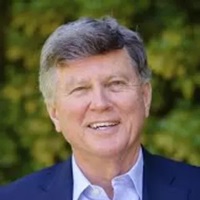
Dr. David M. Kennedy is the Donald J. McLachlan Professor of History, Emeritus at Stanford University
Reflecting his interdisciplinary training in American Studies, which combined the fields of history, literature, and economics, Professor Kennedy's scholarship is notable for its integration of economic and cultural analysis with social and political history. His 1970 book, Birth Control in America: The Career of Margaret Sanger, embraced the medical, legal, political, and religious dimensions of the subject and helped to pioneer the emerging field of women's history. Over Here: The First World War and American Society (1980) used the history of American involvement in World War I to analyze the American political system, economy, and culture in the early twentieth century. Freedom From Fear: The American People in Depression and War (1999) recounts the history of the United States in the two great crises of the Great Depression and World War II.