Go Bookish this Holiday
Books by SMU faculty, students and staff to please those on your list.

Compiled by Cherri Gann
SMU News
DALLAS (SMU) – From art, history and religion to sweet Texas cuisine and fiction, SMU’s book list has a selection to satisfy those on your gift list.
Books by Faculty
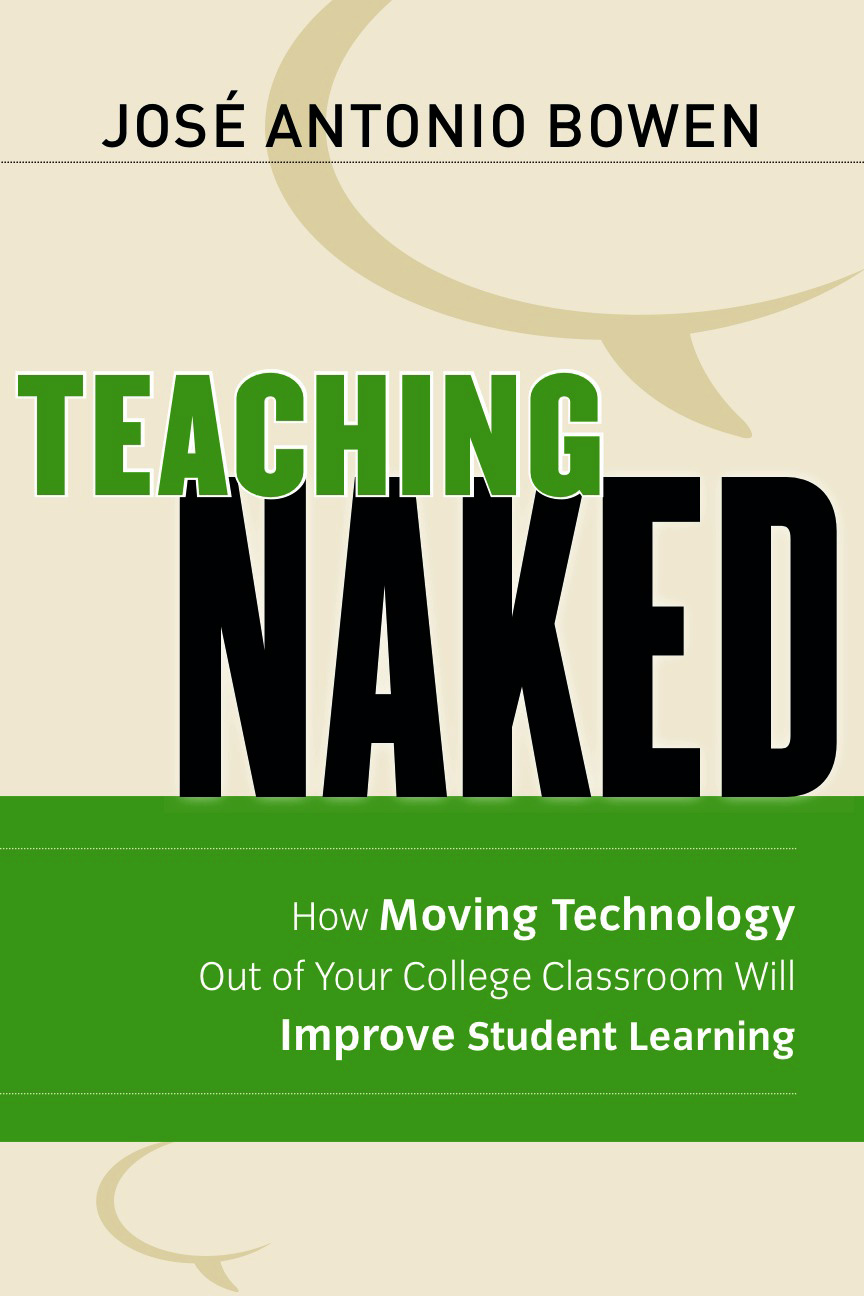 |
Teaching Naked: How Moving Technology Out of Your College Classroom Will Improve Student Learning (Jossey-Bass, 2012) introduces a new way to think about higher education, learning and technology. José Bowen, dean of SMU’s Meadows School of the Arts, recognizes the profound change that technology brings to education, but believes “naked” face-to-face contact between faculty and students is more impactful, and a better value, for higher education. He offers practical advice for faculty and administrators on how to engage students with new technology while restructuring classes into more active learning environments. Available at online booksellers. |
 |
American citizenship goes beyond the official naturalization process. Caroline Brettell, cultural anthropologist at Dedman College of Humanities and Sciences, with Deborah Reed-Danahay, examined sociocultural spaces in Indian and Vietnamese immigrant communities in the Dallas-Arlington-Fort Worth, Texas area for the book Civic Engagements: The Citizenship Practices of Indian and Vietnamese Immigrants (Stanford University Press, 2011). The University Distinguished Professor, and director of the Center for Interdisciplinary Studies, describes how religious and ethnic organizations provide places for refugees and immigrants to develop their own ways of expressing their American citizenship through daily living and honing civic and leadership skills, such as meetings, festivals or banquets. These experiences contribute to the future political potential of these immigrant populations. Available at online booksellers. |
 |
In the richly illustrated Alexander to Constantine: Archaeology of the Land of the Bible, Volume III (Yale University Press, 2012), Mark A. Chancey, religious studies professor in SMU’s Dedman College of Humanities and Sciences, with Eric M. Meyers, draws on recent, groundbreaking archaeological research to re-narrate the history of ancient Palestine. The book spans from the conquest of Alexander the Great in the fourth century BCE until the reign of the Roman emperor Constantine in the fourth century CE. It synthesizes archaeological evidence with ancient literary sources, including the Bible, to offer a sustained overview of the tumultuous intellectual and religious changes that impacted world’s history during the Greco-Roman period. Available at online booksellers. |
 |
Becoming White Clay: A History and Archaeology of Jicarilla Apache Enclavement (University of Utah Press, 2012) by B. Sunday Eiselt, anthropology professor in SMU’s Dedman College of Humanities and Sciences, tells the story of one of the longest-enduring and most successful nomadic enclaves in North America. For nearly 200 years the Jicarilla Apache of New Mexico thrived among the Pueblo and Spanish settlements after their expulsion from the Plains. Critical to their success was their ability to extend key aspects of Plains-Pueblo exchange to Indian and mixed-blood communities on the fringes of colonial rule. More than other nomadic tribes, the Jicarilla played an enormous role in holding together the social fabric of New Mexican villages after the fall of the Spanish Empire. Available at online booksellers. |
 |
In Into the Desert: Reflections on the Gulf War, Jeffrey A. Engel, director of the Center for Presidential History at SMU, brings together a team of distinguished experts and policy specialists to explore the still-unfolding ramifications of the Gulf War. Engel features analysis from Michael Gordon of The New York Times, Richard Haass, president of the Council on Foreign Relations, Sir Lawrence Freeman, foreign policy advisor to Tony Blair, and Shibley Telhami, Middle East specialist. Available at online booksellers. |
 |
Pull up a chair and gather round, y’all, says SMU Public Information Officer Denise Gee in her newest culinary tome Sweet on Texas: Lovable Confections from the Lone Star State (Chronicle Books, 2012). With one part, each, baking advice and kitchen gossip Gee sweet talks readers/bakers through a four-region Lone Star State dessert tour – East Texas, the Hill Country, the Panhandle and South Texas – with such recipes as Big Red Granita, Strong Coffee Custard, Good Ol’ Texas Sheetcake and swap-worthy Cran-Pistachio Cookies. Available at online booksellers. |
 |
Dennis Ippolito’s book Deficits, Debt and the New Politics of Tax Policy (Cambridge University Press, December 2012) explains the relationship between federal tax policy and other components of the budget. The Eugene McElvaney Chair of Political Science and professor in SMU’s Dedman College of Humanities and Sciences traces the partisan battle over budget policy that began in the 1960s, triggering the disconnect between taxes and spending that has plagued the budget ever since. Available at online booksellers. |
 |
Greek myths inform a vast source of forms, symbols and narratives for Western visual and literary traditions. The richly illustrated Greek Myth and Western Art: The Presence of the Past (Cambridge University Press, 2012) examines the legacy of Greek mythology in Western art from the classical era to the present. Written by the late Karl Kilinski II, an archeologist and art historian at SMU’s Meadows School of the Arts, the work traces the story of key mythological figures and motifs from ancient Greece through the modern era and shows the range and variety of which individual myths, motifs, and characters have been treated throughout the history of the visual arts in the West. Available at online booksellers. |
 |
When the One You Love is Gone (Abingdon press, 2012) by Rebekah Miles, professor of ethics and practical theology at SMU’s Perkins School of Theology, is a guide for moving through grief after losing a loved one. Miles reminds us that though we never fully get over the loss, God is at work in us turning the loss and pain into hope and renewal. Available at online booksellers. |
 |
At the end of the 16th century and at the turn of the first Islamic millennium, the powerful Mughal emperor Akbar declared himself the most sacred being on earth, the holiest of all saints and above the distinctions of religion. He styled himself as the messiah reborn, and the Mughal emperor was not alone in doing so. In The Millennial Sovereign: Sacred Kingship and Sainthood in Islam (Columbia University Press, 2012), A. Azfar Moin, professor in the William P. Clements Department of History in SMU’s Dedman College of Humanities and Sciences, explores why Muslim sovereigns in this period imitated the exalted nature of Sufi saints. He shows how the charismatic pull of sainthood (wilayat)—rather than the draw of religious law (sharia) or holy war (jihad)—inspired a new style of sovereignty in Islam. Available at online booksellers. |
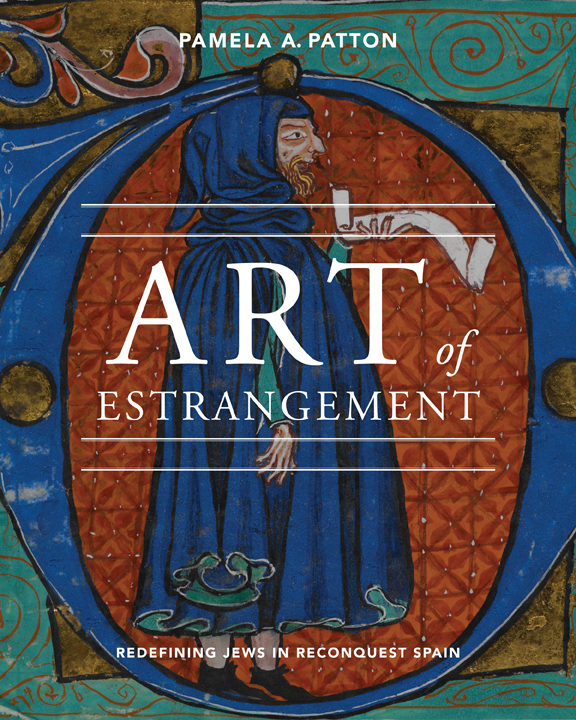 |
At its peak in the 12th and 13th centuries, the so-called Spanish Reconquest transformed the societies of the Iberian Peninsula. Among the most vivid signs of this change were the innovative images developed by Christians to depict the subjugated Muslims and Jews within their expanded kingdoms. Art of Estrangement (Penn State Press, 2012), by Pamela Patton, art history professor in SMU’s Meadows School of the Arts, traces the transformation of Iberia’s Jews in the visual culture of Spain’s Christian-ruled kingdoms. Patton’s work scrutinizes a wide range of works—from luxury manuscripts and cloister sculptures to household ceramics and scribal doodles—to show how imported and local motifs combined to articulate and reinforce the efforts of Spain’s Christian communities to renegotiate their relationships with a vibrant Jewish minority. Available at online booksellers. |
 |
From the age of temperance to the Civil Rights movement, churches have been central to important social movements. Occupy Religion: Theology of the Multitude (Rowman and Littlefield Publishers, 2012) by Joerg Rieger, Wendland-Cook Professor of Constructive Theology at SMU’s Perkins School of Theology, with Kwok Pui Lan, considers the growing role of religion in the Occupy Movement and asks provocative questions about how people of faith can work for social justice. Available at online booksellers. |
 |
With more than 20 years of combined research experience, Barbara Palmer and Dennis Simon, SMU's Altshuler Distinguished Professor of Political Science, go beyond conventional wisdom as they explore the reasons behind the continuing underrepresentation of women in Congress in Women & Congressional Elections: A Century of Change (Tower Center for Political Studies, 2012). They explain how the “rules of the game” — together with an important cluster of demographic characteristics that can make a district more or less “women friendly” — have shaped opportunities for female candidates across a century of U.S. history. Available through online booksellers. |
 |
Twentieth century federal policy toward American Indians sought to extinguish native culture –until the 1960s, when a loose coalition of hippies, civil rights advocates, Black Panthers, unions, Mexican-Americans, Quakers and other Christians and celebrities joined with Red Power activists to fight for Native American rights. In Hippies, Indians, and the Fight for Red Power (Oxford University Press, 2012) Sherry L. Smith, University Distinguished Professor of History in SMU’s Dedman College of Humanities and Sciences, offers a vivid account of this remarkable story when the counterculture was drawn to the Indian cause. Smith explains how the Indians knew political change would not come without help, which they found among the hodge-podge of dissatisfied Americans who rallied to the Indians’ campaign for treaty rights, tribal power, sovereignty, self-determination and protection of reservations as cultural homelands. The coalition was ephemeral but significant, leading to political reforms that strengthened Indian sovereignty. Available at online booksellers. |
 |
Shelette Stewart, associate director of business development for Executive Education in SMU’s Cox School of Business, has written Revelations in Business: Connecting Your Business Plan with God’s Purpose and Plan for Your Life (Tate Publishing, 2012). Stewart’s eight-step divine business planning approach combines Christian beliefs with core business principles. Available at online booksellers. |
 |
Ceran St. Vrain: American Frontier Entrepreneur (Sunstone Press, 2012) by Ronald K. Wetherington, professor of anthropology in SMU’s Dedman College of Humanities and Sciences, tells about a trapper/trader turned merchant who became an emerging capitalist in the flour industry of New Mexico and Colorado. St. Vrain represents an iconic image of the industrious and self-reliant western pioneer of the 19th century, and he helped guide the southwest from a barter economy to a post-military commercial society on the road to statehood. Available at online booksellers. |
From the Meadows Museum
Fans of the Meadows Museum at SMU can experience (or re-experience) its exhibits via art catalogs containing rich photography and fascinating back stories. Offerings for 2012 include:
| In the 1470s, the Portuguese king Afonso V commissioned tapestries to commemorate his recent conquests in North Africa. The Pastrana tapestries, created by Flemish weavers, were nearly lost to neglect in recent decades. The essays in The Invention of Glory: Afonso V and the Pastrana Tapestries document the history and significance of the tapestries, the process of their conservation, the history of Portuguese expansion, the representation of 15th-century arms and armor, and the artistic influence on the style of the figures and scenes. The silk-bound volume presents each of the tapestries in a glorious full-color fold-out page, and numerous details are reproduced in full-page color plates of the finest quality. |  |
| Mexican Modern Painting From the Andrés Blaisten Collection gathers 80 key works by more than 40 Mexican artists of the early 20th century – a period of immense creativity in the region, driven in part by the desire of its artists to forge an aesthetic identity that would define Mexico as a nation-state. The paintings highlighted in this catalog were assembled over 30 years of meticulous research, and offer the most thorough overview of Mexican modernism to date. Featured artists include Raúl Anguiano, Emilio Baz Viaud, Rosario Cabrera, Celia Calderón, Ramón Cano Manilla, Julio Castellanos, Fernando Castillo, Jean Charlot, Jesús Guerrero Galván, Francisco Gutiérrez, Saturnino Herrán, María Izquierdo, Agustín Lazo, Amador Lugo, Carlos Mérida, Guillermo Meza, José Clemente Orozco, Alfonso X. Peña, Feliciano Peña, Alfredo Ramos Martínez, Fermín Revueltas, Fernando Reyes, Diego Rivera, Manuel Rodríguez Lozano, David Alfaro Siqueiros and Rufino Tamayo. |  |
| The richly illustrated Diego Velázquez: The Early Court Portraits represents the third exhibition of The Prado at the Meadows, a vibrant, innovative collaboration between the Museo Nacional del Prado and the Meadows Museum, bringing the collections of the renowned Madrid institution to Dallas. It offers a renewed look at Velázquez’s initial years as a royal portraitist, from stunning regal likenesses like Philip IV (Museo Nacional del Prado, Madrid) to derivative engravings that emerged thereafter. Through an interdisciplinary perspective in the areas of art history, history and sociology, this catalog profiles the role of the artist and his craft by freshly examining the socio-cultural environment of the age. |  |
| Spanish art and culture generated tremendous and sustained excitement in the U.S. from 1870-1930. Collecting Spanish Art: Spain’s Golden Age and America’s Gilded Age explores why and how some of America’s greatest art collectors, including Isabella Stewart Gardner, Henry Clay Frick, Charles Deering, Archer Huntington, William Randolph Hearst and Algur Meadows, turned to the art of Spain to expand and enrich their collections. The authors examine what sparked the taste for Spanish art that grew from travel and visits to world fairs as well as the roles played by contemporary artists, dealers and advisors who were so influential in importing it to the U.S. to fuel the growth of so many private, and later public, American collections. |  |
All catalogs are available in the Meadows Museum gift shop, or send an e-mail to museumshop@smu.edu.
From The Writer's Path
The Writer’s Path at SMU offers classes taught by published and produced writers in a noncredit writing program for Dallas-Fort Worth area adult writers who seek publication. The following selections are works by students of The Writer’s Path:
 |
The third in the Violet Jordan trilogy, Nine Lives of an Urban Panther (Avon Impulse, 2012) by Amanda Arista, is an action-packed supernatural thriller. Werepanther Jordan, now promoted to topcat in the Dallas pack, continues to battle ghouls and vampire witches in a divided city. Available at online booksellers. |
 |
Violence on a secluded bayou, a strange boy with supernatural powers, and rogue science are all at the basis of All the Devil’s Creatures (Amazon Digital Services, Inc., 2012) by J.D. Barnett. This digital novel is a thought-provoking, fast-paced paranormal thriller set on the Texas-Louisiana border that takes on issues of race, class and environmental degradation in the American South. Available at online booksellers. |
 |
Siren Song: Book One of the Siren Song Trilogy (CreateSpace Independent Publishing Platform, 2012) by B.A. Blackwood, is the first of three young adult fantasy novels about fallen angels who roam the earth, and the unsuspecting who happen to cross their high-flying paths. Protagonist Ariel Robinson arrives for her first year at Montana State University and unwittingly lands between two battling factions of the Fallen Angels. Available at online booksellers. |
 |
Cordyceps (Amazon Digital Services, Inc., 2012) by Ian Duncan is a digital novel about a parasitic fungus, cordyceps, that has never enjoyed a such a sophisticated host as the infected residents turned zombies of south Florida who climb everything from light poles and billboards to radio towers – to sprout. It’s “survival at all costs” for protagonist Cole McGinnis who leads his friends through an apocalyptic landscape of increasingly aggressive zombies, National Guard troops, homeowner militias and armed looters. Available at online booksellers. |
 |
In the Laws of Migration (Tyrus Books, 2013) by J. Suzanne Frank, ornithologist Elize loses an expected promotion at a private Texas coastal institute and flees to Morocco both to lick her wounds and undertake an ambitious research project that will secure her professional future. In Marrakesh she meets sexy and mysterious Erik, who accompanies her from coastal paradise to remote desert mountains in search of the endangered Northern Bald Ibis birds. Navigating through an unknown culture, misadventure and tragedy Elize learns that love and forgiveness can be attained if she lets go of the past and its pain. Available at online booksellers. |
 |
Texas Dames: Sassy and Savvy Women Throughout Lone Star History (The History Press, 2012) tells the story of Texas women who sallied forth to run sprawling ranches, build towns, helm major banks and shape Lone Star history. Breaking gender and racial barriers in every facet of life, some women led the way as heroines while others slid into notoriety. But nearly all exhibited courage and determination to wrest a country, state and region from the wilds. From Angelina of the Hasinai Nation, and sharpshooter Sally Scull to Dr. Claudia Potter, America’s first female anesthesiologist, and Birdie Harwood, first female mayor in the United States, historian Carmen Goldthwaite shares their stories here. Available at online booksellers. |
 |
The Fire Horse Girl, author Kay Honeyman’s latest teen novel (Arthur A. Levine Books, Jan. 2013,) references what could be the worst sign in the Chinese zodiac for girls like protagonist Jade Moon. Those born under the sign are thought to be stubborn, willful and far too imaginative. As Moon’s family despairs of finding her a suitable match, her passionate heart yearns for something bigger. Her dreams seem on the cusp of realization when a young man named Sterling Promise comes to their Chinese village with an offer to take Moon and her father to America. Pre-order at online booksellers. |
From SMU's Centennial Celebration
| Commemorate SMU’s centennial with SMU: Unbridled Vision, which features more than 160 pages of photography of the SMU campus, historical photos and facts about the University’s colorful history. Learn more and order at smu.edu/100. Also available at the SMU Bookstore. |  |
| The SMU Campus at 100: a Century of Shared Commitment profiles the 100 buildings that make up SMU’s campus, including Dallas Hall, and previews future facilities that will be essential for students and research in the decades ahead. Rich photography depicts the stately buildings at their best, as well as the inspirational monuments, fountains, quadrangles, promenades and green spaces that add grace and grandeur. Available at the SMU Bookstore. |  |